
Fritz Zwicky Biography Quotes 4 Report mistakes
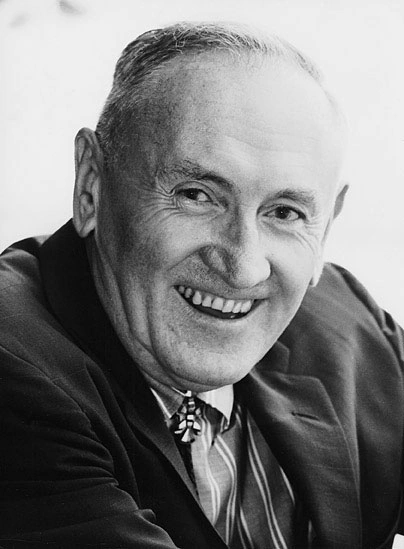
| 4 Quotes | |
| Occup. | Scientist |
| From | Switzerland |
| Born | February 14, 1898 Varna, Principality of Bulgaria |
| Died | February 8, 1974 Pasadena, California, USA |
| Aged | 75 years |
| Cite | |
Citation Formats
APA Style (7th ed.)
Fritz zwicky biography, facts and quotes. (2026, February 11). FixQuotes. https://fixquotes.com/authors/fritz-zwicky/
Chicago Style
"Fritz Zwicky biography, facts and quotes." FixQuotes. February 11, 2026. https://fixquotes.com/authors/fritz-zwicky/.
MLA Style (9th ed.)
"Fritz Zwicky biography, facts and quotes." FixQuotes, 11 Feb. 2026, https://fixquotes.com/authors/fritz-zwicky/. Accessed 5 Mar. 2026.
Early Life and Background
Fritz Zwicky was born on February 14, 1898, in Varna, Bulgaria, to Swiss parents whose work tied them to the Black Sea trade routes; his father, a merchant, expected practicality, and the young Zwicky absorbed a hard, unsentimental view of how effort turns into results. Though he is often labeled simply "Swiss", his earliest years were shaped by the cosmopolitan fringe of Europe, where languages, loyalties, and livelihoods mixed. That early sense of being slightly outside the center would later reappear in his scientific persona: suspicious of consensus, impatient with ceremony, and willing to be abrasive in defense of an idea.As a teenager he was sent to Switzerland, the country he would claim as his own, and he matured in a culture that valued disciplined craft as much as intellectual ambition. Switzerland in the years around World War I offered him both distance from the trenches and a close-up view of how modern states mobilize knowledge. Zwicky carried from that era a paradoxical temperament - romantic about grand possibilities, yet relentlessly practical about instruments, measurement, and proof. The mountains also entered him early, not as a metaphor but as a bodily discipline: risk, endurance, and a taste for steep problems.
Education and Formative Influences
He studied in Zurich at ETH, training as a physicist with a strong mathematical backbone, and moved into theoretical work in the period when quantum mechanics and nuclear physics were overturning classical intuitions. The Zurich milieu prized exactness, but Zwicky also learned to distrust purely elegant argument when it drifted away from what the sky and laboratory would allow. In the early 1920s he emigrated to the United States and joined the California Institute of Technology, entering an American research system expanding rapidly on philanthropic money, new observatories, and the prestige of wartime science - a setting that rewarded boldness, speed, and, for someone with Zwicky's personality, a certain amount of productive combativeness.Career, Major Works, and Turning Points
At Caltech and with the Mount Wilson and later Palomar communities, Zwicky became one of the architects of modern astrophysics by forcing disparate phenomena into unified physical stories. With Walter Baade in the 1930s he tied supernovae to the creation of neutron stars, turning stellar death into a generator of new cosmic objects; he also championed observational campaigns to catch transient events rather than merely classify static stars. In 1933, studying the Coma Cluster, he inferred that the visible galaxies could not supply enough mass to hold the cluster together and coined the concept of "dunkle Materie" - dark matter - decades before it became central to cosmology. He later drove the ambitious Palomar Observatory Sky Survey and compiled catalogs of galaxies and clusters, insisting on systematic mapping as the prerequisite for theory. Alongside his astronomy ran a second, less remembered track: the "morphological method", a structured way of exploring solution spaces for complex problems, and even proposals for jet propulsion and novel explosives - evidence of a mind that treated disciplinary borders as mere suggestions.Philosophy, Style, and Themes
Zwicky's inner life was defined by a tension between sweeping vision and impatience with what he saw as empty sophistication. He distrusted theoretical beauty when it floated free of inventory, declaring, “I soon became convinced... that all the theorizing would be empty brain exercise and therefore a waste of time unless one first ascertained what the population of the universe really consists of”. That sentence is not just methodological; it is psychological. It reveals a man who needed the universe to be countable, charted, and confronted - a temperament that found comfort in catalogs, surveys, and the hard arithmetic of mass, light, and motion. His most prophetic claims, including dark matter, were born from this insistence that nature must balance its books, even if the missing entries were invisible.His style in human terms could be combative, even rude, but it coexisted with a plainspoken self-portrait of labor and attrition. “Every evening, I come home tired and have just enough energy to fill out the endless tax forms, to pay bills, not to let my house neglected and to hear the radio concert for an hour”. The point is not domestic trivia; it shows how he experienced the scientist's life as continuous expenditure, with creativity squeezed between obligations. Yet he also cultivated a myth of periodic eruption, as if ideas arrived like rare comets: “I have a good idea every two years. Give me a topic, I will give you the idea!” Read together, the quotes sketch a psyche that oscillated between fatigue and grand confidence - a man who could feel ground down by routine yet still believe his mind could vault over the field when challenged.
Legacy and Influence
Zwicky died on February 8, 1974, but his signature concepts grew larger after him: dark matter moved from an outsider's inference to a pillar of cosmology; supernovae became precision tools for stellar evolution and, later, for measuring the expansion of the universe; sky surveys became the backbone of astrophysical discovery. His deeper legacy is methodological and cultural: the insistence that observation must be comprehensive, that anomalies deserve pursuit rather than dismissal, and that a scientist may have to be disagreeable to be right. In an era that increasingly prizes collaboration and diplomacy, Zwicky endures as a reminder that some advances come from people who do not fit the room - and who, precisely because they do not, keep asking what the universe is actually made of.Our collection contains 4 quotes written by Fritz, under the main topics: Witty One-Liners - Science - Mountain - Work-Life Balance.
Fritz Zwicky Famous Works
- 1966 Entdeckung, Erfindung, Forschung im Morphologischen Weltbild (Book)
- 1957 Morphological Astronomy (Book)
- 1929 On the Redshift of Spectral Lines through Interstellar Space (Academic Paper)
Source / external links