
Fulton J. Sheen Biography Quotes 11 Report mistakes
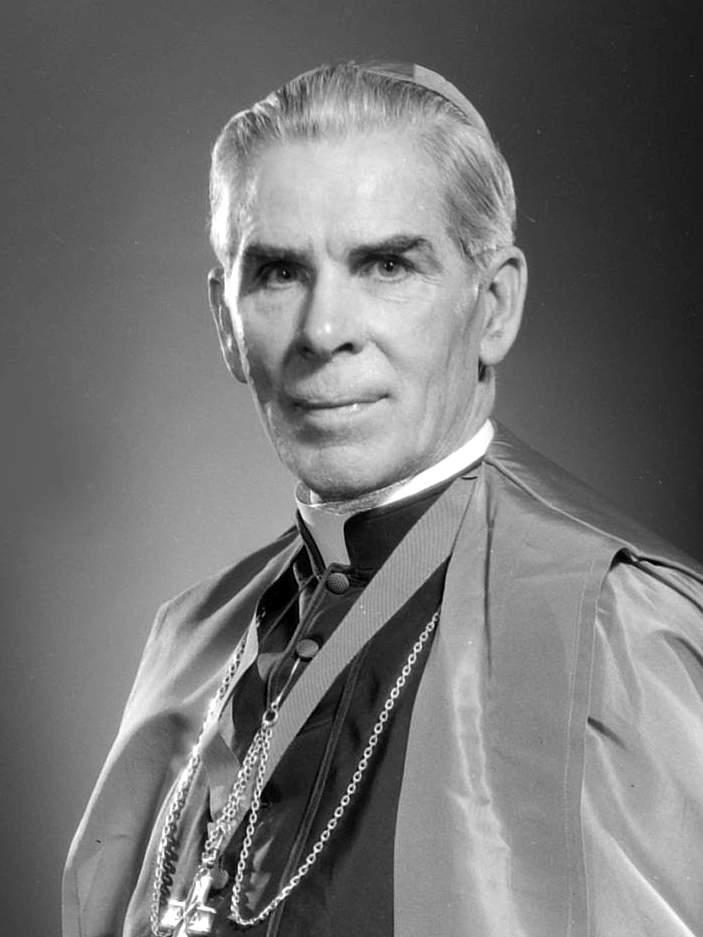
Attr: GetSermons
| 11 Quotes | |
| Known as | Archbishop Fulton J. Sheen |
| Occup. | Clergyman |
| From | USA |
| Born | May 8, 1895 El Paso, Illinois, USA |
| Died | December 9, 1979 New York City, USA |
| Aged | 84 years |
| Cite | |
Citation Formats
APA Style (7th ed.)
Fulton j. sheen biography, facts and quotes. (2026, February 11). FixQuotes. https://fixquotes.com/authors/fulton-j-sheen/
Chicago Style
"Fulton J. Sheen biography, facts and quotes." FixQuotes. February 11, 2026. https://fixquotes.com/authors/fulton-j-sheen/.
MLA Style (9th ed.)
"Fulton J. Sheen biography, facts and quotes." FixQuotes, 11 Feb. 2026, https://fixquotes.com/authors/fulton-j-sheen/. Accessed 5 Mar. 2026.
Early Life and Background
Fulton John Sheen was born May 8, 1895, in El Paso, Illinois, and grew up in nearby Peoria in a Catholic Midwestern world shaped by immigrant parishes, small-town discipline, and the early mass culture of newspapers and radio. His parents, Newton and Delia Sheen, ran a hardware business, and the boy who served Mass and read voraciously learned early how public language could move private conscience. The era offered both confidence in progress and anxiety about modernity - Darwin, industrial labor, and the aftershocks of World War I - pressures that would later make his brand of Catholic apologetics feel urgent rather than ornamental.Ordained a priest for the Diocese of Peoria in 1919, Sheen carried into adulthood a blend of prairie plainspokenness and a taste for the theatrical. Friends and critics alike sensed a temperament pulled between ascetic ideals and a keen awareness of reputation, a tension sharpened by the new celebrity machinery that could turn a clergyman into a household name. He would spend his life insisting that the interior life was the real battleground even as he mastered the exterior tools of persuasion.
Education and Formative Influences
Sheen studied at St. Viator College in Bourbonnais, Illinois, then at St. Paul Seminary in Minnesota before being sent to the Catholic University of America in Washington, D.C., and onward to Europe. In Louvain he earned a doctorate in philosophy (1923), and in Rome he completed advanced theological work at the Angelicum, absorbing Thomism, French Catholic intellectual revival, and the contested relationship between modern philosophy and faith. These years trained him to argue with precision, but also convinced him that ideas must be dramatized if they are to compete with secular mass entertainment.Career, Major Works, and Turning Points
Returning to the United States, Sheen joined the faculty of the Catholic University of America and became a prominent lecturer and preacher, publishing widely while rising within church structures. His first national platform came through radio: The Catholic Hour (from 1930) made him a weekly voice of reassurance during Depression and war. Television then transformed him into a star with Life Is Worth Living (1951-1957), where his chalkboard, cape, and conversational logic brought theology into living rooms; he won an Emmy and competed successfully in the era of Milton Berle. Named auxiliary bishop of New York in 1951, he later became Bishop of Rochester (1966-1969), a post marked by administrative strain and conflict with Cardinal Francis Spellman over control of priests and funds - a bruising episode that revealed how charisma does not dissolve institutional politics. He returned to New York, continued writing and speaking, and died on December 9, 1979, in Manhattan.Philosophy, Style, and Themes
Sheen understood modern life as a contest for attention in which souls could be lost by drift rather than defiance. His style fused scholastic structure with showman timing: clear oppositions, vivid anecdotes, and a steady return to conscience, confession, and sacrificial love. Behind the wit was an ascetical program - daily Holy Hour, discipline of speech, and suspicion of ego - developed in reaction to the temptations of fame. When he observed that “The proud man counts his newspaper clippings, the humble man his blessings”. , he was describing a spiritual pathology he recognized at close range: the way public praise can replace gratitude and slowly hollow out interior freedom.At the center of his psychology was the claim that persons are made for self-gift, not self-display, and that suffering can be transfigured into service. His exhortation - “Show me your hands. Do they have scars from giving? Show me your feet. Are they wounded in service? Show me your heart. Have you left a place for divine love?” - turns biography into examination of conscience, a demand that devotion become visible in costly action. Even his humor served moral diagnosis; he distrusted the soft corruption of praise, warning that “Baloney is flattery laid on so thick it cannot be true, and blarney is flattery so thin we love it”. In an America learning to market itself, Sheen used comedy as a scalpel, exposing vanity while offering a positive alternative: love as self-donation that paradoxically restores the self.
Legacy and Influence
Sheen remains one of the 20th century's most influential American Catholic communicators, a prototype for later religious broadcasters and public intellectuals who combine doctrine with media craft. His books and recordings continue to circulate because they address perennial anxieties - meaning, guilt, love, and death - in language aimed at ordinary listeners rather than specialists. Debates about his administrative record and his complicated relationship to ecclesiastical power coexist with admiration for his evangelical clarity and pastoral urgency; in the end, his enduring achievement was to insist that modern publicity could be pressed into the service of the interior life, provided the preacher never mistook applause for conversion.Our collection contains 11 quotes written by Fulton, under the main topics: Witty One-Liners - Ethics & Morality - Wisdom - Love - Faith.
Other people related to Fulton: Martin Sheen (Actor)