
Fyodor Dostoevsky Biography Quotes 26 Report mistakes
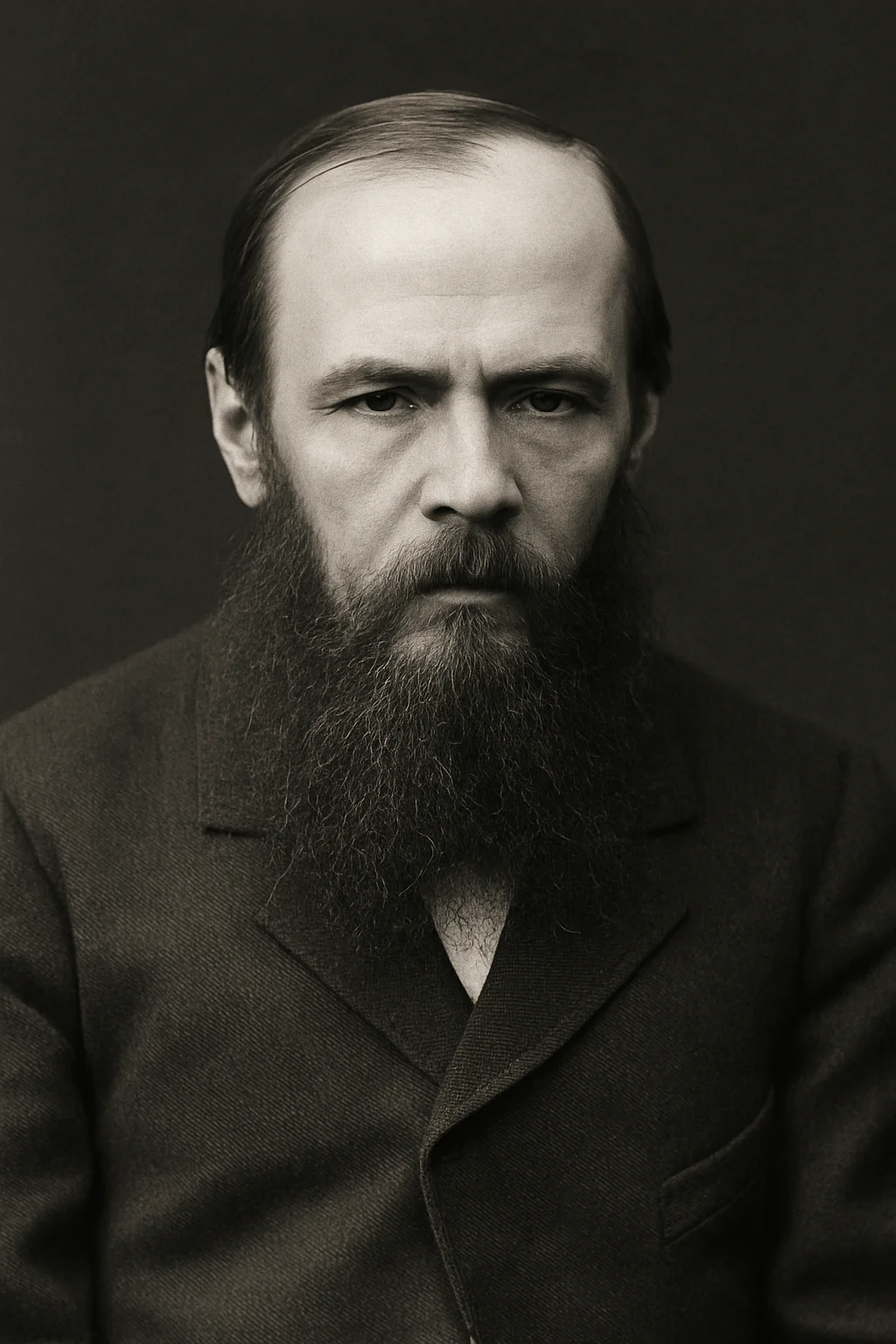
| 26 Quotes | |
| Occup. | Novelist |
| From | Russia |
| Born | November 11, 1821 |
| Died | February 9, 1881 |
| Aged | 59 years |
| Cite | |
Citation Formats
APA Style (7th ed.)
Fyodor dostoevsky biography, facts and quotes. (2026, February 1). FixQuotes. https://fixquotes.com/authors/fyodor-dostoevsky/
Chicago Style
"Fyodor Dostoevsky biography, facts and quotes." FixQuotes. February 1, 2026. https://fixquotes.com/authors/fyodor-dostoevsky/.
MLA Style (9th ed.)
"Fyodor Dostoevsky biography, facts and quotes." FixQuotes, 1 Feb. 2026, https://fixquotes.com/authors/fyodor-dostoevsky/. Accessed 6 Mar. 2026.
Early Life and Background
Fyodor Mikhailovich Dostoevsky was born in Moscow on November 11, 1821, the second son of a family suspended between privilege and precarity. His father, Mikhail, was a doctor attached to the Mariinsky Hospital for the Poor, and the boy grew up near wards where illness, debt, and moral compromise were daily sights. That early proximity to suffering did not turn him into a social reformer of the Western type so much as a psychological witness: he learned to read character in extremity, to notice how pride, shame, and faith survive in cramped rooms.The household was disciplined, devout, and tense. Family memory and later biographers record a stern father whose authority could feel oppressive; whether or not the darkest rumors about him are true, the emotional fact for Dostoevsky was a childhood shaped by fear and reverence at once. His mother died in 1837, and his father died in 1839, leaving the young man with grief, a sharpened sense of contingency, and a lifelong fixation on patricide, guilt, and the desire to both judge and forgive.
Education and Formative Influences
After boarding school in Moscow, Dostoevsky entered the Nikolayev Military Engineering Institute in St Petersburg, graduating in 1843 and briefly serving as an engineer. He hated the utilitarian ethos and fled to literature, absorbing Pushkin, Gogol, and the French social novel, while also forming the habit of philosophical argument as drama. By the mid-1840s he was moving among radical-leaning literary circles, drawn to the era's debate over serfdom, reason, and progress - and to the question of whether a human being can be reduced to a system without remainder.Career, Major Works, and Turning Points
His first novel, Poor Folk (1846), made him instantly famous, but success curdled into quarrels, poverty, and a painful awareness of his own vanity; The Double (1846) and later tales pushed deeper into humiliation and split identity. The decisive rupture came in 1849, when he was arrested for involvement with the Petrashevsky Circle, condemned to death, and subjected to a mock execution before a last-minute commutation to hard labor. Four years in a Siberian prison camp at Omsk (1850-1854), followed by forced military service, remade his politics and spiritual language; the experience became the bedrock of Notes from the House of the Dead (1861-1862). Back in St Petersburg, he edited journals with his brother, battled epilepsy and gambling addiction, and wrote with punishing speed under debt: Notes from Underground (1864) broke with rational-utopian optimism; Crime and Punishment (1866), The Idiot (1868-1869), Demons (1871-1872), and The Brothers Karamazov (1879-1880) turned the Russian novel into an arena for theology, psychology, and political prophecy. He died in St Petersburg on February 9, 1881, after hemorrhage, having become a national writer who still felt himself a defendant before an invisible court.Philosophy, Style, and Themes
Dostoevsky wrote as if ideas were living organisms that must be tested under pressure - in hunger, lust, fear, and the craving to be absolved. His hallmark is polyphony: competing voices argue without being neatly dissolved into authorial verdict, and the plot often serves as a moral experiment. The Siberian years taught him that punishment does not automatically purify; what changes a person is the inner drama of confession, pride, and grace. Yet he remained suspicious of any program that promises paradise by rearranging society while ignoring the crookedness of desire.His characters repeatedly discover that the heart is not a quiet place but a battleground where spiritual realities contend: “Beauty is mysterious as well as terrible. God and devil are fighting there, and the battlefield is the heart of man”. That vision fuels his fascination with seduction, pity, sanctity, and cruelty, often in the same person. He dramatized moral freedom as terrifying rather than comforting, warning that when transcendence is denied the will becomes unmoored: “If there is no God, everything is permitted”. And he made love a discipline of perception rather than sentiment, insisting that redemption begins in how one sees another human being: “To love someone means to see him as God intended him”. In his inner life, tenderness and contempt wrestle; compassion is hard-won, and faith is less an inherited certainty than a choice made against despair.
Legacy and Influence
Dostoevsky's influence is both literary and diagnostic: he mapped modern consciousness before psychology had its common vocabulary, shaping existentialism, psychoanalysis, and the political novel. Nietzsche, Freud, Camus, and later Russian writers from Bulgakov to Solzhenitsyn engaged him as a rival witness to the 19th and 20th centuries' arguments about freedom, violence, and belief. His novels endure because they refuse to let the reader stand outside the action - every page asks not only what the characters will do, but what we permit ourselves to become when suffering, ideology, and the longing for meaning collide.Our collection contains 26 quotes written by Fyodor, under the main topics: Motivational - Ethics & Morality - Truth - Love - Sarcastic.
Frequently Asked Questions
- Fyodor Dostoevsky White Nights: 1848 short story set in St. Petersburg: a lonely dreamer meets Nastenka over four nights; themes of yearning and fleeting love; basis for Visconti’s Le Notti Bianche.
- Fyodor Dostoevsky movies: Le Notti Bianche (1957); The Idiot (Kurosawa, 1951); The Brothers Karamazov (1958/1969); Crime and Punishment (various); Notes from Underground; The Gambler.
- Fyodor Dostoevsky philosophy: Christian existentialism; freedom and responsibility; faith vs. doubt; suffering and redemption; critique of nihilism; deep moral psychology.
- Fyodor Dostoevsky BSD: No known link; possibly a mix-up (he’s associated with epilepsy, not “BSD”).
- Fyodor Dostoevsky pronunciation: FYO-dor dos-toy-EV-skee.
- Fyodor Dostoevsky books: Crime and Punishment; The Brothers Karamazov; The Idiot; Demons (The Possessed); Notes from Underground; The Gambler; The House of the Dead; Poor Folk; White Nights.
- How old was Fyodor Dostoevsky? He became 59 years old
Fyodor Dostoevsky Famous Works
- 1880 The Brothers Karamazov (Novel)
- 1872 Demons (Novel)
- 1869 The Idiot (Novel)
- 1866 Crime and Punishment (Novel)
- 1864 Notes from Underground (Novella)
Source / external links