
G. H. Hardy Biography Quotes 11 Report mistakes
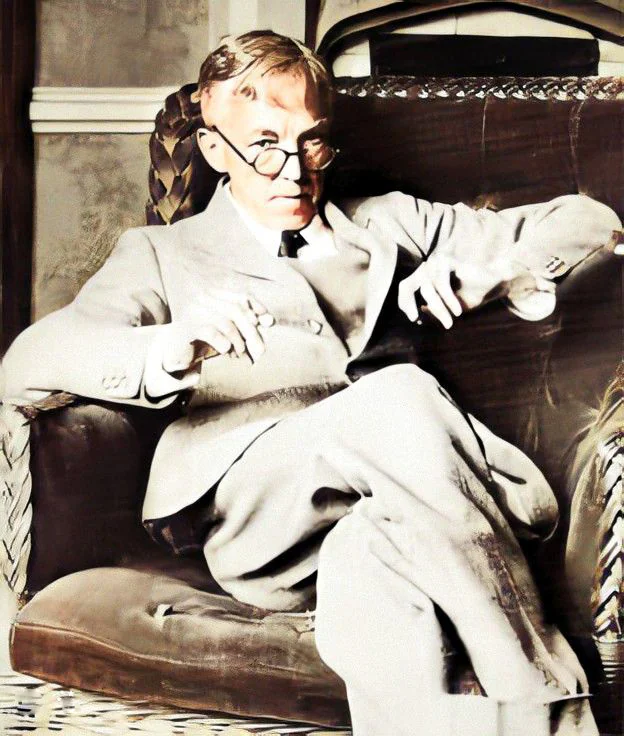
| 11 Quotes | |
| Born as | Godfrey Harold Hardy |
| Occup. | Mathematician |
| From | United Kingdom |
| Born | February 7, 1877 Cranleigh, Surrey, England |
| Died | December 1, 1947 Cambridge, Cambridgeshire, England |
| Cause | Natural Causes |
| Aged | 70 years |
| Cite | |
Citation Formats
APA Style (7th ed.)
G. h. hardy biography, facts and quotes. (2026, February 11). FixQuotes. https://fixquotes.com/authors/g-h-hardy/
Chicago Style
"G. H. Hardy biography, facts and quotes." FixQuotes. February 11, 2026. https://fixquotes.com/authors/g-h-hardy/.
MLA Style (9th ed.)
"G. H. Hardy biography, facts and quotes." FixQuotes, 11 Feb. 2026, https://fixquotes.com/authors/g-h-hardy/. Accessed 27 Mar. 2026.
Early Life and Background
Godfrey Harold Hardy was born on February 7, 1877, in Cranleigh, Surrey, into the late-Victorian English world of schoolrooms, chapel seriousness, and rising professional opportunity. His father, also named Harold Hardy, was bursar and art master at Cranleigh School; his mother, Sophia Hall, had been a teacher. The household prized accuracy and quiet competence, and Hardy later suggested that his earliest talents showed themselves in the simplest of forms - a child counting and factoring numbers for pleasure, already drawn to a private order that did not require applause.That inward pull toward abstraction suited a temperament that was reserved, austere, and often emotionally guarded. Hardy never married and formed his adult identity inside institutions - colleges, common rooms, lecture halls - that could shelter intense intellectual life while discouraging confession. The England that shaped him still carried the moral chill that made many personal truths unspeakable; in that climate Hardy cultivated a disciplined impersonality, letting proof replace intimacy. Yet the same restraint sharpened his loyalties: to colleagues, to students, and to the idea that intellectual excellence was a form of character.
Education and Formative Influences
Hardy went up to Trinity College, Cambridge, in 1896 and quickly distinguished himself in the Mathematical Tripos, at a time when Cambridge mathematics was shifting from competitive coaching toward modern analysis. Influenced by the reforming spirit associated with figures like E. W. Hobson and the growing prestige of continental rigor, Hardy helped move British mathematics away from rote problem-solving and toward proof-based research. By the early 1900s he was publishing in analysis and number theory, absorbing the new international language of mathematics and seeking an aesthetic standard that could match the best work coming from France and Germany.Career, Major Works, and Turning Points
Elected a Fellow of Trinity, Hardy became one of the central architects of modern British pure mathematics, later holding the Savilian Professorship of Geometry at Oxford (1919-1931) before returning to Cambridge as Sadleirian Professor (1931-1942). His collaborations defined his career: the Hardy-Littlewood partnership produced foundational work in analytic number theory, including the circle method and deep results on additive problems and prime distribution; with J. E. Littlewood he also advanced inequalities and complex analysis. The most dramatic turning point came in 1913, when Hardy recognized the genius in a letter from Srinivasa Ramanujan and brought him to Cambridge - a collaboration that yielded striking identities and asymptotics, but also unfolded under the shadow of war, illness, and cultural displacement. Hardy later distilled his self-understanding in A Mathematician's Apology (1940), written after a decline in creative power and following personal crises, as both a defense of pure thought and a mournful inventory of what remained.Philosophy, Style, and Themes
Hardy's public creed was that mathematics belonged with the arts, not with utilities or national projects. “I am interested in mathematics only as a creative art”. That sentence is not a pose but a psychological key: it frames his work as the one domain where he could be fully himself, controlled yet daring, judged by standards he trusted. In the background sits the era's brutal insistence on usefulness - the First World War, the mechanization of killing, the growing marriage of science to state power - against which Hardy defined purity as a kind of moral refuge. His insistence on pure mathematics was also a way to make peace with his own temperament: where life felt contingent, mathematics could be exact.His style favored clarity, elegance, and a certain severe courtesy toward the reader: no rhetorical flourishes, only the clean line of a proof and the austere pleasure of inevitability. “Beauty is the first test: there is no permanent place in the world for ugly mathematics”. That beauty standard policed not only technique but emotion - it allowed Hardy to value intensity without sentimentality. At the same time, his self-criticism could be unforgiving, especially as age and depression tightened his sense of dwindling powers; he measured a life by a small number of enduring papers and by the ability to create, not merely to explain. Underneath the famous confidence lay fear of irrelevance, answered by a faith in permanence: “A mathematician, like a painter or a poet, is a maker of patterns. If his patterns are more permanent than theirs, it is because they are made with ideas”.
Legacy and Influence
Hardy died on December 1, 1947, in Cambridge, leaving a double legacy: technical and cultural. Technically, his work with Littlewood reshaped analytic number theory and set agendas that still drive research on primes, additive problems, and inequalities; his mentorship helped normalize research-level rigor in Britain, and his defense of Ramanujan permanently altered how the mathematical world thinks about genius across class and empire. Culturally, A Mathematician's Apology became the classic modern statement of mathematical vocation - proud, wounded, unsparing - and it continues to influence how mathematicians talk about beauty, creativity, and the costs of a life lived for ideas.Our collection contains 11 quotes written by H. Hardy, under the main topics: Wisdom - Art - Deep - Aging - Legacy & Remembrance.
Other people related to H. Hardy: Norbert Wiener (Mathematician)
G. H. Hardy Famous Works
- 1940 Ramanujan: Twelve Lectures on Subjects Suggested by His Life and Work (Book)
- 1940 A Mathematician's Apology (Book)
- 1938 An Introduction to the Theory of Numbers (Book)
Source / external links