
Gail Simmons Biography Quotes 11 Report mistakes
Attr: Larry D. Moore, CC BY-SA 4.0
| 11 Quotes | |
| Occup. | Author |
| From | Canada |
| Born | May 19, 1976 Toronto, Ontario, Canada |
| Age | 49 years |
| Cite | |
Citation Formats
APA Style (7th ed.)
Gail simmons biography, facts and quotes. (2026, February 11). FixQuotes. https://fixquotes.com/authors/gail-simmons/
Chicago Style
"Gail Simmons biography, facts and quotes." FixQuotes. February 11, 2026. https://fixquotes.com/authors/gail-simmons/.
MLA Style (9th ed.)
"Gail Simmons biography, facts and quotes." FixQuotes, 11 Feb. 2026, https://fixquotes.com/authors/gail-simmons/. Accessed 26 Mar. 2026.
Early Life and Background
Gail Simmons was born May 19, 1976, in Toronto, Ontario, and grew up in a Jewish Canadian household where food was both daily practice and family language. Long before she became a public voice in American food media, she absorbed the quiet rhythms of home cooking, holiday tables, and the social choreography of hosting - experiences that trained her palate as much as her sense of what meals do inside a community. Toronto in the 1980s and 1990s, increasingly shaped by immigration and restaurant diversity, offered a living classroom: dim sum, Caribbean patties, Italian bakeries, and steakhouse glamour coexisted within a city learning to narrate itself through taste.That early environment also gave her the emotional template that later viewers recognized as her signature - an ability to judge food while still judging the moment. Simmons has often been read as calm and warm on camera, but the roots of that composure lie in a childhood where feeding people was intertwined with responsibility and care. A table could be celebratory, but it could also be where tensions smoothed out and bonds were renewed; that duality - pleasure paired with duty - became one of the hidden engines of her later writing and criticism.
Education and Formative Influences
Simmons studied at McGill University in Montreal, a city whose French-inflected market culture and restaurant life sharpened her attention to craft, sauces, and the pleasures of eating well without pretense. She later trained at the Institute of Culinary Education in New York City, a practical pivot that aligned her intellectual interest in culture with the discipline of professional kitchens. The move from Canada to New York placed her in a late-1990s and early-2000s food world that was rapidly professionalizing its media ecosystem - glossy magazines, celebrity chefs, and the first wave of internet food writing - and she learned to translate between the back-of-house realities of cooking and the front-of-house storytelling that readers and audiences crave.Career, Major Works, and Turning Points
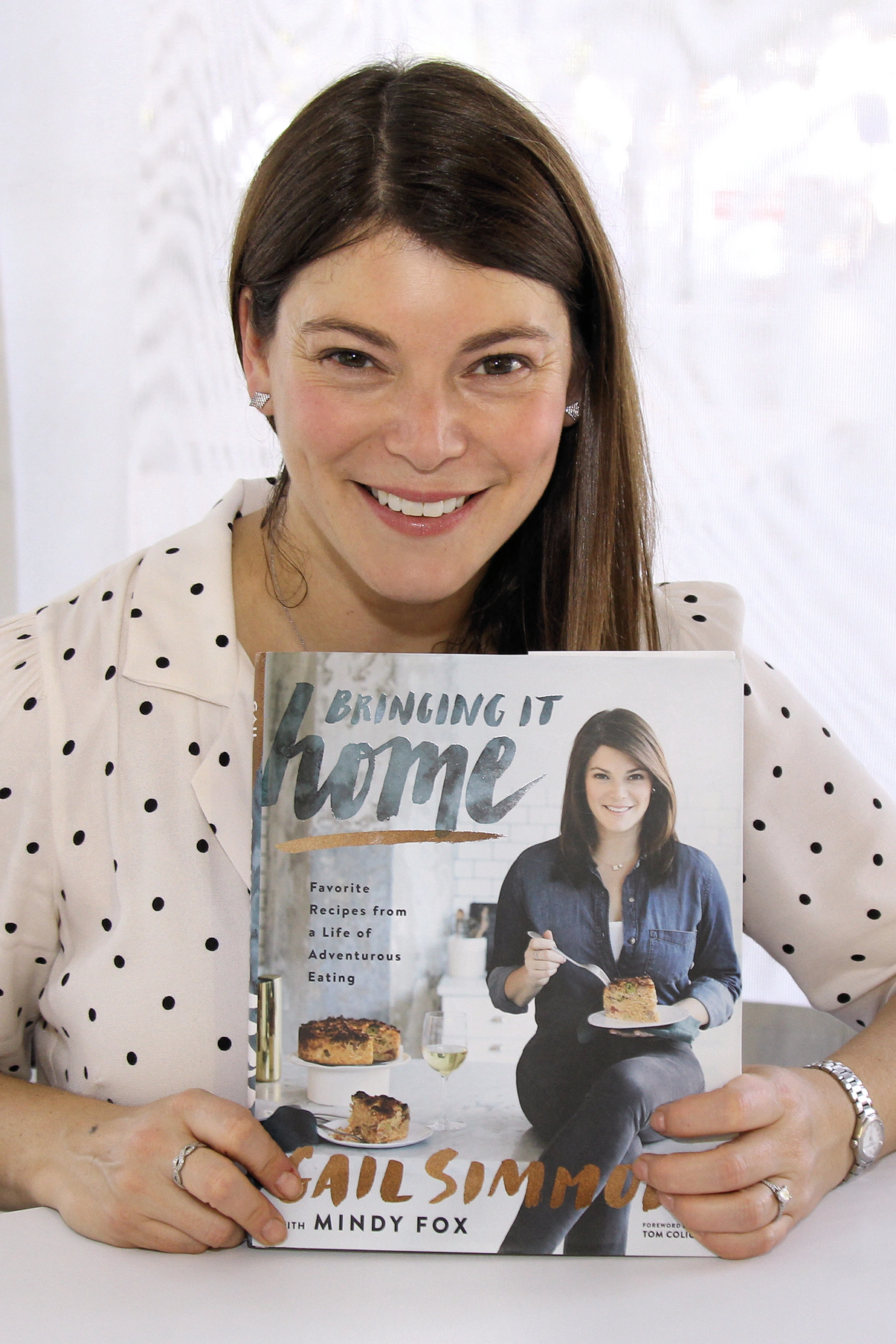
After culinary school, Simmons built a career in food media and public-facing food culture, including work as a special projects director at Food and Wine, where she helped shape how chefs, trends, and regions were introduced to mainstream readers. Her widest recognition came as a judge on Bravo's Top Chef, beginning with the franchise's early seasons, where her role evolved into a steady interpretive presence - attentive to technique, yet equally attentive to whether a dish communicated intention. She later expanded her authorial identity through cookbooks and essays, notably Bringing It Home: Favorite Recipes from a Life of Adventurous Eating, which framed cooking as biography: a set of places lived in, people loved, and tastes learned. Across television, print, and live events, her turning point was not a single accolade so much as a sustained credibility - the rare figure who could move between entertainment, criticism, and instruction without losing trust.Philosophy, Style, and Themes
Simmons writes and speaks from a conviction that food is never merely culinary; it is social evidence. Her most consistent idea is that meals encode identity and belonging - that what tastes "right" is often what feels like home, and what feels like home is shaped by migration, class, and memory. This is why she returns to the emotional infrastructure of eating, insisting that “Food is so much more than just sustenance. It's about culture, history, and connection”. In her worldview, taste is a kind of archive: a way families keep stories when language fails, and a way cities announce who they have become. That sensitivity also explains her on-screen empathy - critique, for her, is less about scoring and more about reading the narrative a dish is trying to tell.Her style favors clarity over swagger: she prizes balance, seasoning, and intention, but she also values the human atmosphere around the plate. When she emphasizes that “A great meal is not just about the food, it's about the company you share it with”. , she is quietly describing her own psychology - a person oriented toward relationship, for whom hospitality is both pleasure and moral practice. Likewise, “Cooking is an act of love, and when you share that love with others, it becomes something even greater”. captures the ethical undertone of her work: generosity as a craft that can be learned, refined, and offered publicly. Even her judgments tend to be contextual - not excusing mistakes, but locating them within pressure, ambition, and the desire to be understood through flavor.
Legacy and Influence
Simmons' lasting influence lies in how she helped normalize a more emotionally literate food conversation in North American media: one that makes room for technique and pleasure while treating food as a civic and personal connector. As Top Chef became a defining platform for a generation of chefs, her presence modeled a form of critique that is firm without being cruel, culturally curious without being performative. As an author, she has used the cookbook not simply to instruct but to map a life across borders - Canadian upbringing, Montreal education, New York professionalization - showing readers that adventurous eating is less about novelty than about openness. In a media era often pulled toward extremes of snark or sentimentality, her work endures for its steadier premise: that feeding people, and talking honestly about how we do it, is one of the most durable ways to describe who we are.Our collection contains 11 quotes written by Gail, under the main topics: Witty One-Liners - Friendship - Food - Cooking.
Gail Simmons Famous Works
- 2017 Bringing It Home: Favorite Recipes from a Life of Adventurous Eating (Book)
- 2012 Talking with My Mouth Full: My Life as a Professional Eater (Book)
Source / external links