
Gale Sayers Biography Quotes 7 Report mistakes
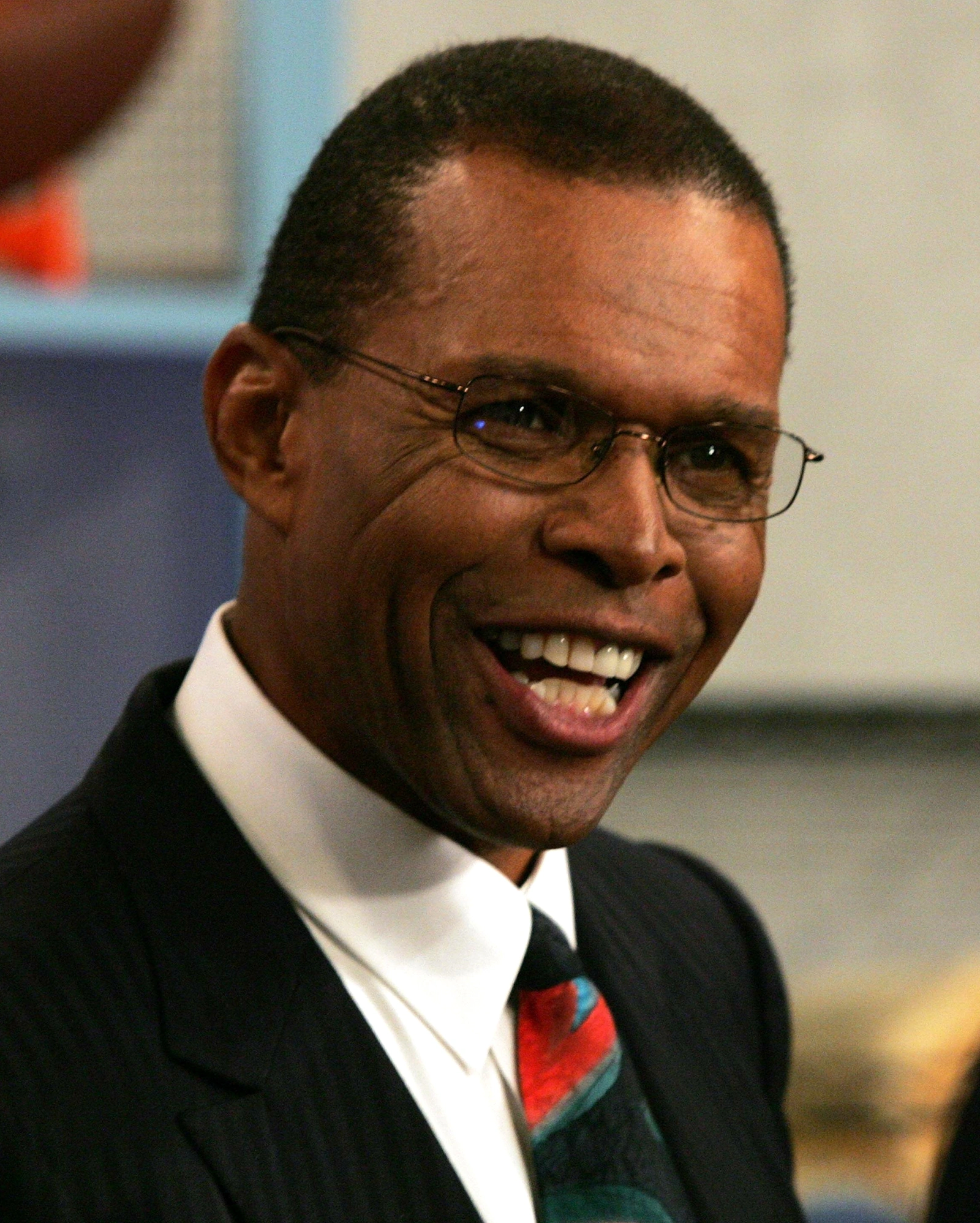
| 7 Quotes | |
| Born as | Gale Eugene Sayers |
| Known as | The Kansas Comet |
| Occup. | Athlete |
| From | USA |
| Born | May 30, 1943 Wichita, Kansas |
| Age | 82 years |
| Cite | |
Citation Formats
APA Style (7th ed.)
Gale sayers biography, facts and quotes. (2026, February 11). FixQuotes. https://fixquotes.com/authors/gale-sayers/
Chicago Style
"Gale Sayers biography, facts and quotes." FixQuotes. February 11, 2026. https://fixquotes.com/authors/gale-sayers/.
MLA Style (9th ed.)
"Gale Sayers biography, facts and quotes." FixQuotes, 11 Feb. 2026, https://fixquotes.com/authors/gale-sayers/. Accessed 28 Mar. 2026.
Early Life and Background
Gale Eugene Sayers was born May 30, 1943, in Wichita, Kansas, the son of Bernice and Roger Sayers. Like many Black families in mid-century America, the Sayerses navigated the constraints of segregation and limited opportunity even as the postwar Midwest promised mobility. When Roger took work as an auto mechanic and later with the Goodyear tire business, the family moved to Omaha, Nebraska, a city whose neighborhoods and schools still reflected the hard lines of race and class.In Omaha, Sayers grew into a quiet, self-contained boy whose athletic gift seemed almost accidental - a sprinter's glide in cleats. At Central High School he starred in football and track, showing the traits that would define him: sudden acceleration, unusual balance through contact, and an ability to read pursuit angles as if he were already a professional. Beneath the elegance was a competitive streak sharpened by the era's daily tests of dignity, and by the knowledge that one injury or one mistake could close the narrow door sports sometimes opened.
Education and Formative Influences
Recruited nationally, Sayers chose the University of Kansas and became the centerpiece of an offense that used him as runner, receiver, and return man. In the early 1960s, as college football sat uneasily alongside the civil rights movement, he entered a Big Eight world where Black stars could draw crowds yet still meet discrimination off the field. Coaches and teammates helped refine his technical craft, but the more enduring influence was the discipline of repetition - sprint mechanics, cuts, and ball security - that turned raw speed into a controlled art and taught him to treat talent as a responsibility rather than a birthright.Career, Major Works, and Turning Points
Drafted by George Halas and the Chicago Bears in 1965, Sayers detonated the league: in his rookie season he scored six touchdowns in a single game against the San Francisco 49ers and became the NFL's most feared open-field runner, then won the 1966 rushing title. Yet even success carried the old-school constraints of Halas' conservatism - “Halas didn't believe in starting rookies”. - a reminder that reputation and hierarchy could matter as much as performance. The defining turn came in 1968, when a torn ACL in his right knee threatened his career; he returned to win a second rushing title in 1969, only to suffer additional knee damage in 1970. By 1971, at 28, the body that made him a phenomenon could no longer answer the mind's demands, and he retired with a legend already intact.Philosophy, Style, and Themes
Sayers' playing style was often described as grace, but grace was merely the surface of his psychology: a preference for precision over spectacle, and for efficiency over aggression. He ran as if the field were a geometry problem - setting up defenders, forcing overcommitment, then slicing through the thinnest seam. That elegance coexisted with a private fear shared by many athletes of his time: that fame could trap a person inside highlights. He resisted that trap in the way he spoke about himself. “I don't care to be remembered as the man who scored six touchdowns in a game. I want to be remembered as a winner in life”. The line reads like self-protection, but also like a credo - identity anchored beyond applause.The injuries, and the long rehabilitation culture of the late 1960s, deepened his emphasis on will as a skill. “I learned that if you want to make it bad enough, no matter how bad it is, you can make it”. In Sayers, determination was not a motivational slogan but a response to fragility: the recognition that a career can vanish in one cut, and that character is what remains when the body fails. That same moral lens shaped his civic voice later, as he challenged the easy hero narratives attached to sports stardom: “Athletes as role models and heroes is a hoax, a sick hoax. The men and women who are fighting in Iraq, they are the true heroes”. The statement is less cynicism than accountability, an insistence that fame should not excuse a shallow life.
Legacy and Influence
Inducted into the Pro Football Hall of Fame in 1977, Sayers became an archetype: the brilliant, brief comet whose film still teaches coaches how to value vision and acceleration over brute force. Just as lasting was his human imprint through his bond with teammate Brian Piccolo, immortalized in the book and 1971 television film "Brian's Song", which reframed a football relationship as a story of interracial friendship and mortality in a turbulent America. After football he worked in business and philanthropy, increasingly speaking about youth, education, and responsibility, and he remained a touchstone for generations of runners who chased his standard of beauty with purpose. When he died in 2020, the tributes returned not only to the cut and the sprint, but to the man who tried, relentlessly, to make winning mean something beyond the goal line.Our collection contains 7 quotes written by Gale, under the main topics: Witty One-Liners - Justice - Leadership - Military & Soldier - Legacy & Remembrance.
Source / external links