
Galen Rowell Biography Quotes 27 Report mistakes
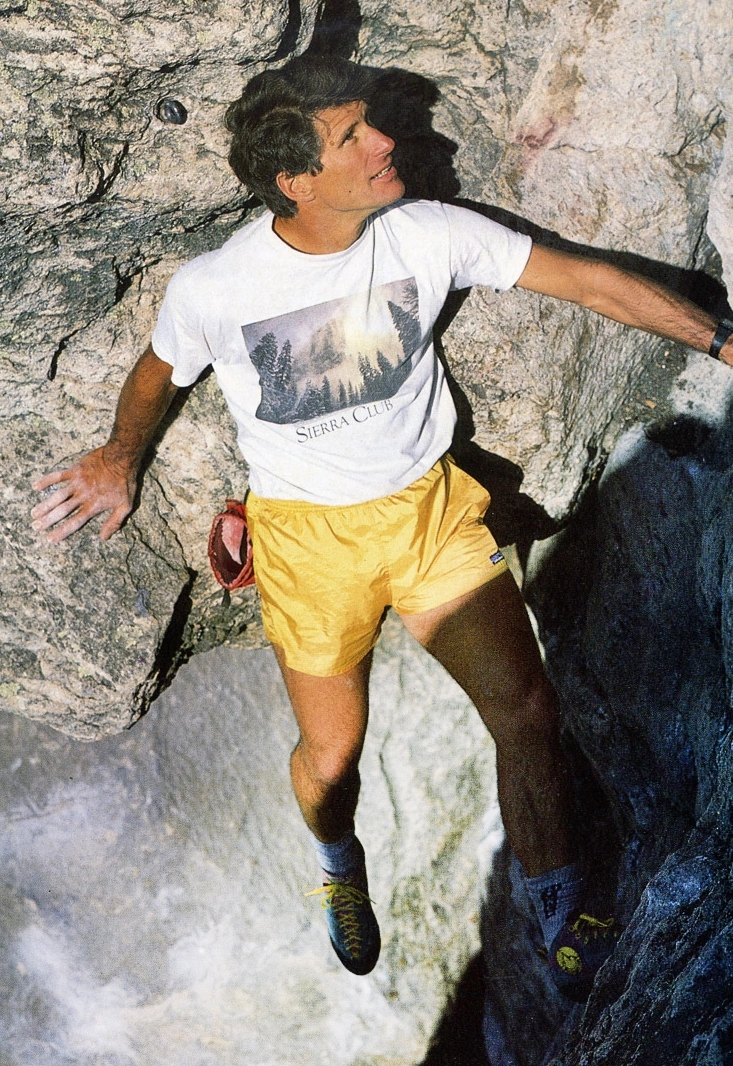
| 27 Quotes | |
| Born as | Galen Allen Rowell |
| Occup. | Photographer |
| From | USA |
| Spouse | Barbara Cushman Rowell |
| Born | August 23, 1940 Oakland, California, U.S. |
| Died | August 11, 2002 Bishop, California |
| Cause | Plane Crash |
| Aged | 61 years |
| Cite | |
Citation Formats
APA Style (7th ed.)
Galen rowell biography, facts and quotes. (2026, February 11). FixQuotes. https://fixquotes.com/authors/galen-rowell/
Chicago Style
"Galen Rowell biography, facts and quotes." FixQuotes. February 11, 2026. https://fixquotes.com/authors/galen-rowell/.
MLA Style (9th ed.)
"Galen Rowell biography, facts and quotes." FixQuotes, 11 Feb. 2026, https://fixquotes.com/authors/galen-rowell/. Accessed 6 Mar. 2026.
Early Life and Background
Galen Allen Rowell was born on August 23, 1940, in the United States, and came of age in a mid-century culture that increasingly celebrated the outdoors as both recreation and refuge. In the postwar years, new highways, expanding national parks, and a growing outdoor-gear economy made wilderness more reachable for middle-class Americans. For Rowell, that accessibility did not flatten the wild into scenery; it sharpened a hunger for direct encounter, a desire to meet the world on its own physical terms.Before he was famous for luminous mountain light and high-country color, he was already training his attention - not only to peaks and weather, but to the ethics of presence. The early arc of his life points to a personality drawn toward intensity: long approaches, thin air, changing skies, and the kind of self-reliance that rewards patience and punishes vanity. Those traits later became the quiet engine of his photographic identity: disciplined, adventurous, and insistently personal.
Education and Formative Influences
Rowell studied at the University of California, Berkeley, a campus shaped in the early 1960s by scientific confidence, political ferment, and a West Coast environmental consciousness that would soon crystallize around wilderness protection. Berkeley placed him near the Sierra Nevada and within reach of Yosemite - landscapes already mythologized by earlier image-makers - yet the era also asked harder questions about development, public lands, and the meaning of "nature" in a modern economy. That mix of idealism and argument helped form his later insistence that pictures could be beautiful without being escapist, and that a photographer could be both artist and advocate while still honoring the complexities of place.Career, Major Works, and Turning Points
Rowell became one of the most recognizable American nature photographers of the late 20th century by merging serious mountaineering with a refined command of color, timing, and narrative. Based in California, he produced widely circulated work through books, magazine assignments, and lectures, and he helped define an era when adventure photography moved from grainy documentation toward immersive, expressive color. His best-known images and essays frequently came from the Sierra, Alaska, and the greater ranges of Asia, where he pursued big weather and fleeting alignments rather than postcard certainty. A crucial turning point was his commitment to authoring the accompanying text as well as the photographs, allowing his images to function not as isolated trophies but as chapters in a coherent worldview. Rowell died on August 11, 2002, in a plane crash, an abrupt end that underscored how closely his life and work were bound to travel and risk.Philosophy, Style, and Themes
Rowell framed photography as an active, bodily practice rather than a detached harvest of views. “What I mean by photographing as a participant rather than observer is that I'm not only involved directly with some of the activities that I photograph, such as mountain climbing, but even when I'm not I have the philosophy that my mind and body are part of the natural world”. Psychologically, that statement is a declaration against numbness: he resisted the safety of distance, choosing instead to let exertion, exposure, and awe shape perception. It also explains his recurring emphasis on timing and light - the belief that a picture is earned through presence, not merely taken through equipment.He also understood landscape as communication, not wallpaper, and he trusted an audience to feel the difference between description and interpretation. “When we tune in to an especially human way of viewing the landscape powerfully, it resonates with an audience”. Underneath the craft is a moral tension: how to share beauty without turning places into consumable targets. As outdoor travel boomed and fragile sites became over-visited, his caution about specificity and his growing environmental voice reflected a conscience shaped by consequences, not trend. “These days, most nature photographers are deeply committed to the environmental message”. In Rowell, that commitment read less like slogan and more like an attempt to keep wonder from becoming exploitation - to make the photograph an invitation to responsibility.
Legacy and Influence
Rowell helped set a template for the modern nature photographer as athlete, writer, and advocate: someone who travels far, works fast in changing light, and returns with images that feel lived-in rather than merely looked-at. His influence persists in contemporary adventure and conservation photography, where the ideal is no longer neutral record but a personal, ethically aware vision that acknowledges the photographer as part of the scene. By insisting on participation, narrative context, and emotional clarity, he widened the field beyond technical mastery into a discipline of attention - a way of seeing that asks what a beautiful picture is for, and what it costs the places that give it.Our collection contains 27 quotes written by Galen, under the main topics: Truth - Art - Nature - Writing - Optimism.
Galen Rowell Famous Works
- 2006 Galen Rowell: A Retrospective (Book)
- 1997 Bay Area Wild: A Celebration of the Natural Heritage of the San Francisco Bay Area (Book)
- 1989 The Art of Adventure (Book)
- 1986 Mountain Light: In Search of the Dynamic Landscape (Book)
Source / external links