
Garfield Sobers Biography Quotes 6 Report mistakes
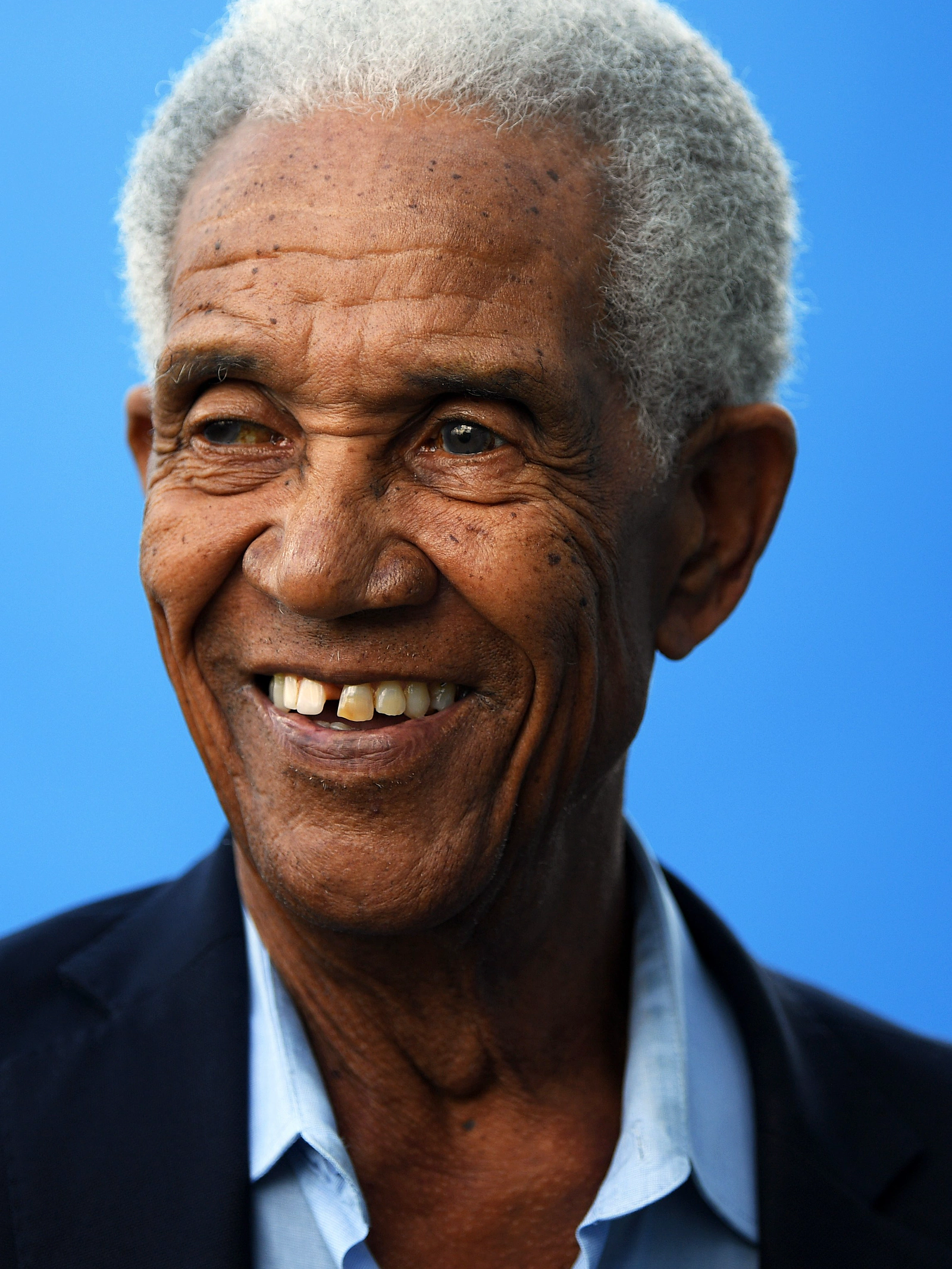
Attr: thetimes.com
| 6 Quotes | |
| Born as | Garfield St Aubrun Sobers |
| Known as | Sir Garfield Sobers |
| Occup. | Athlete |
| From | Barbados |
| Spouse | Prudence Kirby (1969-1990) |
| Born | July 28, 1936 Bridgetown, Barbados |
| Age | 89 years |
| Cite | |
Citation Formats
APA Style (7th ed.)
Garfield sobers biography, facts and quotes. (2026, February 16). FixQuotes. https://fixquotes.com/authors/garfield-sobers/
Chicago Style
"Garfield Sobers biography, facts and quotes." FixQuotes. February 16, 2026. https://fixquotes.com/authors/garfield-sobers/.
MLA Style (9th ed.)
"Garfield Sobers biography, facts and quotes." FixQuotes, 16 Feb. 2026, https://fixquotes.com/authors/garfield-sobers/. Accessed 30 Mar. 2026.
Early Life and Background
Garfield St Aubrun Sobers was born on July 28, 1936, in Bridgetown, Barbados, the youngest of five children in a working-class family. His father died when he was young, a loss that sharpened the self-reliance and quiet composure for which he later became known. Barbados in the 1930s and 1940s was still a British colony, with cricket functioning as both a discipline and a language of aspiration - a public stage where a talented boy could push against the boundaries of class and empire without ever needing to name the struggle.He learned the game in the dense, competitive cricket culture of Bridgetown and its clubs, where long days and hard pitches demanded sound technique and a calm head. From early on he showed the rare combination that would define him: effortless coordination with a stubborn appetite for responsibility. By the time he reached his late teens he was already being discussed not only as a promising batsman, but as an all-rounder in the old West Indian sense - someone expected to contribute in every phase of a match and to carry teammates when conditions turned.
Education and Formative Influences
Sobers attended Bay Street Boys School and then Combermere School, an institution with a strong cricket tradition that helped refine his natural gifts into repeatable method. He came of age during the rise of West Indian self-confidence in sport, when figures like Frank Worrell, Everton Weekes, Clyde Walcott, and later Rohan Kanhai offered models of excellence that were both local and world-class. The formative influence on Sobers was not a single coach so much as the region-wide demand for complete cricketers: batsmen who could bowl, fielders who could change games, and young men who could perform under the psychological weight of representing a people still negotiating colonial hierarchies.Career, Major Works, and Turning Points
He debuted for the West Indies in 1954, still a teenager, and after early tests of temperament he announced himself in 1958 at Kingston with a monumental 365 not out against Pakistan - then the world record Test score - an innings that married patience to controlled dominance and signaled a new ceiling for Caribbean batting. Over the next decade he became the era's most coveted all-rounder: a left-handed batsman of great range, a bowler who could operate as left-arm orthodox spin or switch to left-arm pace depending on conditions, and a close fielder of exceptional athleticism. Named West Indies captain in the mid-1960s, he led a side in transition while continuing to produce at a level that made him, in the eyes of many contemporaries, the most complete cricketer in history. A famous emblem of his peak came in 1968, when playing county cricket for Nottinghamshire he struck six sixes in an over in a first-class match - a feat that became mythic, yet never defined him as much as his week-to-week reliability across continents.Philosophy, Style, and Themes
Sobers' inner life, as glimpsed through his own words and habits, points to a man who treated brilliance as a mental craft rather than a gift to be admired. “The proper use of the mind is the one thing that separates champions from merely good players”. That sentence is less motivational slogan than self-diagnosis: he understood that his versatility could scatter attention, so he built a champion's identity around focus, preparation, and situational intelligence - the capacity to read pitches, opponents, and momentum and then select the right version of himself.His batting style looked fluid, but it was anchored in a fierce narrowing of consciousness under pressure. “When I am batting, the moment I face up to the bowler, my concentration is zeroed in on him and the ball. Everything else is shut out”. In an age when West Indian cricket carried the freight of regional pride, that tunnel vision functioned as protection: it turned history into a single contest between bat and ball. Even his most celebrated feats were framed by a team ethic rather than self-display. “Six sixes and self-satisfaction are not what it's about - it’s all about the team. You should never be an individual in a team sport. The team comes first you come second”. Psychologically, this reads as both principle and discipline - a way to keep fame from corrupting judgment, and a way to remain useful even when conditions denied him glamour.
Legacy and Influence
Sobers finished with 8, 000-plus Test runs, 200-plus Test wickets, and a reputation that has endured across formats and generations: the gold standard for the word "all-rounder". Knighted in 1975 and long treated as a cultural ambassador for Barbados and the wider Caribbean, he became a reference point for later stars who sought to combine artistry with durability - from the multi-skilled West Indians of the 1970s and 1980s to modern cricketers chasing completeness in a specialized age. More than records, his enduring influence is a model of mastery without theatrics: an athlete who made versatility look natural, then revealed that its true engine was mental control, humility, and an unwavering commitment to the team.Our collection contains 6 quotes written by Garfield, under the main topics: Sports - Teamwork - Stress - Thank You.
Source / external links