
Garrison Keillor Biography Quotes 24 Report mistakes
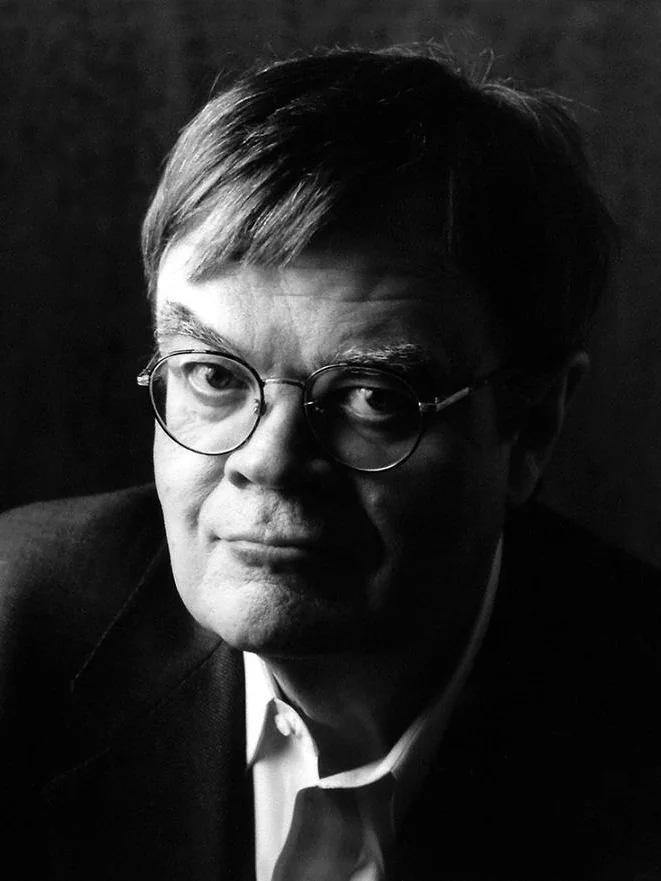
Attr: theparisreview.org
| 24 Quotes | |
| Born as | Gary Edward Keillor |
| Occup. | Writer |
| From | USA |
| Born | August 7, 1942 Anoka, Minnesota, USA |
| Age | 83 years |
| Cite | |
Citation Formats
APA Style (7th ed.)
Garrison keillor biography, facts and quotes. (2026, February 11). FixQuotes. https://fixquotes.com/authors/garrison-keillor/
Chicago Style
"Garrison Keillor biography, facts and quotes." FixQuotes. February 11, 2026. https://fixquotes.com/authors/garrison-keillor/.
MLA Style (9th ed.)
"Garrison Keillor biography, facts and quotes." FixQuotes, 11 Feb. 2026, https://fixquotes.com/authors/garrison-keillor/. Accessed 6 Mar. 2026.
Early Life and Background
Garrison Keillor was born Gary Edward Keillor on August 7, 1942, in Anoka, Minnesota, and grew up in nearby Minneapolis-St. Paul in the sober, industrious atmosphere of midcentury Upper Midwest Protestant life. His family belonged to the Plymouth Brethren, a strict evangelical sect whose plainness of style, suspicion of worldly display, and intense attention to moral accounting would later become both a source of conflict and a deep well for satire. The Minnesota of his youth was a landscape of rail yards and lakes, modest houses and church basements, where civic order and private longing existed side by side.That setting trained his ear early. Keillor learned how people actually talked when they were trying to sound proper, how jokes served as permission to confess, and how a community could be both protective and suffocating. The emotional temperature of those years - reticence, duty, quiet competition, and the ache of wanting out while fearing the cost - became the psychological climate he would recreate as a storyteller: affectionate, observant, and always listening for the buried line that revealed the whole person.
Education and Formative Influences
He attended the University of Minnesota, writing for campus outlets and absorbing radio craft while also steeping himself in the tradition of American humorists and regional stylists. Early work in Minnesota public radio introduced him to the discipline of voice, timing, and weekly deadlines - a crucible in which personality becomes a technique. His split inheritance of religious literalism and literary curiosity pushed him toward a vocation where he could keep faith with the people he knew while also translating them into art.Career, Major Works, and Turning Points
Keillor rose to national prominence as the creator and host of the live radio variety show "A Prairie Home Companion", first aired in 1974 from Minnesota Public Radio and later syndicated widely, turning a regional sensibility into a durable national ritual. The show blended music, mock commercials, and monologues that introduced Lake Wobegon, his fictional Minnesota town, and it made him one of the defining American voices of late-20th-century public radio. He expanded the world in books including "Lake Wobegon Days" (1985) and "Wobegon Boy" (1997), as well as essays, poetry, and commentary, and later hosted "The Writer's Almanac". A major late-career turn came in 2016-2017: he stepped away from "Prairie Home", and afterward faced public controversy and professional rupture following allegations of inappropriate behavior, a reminder that the genial authority of a voice can collide with changing norms and with the realities behind a persona.Philosophy, Style, and Themes
Keillor's style is a careful illusion of ease: conversational, meticulously paced, built on the music of the sentence and the slow reveal of the punchline. Lake Wobegon operates as an emotional map of the Midwest - pride and embarrassment, social comparison and neighborly rescue - summed up in the town's famous self-description, “Welcome to Lake Wobegon, where all the women are strong, all the men are good-looking, and all the children are above average”. The line is funny because it is true in the way small places dream: the boast masks vulnerability, and the comedy is a protective charm against the fear of being ordinary or left behind.Under the humor sits a moral psychology shaped by church and family: a belief that life is judged not by grand gestures but by small, repeated acts of care. When he writes, “Nothing you do for children is ever wasted. They seem not to notice us, hovering, averting our eyes, and they seldom offer thanks, but what we do for them is never wasted”. , he is articulating his central tenderness - the conviction that love is often invisible at the moment it matters most, and that adulthood is a series of uncredited labors. Even his theological jokes carry an ethic of compassion for human clumsiness: “God writes a lot of comedy... the trouble is, he's stuck with so many bad actors who don't know how to play funny”. The joke turns judgment into mercy, implying that failure is the default condition, and that laughter is one way to endure it without turning cruel.
Legacy and Influence
Keillor helped define what public radio could sound like: intimate, literary, regional without being parochial, and confident that a monologue could hold a nation's attention. His influence runs through later audio storytellers and essayists who treat the microphone as a desk lamp over a page, and who understand that sincerity and irony can coexist in the same breath. The Lake Wobegon stories remain an enduring portrait of American belonging and self-invention, even as his reputation is complicated by late-career controversy; his work continues to invite the same double vision he practiced best - affection sharpened by satire, and comedy used not to escape life, but to look at it steadily.Our collection contains 24 quotes written by Garrison, under the main topics: Witty One-Liners - Dark Humor - Freedom - Life - Parenting.
Other people related to Garrison: Tom Keith (Radio host), Roy Blount, Jr. (Writer)
Garrison Keillor Famous Works
- 2008 Pontoon (Novel)
- 1998 WLT: A Radio Romance (Novel)
- 1985 Lake Wobegon Days (Novel)