
Garry Kasparov Biography Quotes 27 Report mistakes
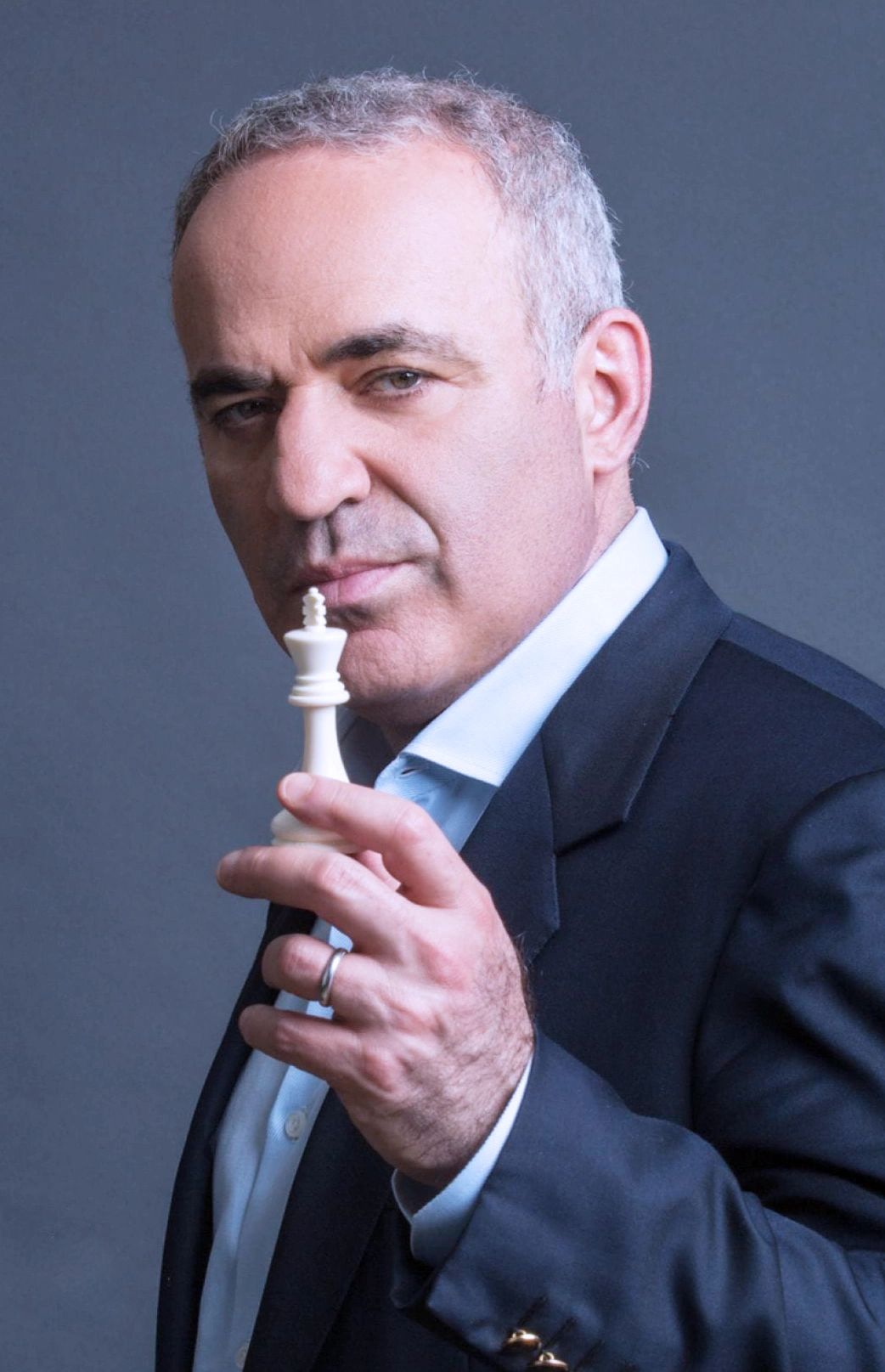
| 27 Quotes | |
| Born as | Garry Kimovich Kasparov |
| Occup. | Celebrity |
| From | Russia |
| Born | April 13, 1963 Baku, Azerbaijan SSR, Soviet Union |
| Age | 62 years |
| Cite | |
Citation Formats
APA Style (7th ed.)
Garry kasparov biography, facts and quotes. (2026, February 17). FixQuotes. https://fixquotes.com/authors/garry-kasparov/
Chicago Style
"Garry Kasparov biography, facts and quotes." FixQuotes. February 17, 2026. https://fixquotes.com/authors/garry-kasparov/.
MLA Style (9th ed.)
"Garry Kasparov biography, facts and quotes." FixQuotes, 17 Feb. 2026, https://fixquotes.com/authors/garry-kasparov/. Accessed 28 Mar. 2026.
Early Life and Background
Garry Kimovich Kasparov was born on 1963-04-13 in Baku, Azerbaijan SSR, then part of the Soviet Union, to a mixed Armenian-Jewish family. His father, Kim Weinstein, died when Garry was a child, leaving his mother, Klara Shagenovna Kasparova, as the central force in his upbringing. In the tightly managed Soviet world of official youth programs and state patronage, chess was both a mass pastime and a prestige instrument, and the young Kasparov entered it not as an eccentric prodigy on the margins but as talent the system could cultivate and display.
The boy who would later personify defiance learned early how quickly security can vanish and how much depends on will, preparation, and allies. Even his name carried the undertow of politics and identity: he later took his mothers surname, becoming Kasparov, a public-facing choice that also made him more legible within Soviet life. From the start he absorbed the paradox of his era - an authoritarian state that feared improvisation yet rewarded genius, and a society that taught discipline while quietly breeding dissent.
Education and Formative Influences
Kasparovs real schooling was chess education. He trained at Mikhail Botsvinniks famed school for elite juniors, where systematic analysis, opening preparation, and a scientific attitude to positions became second nature. He also came under the guidance of Alexander Nikitin and absorbed the Soviet tradition that treated chess as applied psychology: pressure, initiative, and calculation as tools for breaking not only positions but opponents. Those formative years coincided with late-Soviet stagnation, when the myth of inevitable progress had dulled, sharpening his instinct to seek advantage rather than wait for permission.
Career, Major Works, and Turning Points
Kasparov exploded onto the world stage as a teenager, winning the USSR Championship in 1981-82 and qualifying for the World Championship cycle. In 1985, after an unprecedented, politically charged series of matches with Anatoly Karpov (including the 1984 match controversially aborted), he became the youngest World Chess Champion at 22. He dominated the late 1980s and 1990s with a style that fused opening innovation with relentless initiative, defending his crown in rematches against Karpov and later facing the symbolic confrontation of man vs machine: the 1996-97 matches against IBMs Deep Blue, culminating in his 1997 defeat that marked a cultural turning point for perceptions of intelligence. In 1993 he split from FIDE to form the Professional Chess Association, a break that cost him the universal title but underscored his resistance to bureaucracy. After losing his classical crown to Vladimir Kramnik in 2000, he remained a top contender until retiring from professional chess in 2005, pivoting toward writing, commentary, and overt political opposition to Vladimir Putin.
Philosophy, Style, and Themes
Kasparovs chess was never merely technical. He treated the board as a laboratory for risk, courage, and the moral drama of decision-making. His best games read like arguments: seize space, expand options, force the adversary into time trouble and existential choice. That psychology carried into his political life, where the same hunger for initiative made him impatient with gradualism. “If you make a decision to fight for the future of your own country, you have to consider all the consequences”. The line is less a slogan than a self-portrait - a man who believes action is ethically binding, and that responsibility begins when you stop pretending you can control outcomes.
His themes hardened in exile-era commentary into a theory of public pressure and civic courage. “The real political life in Russia unfortunately is not in the parliament but on the streets and in the media”. It echoes the chess lesson that real advantage is created where the struggle is sharpest, not where the rules pretend it is orderly. Yet his record also includes the flaws of a combative worldview: his remark, “Women, by their nature, are not exceptional chess players: they are not great fighters”. , exposes how a culture of relentless competition can curdle into essentialism. In biographical terms, it reveals a man who universalized his own temperament - fight, pressure, dominance - and sometimes mistook that personal creed for a law of nature.
Legacy and Influence
Kasparov endures as one of historys strongest chess players and as a symbol of modernity in conflict: the last great champion of Soviet schooling who became a critic of the post-Soviet state, the grandmaster who tested human intuition against machines and then tested personal fame against political consequence. His books - including the multi-volume "My Great Predecessors" and later political works such as "Winter Is Coming" - helped shape how new generations study chess and interpret Russias authoritarian turn. In both arenas his imprint is the same: preparation married to audacity, an insistence that the decisive moment belongs to whoever accepts the burden of initiative first.
Our collection contains 27 quotes written by Garry, under the main topics: Motivational - Justice - Never Give Up - Sarcastic - Freedom.
Other people related to Garry: Mikhail Botvinnik (Celebrity)
Source / external links