
Garry Winogrand Biography Quotes 2 Report mistakes
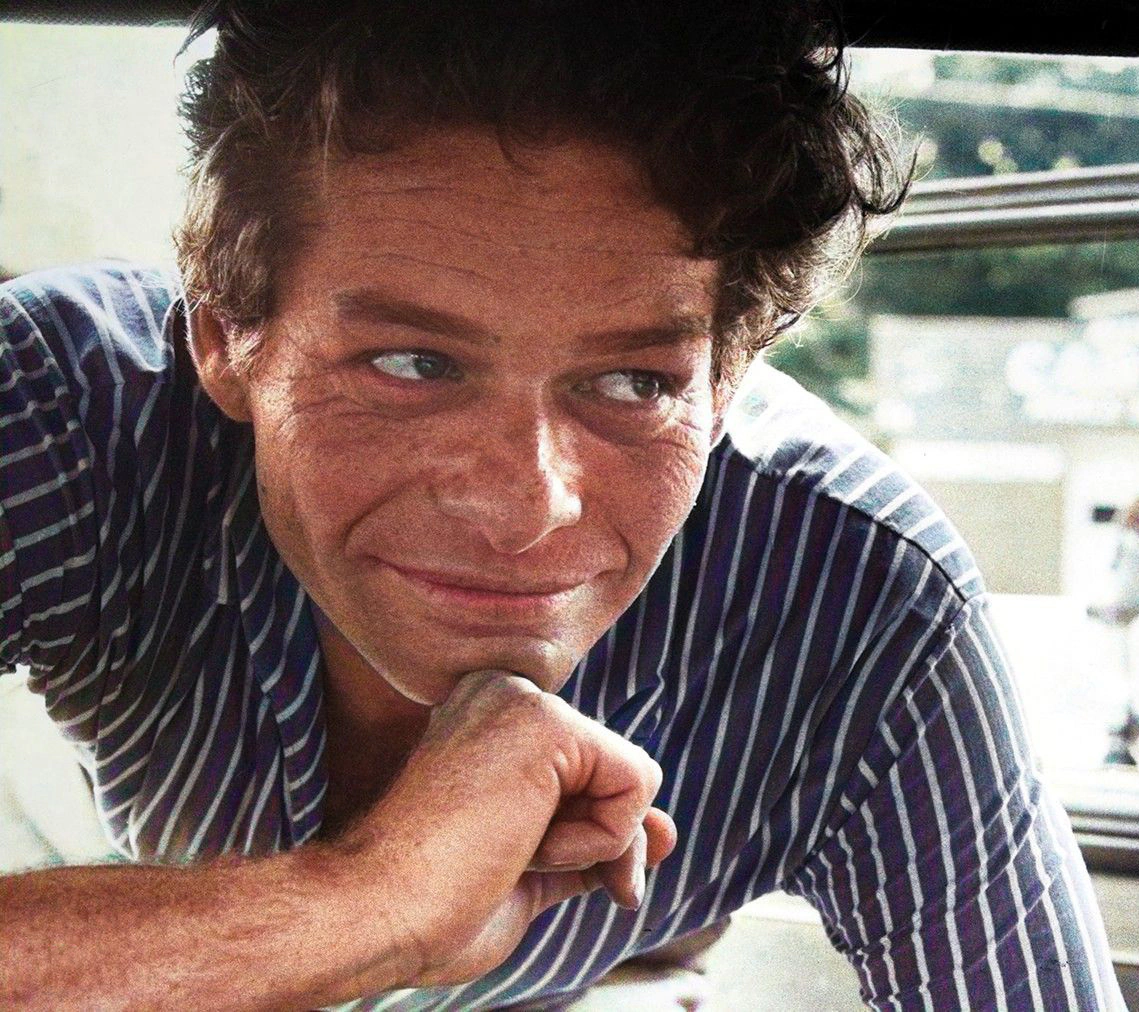
| 2 Quotes | |
| Occup. | Photographer |
| From | USA |
| Born | January 14, 1928 New York, USA |
| Died | March 19, 1984 Tijuana, Mexico |
| Aged | 56 years |
| Cite | |
Citation Formats
APA Style (7th ed.)
Garry winogrand biography, facts and quotes. (2026, February 11). FixQuotes. https://fixquotes.com/authors/garry-winogrand/
Chicago Style
"Garry Winogrand biography, facts and quotes." FixQuotes. February 11, 2026. https://fixquotes.com/authors/garry-winogrand/.
MLA Style (9th ed.)
"Garry Winogrand biography, facts and quotes." FixQuotes, 11 Feb. 2026, https://fixquotes.com/authors/garry-winogrand/. Accessed 6 Mar. 2026.
Early Life and Background
Garry Winogrand was born on January 14, 1928, in the Bronx, New York City, to Jewish immigrant parents working in the dense, aspirational world of interwar urban America. The boroughs in his childhood were a live tutorial in public behavior - crowded sidewalks, stoops, parades, storefronts, and subway platforms where strangers negotiated space and status in seconds. That early immersion in street life mattered: he did not later "discover" the city as subject so much as return to the social theater he had always watched.His adolescence and early adulthood were shaped by the Great Depression's aftershocks and the wartime mobilization that reorganized American life. He served in the U.S. Air Force in the late 1940s, a period when mass media, consumer advertising, and postwar confidence were remaking how Americans performed happiness and belonging. The tension between private unease and public display - the grin held a beat too long, the gesture that misfires - became a key emotional register in his mature work.
Education and Formative Influences
After military service he used the GI Bill to study painting at City College of New York, then shifted to photography at Columbia University, where Alexey Brodovitch's influence helped push him toward speed, risk, and editing as a form of thinking. In the 1950s he worked in commercial and photojournalistic contexts while absorbing the example of Walker Evans, Robert Frank, and the emerging "New Documents" sensibility that treated everyday life as historically consequential. By the early 1960s he had committed to the 35mm Leica as both tool and ethic: the small camera's mobility matched his belief that meaning was produced in the instant, not staged in advance.Career, Major Works, and Turning Points
Winogrand became one of the central figures of American street photography from the early 1960s through the early 1980s, photographing New York's sidewalks, parks, airports, political rallies, and leisure spaces with a brash, angular energy. His work entered major institutions and conversations through exhibitions such as the Museum of Modern Art's "New Documents" (1967) alongside Diane Arbus and Lee Friedlander, and through books including The Animals (1969), Women Are Beautiful (1975), and Public Relations (1977). Grants (including Guggenheim fellowships) enabled him to range beyond New York into Los Angeles, Texas, and the broader Sun Belt as postwar America tilted toward cars, television, and a new kind of social distance. In his final years he produced at an astonishing rate, leaving a vast backlog of undeveloped rolls and unedited contact sheets at his death on March 19, 1984, in Tijuana, Mexico - a coda that reinforced the sense that his project was less about finished statements than relentless seeing.Philosophy, Style, and Themes
Winogrand's psychology as an artist was inseparable from his method: he photographed not to confirm what he already knew, but to test reality under the pressure of framing. “Photography is about finding out what can happen in the frame. When you put four edges around some facts, you change those facts”. The line is both practical and existential. It admits that the camera does not merely record - it alters, intensifies, and makes social situations tip into new meanings. His famously tilted horizons and abrupt cropping were not carelessness but a visual equivalent of urban perception: partial, fast, and ethically honest about uncertainty.That uncertainty carried a deeper hunger. “There is nothing as mysterious as a fact clearly described. I photograph to see what something will look like photographed”. He treated the photograph as a revelation of how the world behaves when frozen, how expressions congeal into masks, how bodies line up into accidental choreography, how power leaks through posture and proximity. The recurring themes - public performance, gendered display, animal and human kinship, civic rituals, celebrity and spectatorship - emerge from his insistence that modern life is an arena of cues and misreadings. Comedy in his pictures often has an aftertaste of dread: the grin and the glare coexist, and the photographer is implicated as participant, not judge.
Legacy and Influence
Winogrand's influence runs through late-20th-century documentary and street practice: a permission to be messy, fast, and alive to contradiction, and a standard for how a photograph can be both sociological and formally electric. The posthumous sorting of his enormous archive sharpened debates about authorship, editing, and the meaning of an unfinished oeuvre, but it also expanded the sense of his ambition - to map American behavior as it drifted from postwar optimism into the anxious spectacle of the 1970s and early 1980s. For later photographers, he remains a model of the camera as instrument of inquiry rather than confirmation, and of the street not as backdrop but as the place where a culture tells the truth about itself in public.Our collection contains 2 quotes written by Garry, under the main topics: Art.
Garry Winogrand Famous Works
- 1999 The Man in the Crowd: The Uneasy Streets of Garry Winogrand (Photobook)
- 1980 Stock Photographs: The Fort Worth Fat Stock Show and Rodeo (Photobook)
- 1977 Public Relations (Photobook)
- 1975 Women Are Beautiful (Photobook)
- 1969 The Animals (Photobook)
Source / external links