
Gary Webb Biography Quotes 2 Report mistakes
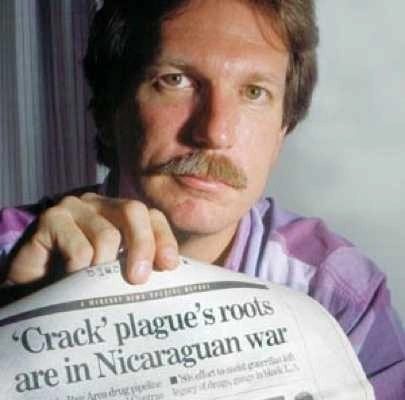
| 2 Quotes | |
| Occup. | Journalist |
| From | USA |
| Born | August 31, 1955 Corona, California |
| Died | December 10, 2004 Carmichael, California |
| Aged | 49 years |
| Cite | |
Citation Formats
APA Style (7th ed.)
Gary webb biography, facts and quotes. (2026, February 19). FixQuotes. https://fixquotes.com/authors/gary-webb/
Chicago Style
"Gary Webb biography, facts and quotes." FixQuotes. February 19, 2026. https://fixquotes.com/authors/gary-webb/.
MLA Style (9th ed.)
"Gary Webb biography, facts and quotes." FixQuotes, 19 Feb. 2026, https://fixquotes.com/authors/gary-webb/. Accessed 28 Mar. 2026.
Early Life and Background
Gary Webb was born on August 31, 1955, in Corona, California, and came of age in the long afterglow of Watergate, when skepticism toward official narratives was becoming a civic reflex. Southern California in the 1960s and 1970s was both suburban and militarized, a landscape shaped by aerospace wealth, policing, and the shadow of foreign wars. Webb grew up watching the public square fill with televised hearings and government denials, learning early that power was often exercised through paperwork, press briefings, and carefully managed silence.He was not a celebrity journalist in the early years but a working reporter with a blue-collar sense of craft: deadlines, documents, and the stubborn habit of asking one more question. Friends and colleagues later described a man who could be intense and single-minded, capable of warmth but also prone to carrying battles home with him. That temperament - earnest, impatient with evasions, and hungry for provable fact - would become both his engine and his vulnerability when his reporting collided with institutional self-protection.
Education and Formative Influences
Webb attended Northern Kentucky University, where he studied journalism and wrote for campus publications before entering newspapers at a moment when American local reporting still had resources for deep public-record work. The era rewarded reporters who could read budgets and court files as fluently as they could conduct interviews, and Webb absorbed the older, document-driven tradition of investigative reporting. He was also shaped by post-Vietnam disillusionment and the emerging Iran-Contra story, a national lesson in how covert policy, plausible deniability, and selective leaks could distort public understanding.Career, Major Works, and Turning Points
Webb built his career in regional newspapers, including the Kentucky Post and later California papers, and won shared recognition for investigative work in the early 1990s before joining the San Jose Mercury News. His defining work arrived in 1996 with the three-part series "Dark Alliance", which argued that Nicaraguan Contra-linked drug traffickers helped fuel crack distribution in Los Angeles and that U.S. agencies tolerated or failed to stop networks tied to a favored anti-communist cause. The series, amplified by the Mercury News early on the web, detonated into national controversy. Major papers and broadcast outlets attacked Webb's framing and sourcing; internal newsroom support eroded; and official reports from the CIA inspector general and others both criticized aspects of the presentation and acknowledged broader realities of Contra drug connections and investigative failures. Webb expanded his work in the 1998 book Dark Alliance, but the professional consequences were severe: isolation from mainstream platforms, financial stress, and a drawn-out fight over whether his central moral claim - that secrecy in foreign policy can poison domestic life - would be allowed to stand.Philosophy, Style, and Themes
Webb wrote with a prosecutor's rhythm: names, dates, trails of money, and the insistence that public harm deserves a public accounting. Beneath the mechanics was a psychology of guarded trust. He believed institutions reflexively protect themselves, and he regarded official denials as starting points, not conclusions. That suspicion hardened into worldview as he watched the backlash to his reporting, giving his later speeches and writing an edge of wounded clarity: “You can't believe the government - on anything. And you especially can't believe them when they're talking about important stuff”. For Webb, this was not cynicism for its own sake; it was a survival rule learned from watching how easily uncomfortable facts are managed.His central theme was moral causality across borders: covert operations abroad returning as social wreckage at home. He argued that the crack epidemic could not be explained only by street-level choices or local policing failures if powerful actors had enabled the supply lines. The psychological core of his work is a refusal to let bureaucratic distance dissolve responsibility, a stance captured in his own retrospective judgment: “After spending three years of my life looking into this, I am more convinced than ever that the U.S. government's responsibility for the drug problems in South Central Los Angeles and other inner cities is greater than I ever wrote in the newspaper”. That sentence reads like both conclusion and confession - a reporter admitting that even a major series can understate what the evidence implies, and that the burden of knowing can outgrow the protections of a newsroom.
Legacy and Influence
Webb died on December 10, 2004, in Sacramento, California, in a death ruled suicide, after years of professional marginalization and personal strain. His legacy is contested but durable: he became a symbol of the risks investigative reporters face when their work threatens powerful narratives, and "Dark Alliance" became a case study in how media ecosystems police the boundaries of acceptable inference. Later reassessments, including the CIA inspector general findings and renewed scholarship on the Contra war and narcotics trafficking, did not vindicate every detail of Webb's presentation, but they strengthened the argument that the larger story was real, complex, and institutionally inconvenient. In journalism and popular culture, Webb endures as a cautionary figure and a spur to harder questions about accountability, the costs of dissent, and the fragile line between exposing scandal and being consumed by it.Our collection contains 2 quotes written by Gary, under the main topics: Truth - Justice.
Gary Webb Famous Works
- 1998 Dark Alliance (Book)
Source / external links