
Gay Talese Biography Quotes 14 Report mistakes
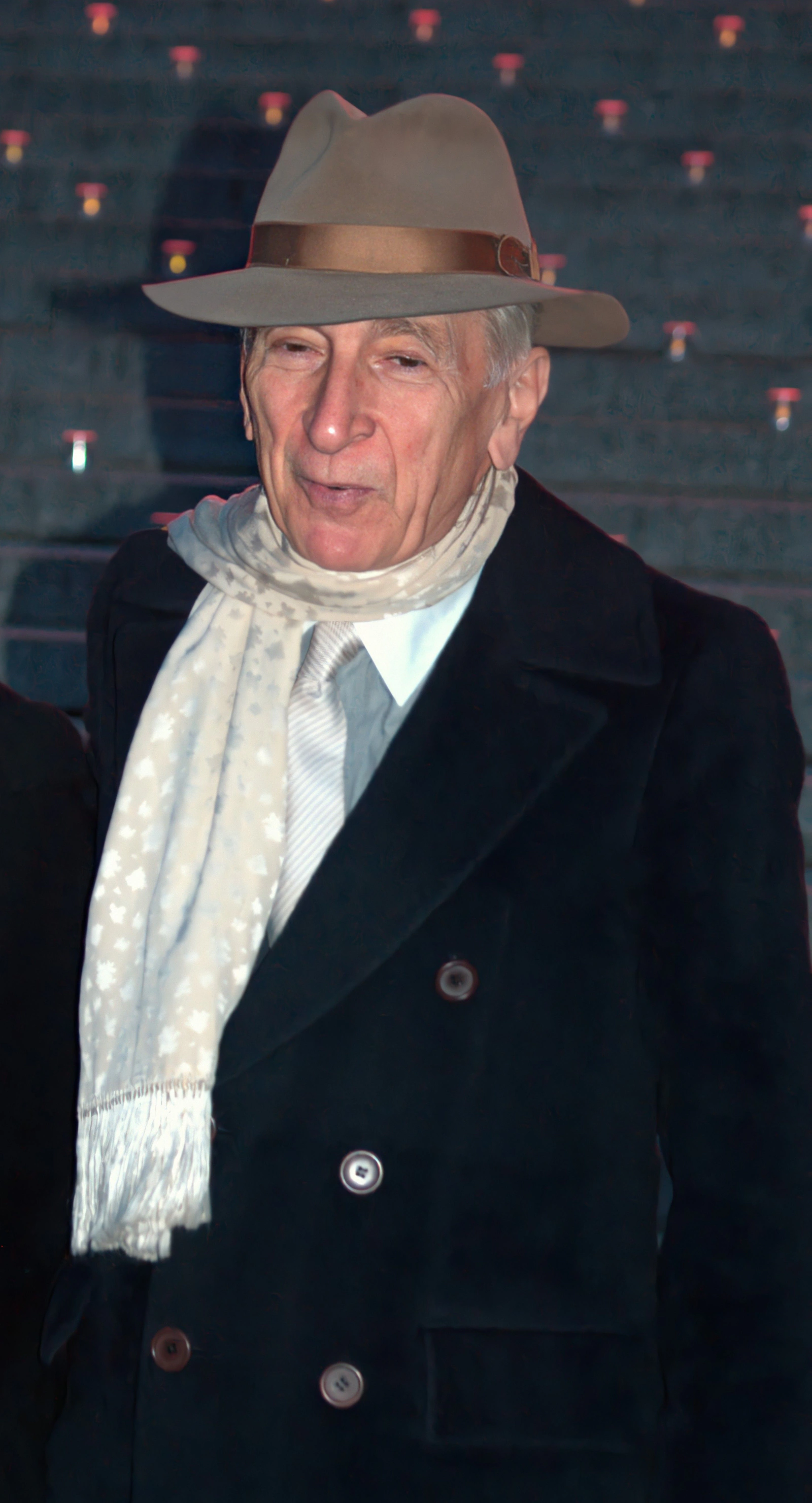
Attr: By David Shankbone
| 14 Quotes | |
| Born as | Gaetano Talese |
| Occup. | Journalist |
| From | USA |
| Spouse | Nan Ahearn (1959) |
| Born | February 7, 1932 Ocean City, New Jersey, United States |
| Age | 94 years |
| Cite | |
Citation Formats
APA Style (7th ed.)
Gay talese biography, facts and quotes. (2026, February 11). FixQuotes. https://fixquotes.com/authors/gay-talese/
Chicago Style
"Gay Talese biography, facts and quotes." FixQuotes. February 11, 2026. https://fixquotes.com/authors/gay-talese/.
MLA Style (9th ed.)
"Gay Talese biography, facts and quotes." FixQuotes, 11 Feb. 2026, https://fixquotes.com/authors/gay-talese/. Accessed 26 Mar. 2026.
Early Life and Background
Gay Talese was born Gaetano Talese on February 7, 1932, in Ocean City, New Jersey, the child of Italian immigrants who brought Old World craft pride into a small American resort town. His father, a tailor, worked with the patience of measurement and revision; his mother ran a dress shop and moved easily among customers, gossip, and local hierarchies. Between the fitting room and the boardwalk, Talese absorbed a double education: how people present themselves, and what they conceal.The Depression and wartime years sharpened that sensitivity. Ocean City was orderly and Protestant, but Talese grew up with the outsider's alertness, watching how status circulated through clothes, jobs, and reputation. The young Talese learned to read rooms - diners, barbershops, lobbies - and to treat ordinary talk as a kind of social document. Long before he wrote about famous men, he was studying the micro-drama of aspiration, shame, and performance that would later define his New York reporting.
Education and Formative Influences
He attended the University of Alabama in the early 1950s, writing for the student paper and learning the discipline of deadline reporting in a region still organized by Jim Crow and postwar boosterism. The campus newsroom introduced him to the ambitions and limits of institutional journalism, while his wider reading nudged him toward the idea that reported fact could be shaped with the scene, pacing, and character logic of fiction. By the time he left Alabama, he was already oriented toward a career that would depend on observation, patience, and a relentless ear for what people say when they think no one important is listening.Career, Major Works, and Turning Points
Talese moved into the competitive ecosystem of New York newspapers and magazines, landing at The New York Times in the mid-1950s and climbing from copy work to reporting, where he became known for pieces that found narrative voltage in overlooked lives and secondary characters. His 1966 Esquire profile "Frank Sinatra Has a Cold" became a landmark of New Journalism precisely because it refused access and turned that refusal into structure - describing a star by mapping the anxious orbit of entourage, hangers-on, and power brokers. He followed with book-length social histories and reportorial novels-in-effect, including The Kingdom and the Power (1969) on The Times, Honor Thy Father (1971) on the Bonanno crime family, and later Thy Neighbor's Wife (1981), an immersion into American sexual mores that drew both acclaim and unease. Decades on, his willingness to spend years inside a subject remained a hallmark, as did the controversies of late career, when questions about verification around The Voyeur's Motel (2016) forced readers to confront the ethical edge of intimate access.Philosophy, Style, and Themes
Talese's deepest subject is not celebrity but the machinery around it: the assistants, rivals, spouses, fixers, and institutions that translate desire into public fact. He builds stories the way his father built suits - by cutting close, fitting repeatedly, and hiding the seams - and he has said, “With all of the qualities of the scene-setting, the dialogue, the place and time and the time and place in which your characters move. And I want to move with the characters, move with them and describe the world in which they are living”. That commitment explains his signature method: long reporting, an architectural attention to setting, and a refusal to summarize what can be dramatized through observed behavior.Psychologically, Talese is drawn to people who are both dominant and trapped - by image, appetite, class, or the institutions they built. His scenes often reveal how a social space organizes motives, as in his fascination with restaurants, hotels, newsrooms, and clubs where bargaining and seduction blur: “People go to restaurants for so many different reasons. To court a girl, to make some deal. Maybe to talk to some lawyer about how to get an alimony settlement better than they got last week”. Even when writing about sexual revolution and its entrepreneurs, his tone is less prurient than diagnostic, alert to possession and power - “Even after they had stopped modeling for Playboy and had settled down with other men to raise families of their own, Hugh Hefner still considered them his women, and in the bound volumes of his magazine he would always possess them”. Underneath the elegance is a persistent moral question: who owns a story, a body, a legacy - and what does the act of looking cost the looked-at and the looker?
Legacy and Influence
Talese helped define narrative nonfiction as a serious American art, demonstrating that reported work could carry the suspense of a short story without surrendering to invention. "Frank Sinatra Has a Cold" remains a template for writing around closed doors, while Honor Thy Father and The Kingdom and the Power set standards for institutional and underworld reporting that combines intimacy with panoramic context. His influence runs through generations of magazine writers and book journalists who borrow his scene construction, his attention to subordinate characters, and his patience with time, even as later debates about sourcing and consent have made his career a case study in the hazards of proximity. In the end, Talese endures not as a stylist alone but as a diagnostician of mid-to-late 20th-century America, chronicling how status, sex, and power travel through rooms - and how a reporter can make those rooms speak.Our collection contains 14 quotes written by Gay, under the main topics: Wisdom - Writing - Life - Sports - Human Rights.
Other people related to Gay: Pete Hamill (Journalist)
Frequently Asked Questions
- Gay Talese articles: Frank Sinatra Has a Cold; The Silent Season of a Hero; Joe Louis: The King as a Middle-Aged Man; The Voyeur's Motel.
- Gay Talese research method: Immersive, shoe-leather reporting with meticulous handwritten notes and outlines; deep background interviews; scene-by-scene narrative.
- How to pronounce Gay Talese: GAY tuh-LEEZ.
- Gay Talese books: The Kingdom and the Power; The Bridge; Honor Thy Father; Thy Neighbor's Wife; Unto the Sons; A Writer's Life; The Voyeur's Motel.
- Nan Talese: His wife, a renowned book editor and publisher who led the Nan A. Talese imprint at Doubleday.
- What is Gay Talese net worth? Estimated around $5 million.
- How old is Gay Talese? He is 94 years old
Gay Talese Famous Works
- 2022 High Notes: Selected Writings of Gay Talese (Collection)
- 2016 The Voyeur's Motel (Book)
- 2006 A Writer's Life (Book)
- 2003 The Gay Talese Reader: Portraits and Encounters (Collection)
- 1992 Unto the Sons (Book)
- 1980 Thy Neighbor's Wife (Book)
- 1971 Honor Thy Father (Book)
- 1970 Fame and Obscurity (Collection)
- 1969 The Kingdom and the Power (Book)
- 1966 The Silent Season of a Hero (Essay)
- 1966 Frank Sinatra Has a Cold (Essay)
- 1964 The Loser (Essay)
- 1964 The Bridge: The Building of the Verrazano-Narrows Bridge (Book)
Source / external links