
Georg Buchner Biography Quotes 31 Report mistakes
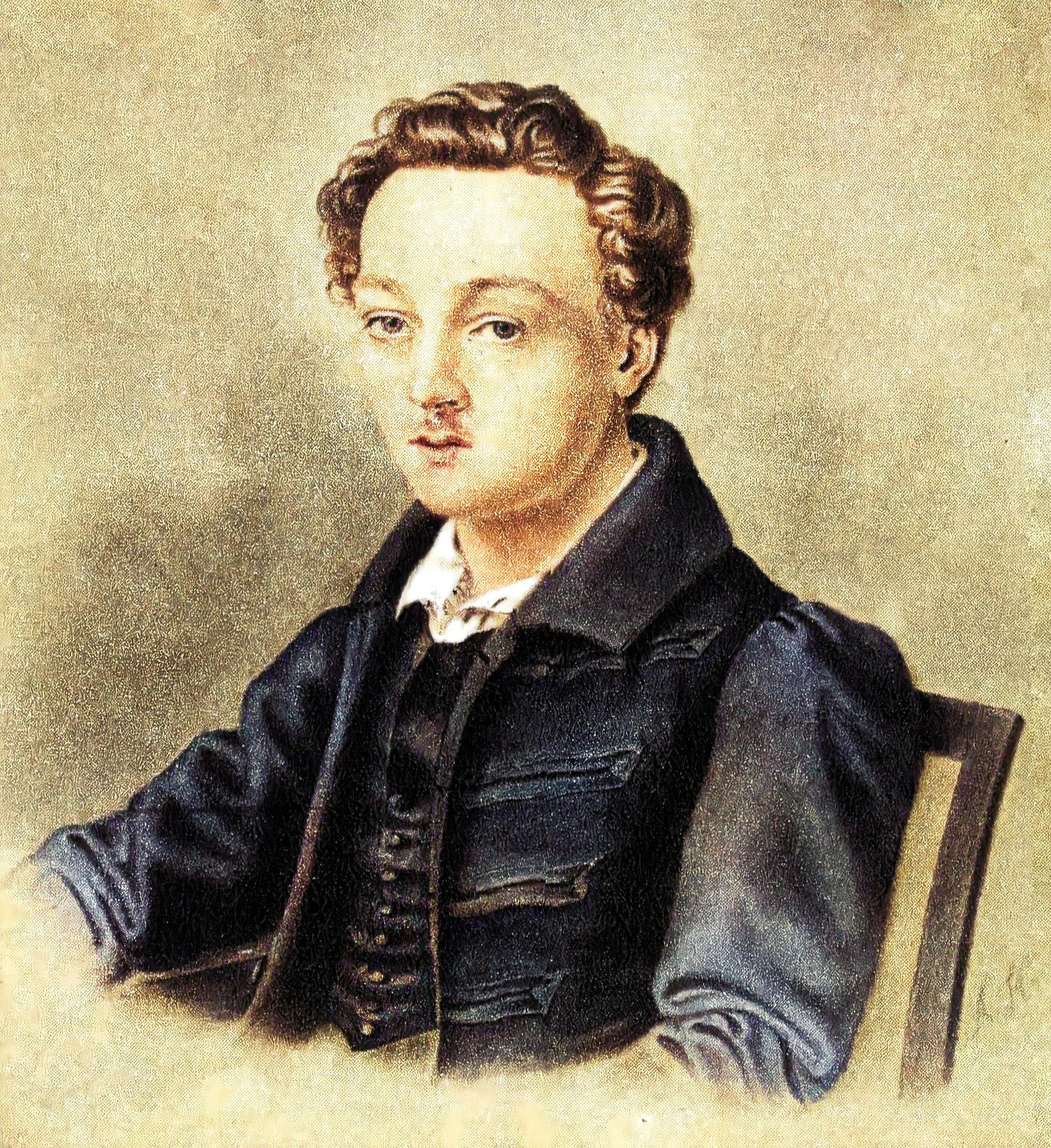
| 31 Quotes | |
| Born as | Karl Georg Büchner |
| Occup. | Dramatist |
| From | Germany |
| Born | October 17, 1813 Godesberg, Germany |
| Died | February 19, 1837 Zürich, Switzerland |
| Cause | Tuberculosis |
| Aged | 23 years |
| Cite | |
Citation Formats
APA Style (7th ed.)
Georg buchner biography, facts and quotes. (2026, February 11). FixQuotes. https://fixquotes.com/authors/georg-buchner/
Chicago Style
"Georg Buchner biography, facts and quotes." FixQuotes. February 11, 2026. https://fixquotes.com/authors/georg-buchner/.
MLA Style (9th ed.)
"Georg Buchner biography, facts and quotes." FixQuotes, 11 Feb. 2026, https://fixquotes.com/authors/georg-buchner/. Accessed 12 Feb. 2026.
Early Life and Background
Karl Georg Buchner was born on October 17, 1813, in Goddelau near Darmstadt, in the Grand Duchy of Hesse, at a moment when the Napoleonic order was collapsing and the German states were being rebuilt under Restoration conservatism. His father, Ernst Karl Buchner, was a physician and later medical officer; the household was educated, orderly, and oriented toward science and civic duty. That bourgeois stability, however, sat beside the new century's political repression: after the failed liberal-national hopes of 1813-1815, censorship and police surveillance hardened across the German Confederation.Within this environment, Buchner developed early in two directions that would never reconcile into comfort: an empiricist eye trained on bodies and facts, and a fierce sympathy for the socially crushed. The tension between family respectability and his attraction to the suffering poor became a private engine for his art. Even before he was publicly dangerous, he was inwardly impatient - a temperament that did not accept slow reform as a moral option when hunger and disease were immediate.
Education and Formative Influences
He attended the Gymnasium in Darmstadt and, in 1831, began medical studies at the University of Strasbourg, where he also became engaged to Wilhelmine "Minna" Jaegle and absorbed French political memory at close range. Strasbourg offered comparative freedom and a living archive of revolution; returning to Giessen in 1833 exposed him again to German reaction, and he turned clandestine. Alongside anatomy and natural science, he read Shakespeare and the radicals of the era, and he learned how quickly ideals become police files.Career, Major Works, and Turning Points
Buchner's decisive turning point came in 1834, when he helped organize the Gesellschaft der Menschenrechte and co-authored and distributed the incendiary pamphlet Der Hessische Landbote with the refrain "Friede den Hutten! Krieg den Palasten!" - later echoed in English as "Peace to the shacks! War on the palaces!" His network was infiltrated; warrants followed; friends were arrested and tortured, and Buchner fled to Strasbourg in 1835. In exile he wrote at volcanic speed: the revolutionary tragedy Dantons Tod (1835), the corrosive comedy Leonce und Lena (1836), and the fragmentary, epoch-making Woyzeck (1836-1837). Simultaneously he pursued science, translating and lecturing, and in 1836 he secured a post at the University of Zurich. There he fell ill with typhus and died on February 19, 1837, at just 23, leaving a small oeuvre whose incompleteness became part of its myth and its modernity.Philosophy, Style, and Themes
Buchner wrote as a dramatist who had looked closely at both autopsy tables and interrogation rooms. His characters rarely stand on the platform of heroic autonomy; they are pressured by hunger, status, sexual jealousy, and the blunt physics of power. That psychology is explicit in his fatalistic line, "We are only puppets, our strings are being pulled by unknown forces". In Dantons Tod, the Revolution becomes not a clean moral ascent but a machine that converts virtue into suspicion; political action is shown as a pressure-cooker where compassion and cruelty trade masks.His political imagination was equally unsentimental about half-measures and purity. The maxim "Whoever finishes a revolution only halfway, digs his own grave". reads, in Buchner's world, less as propaganda than as diagnosis: hesitation is not neutrality but a choice that allows violence to consolidate elsewhere. Yet he also distrusted revolutionary self-deception, capturing the cycle of purges and betrayal in "Revolution is like Saturn, it devours its own children". Formally, he matched this bleak insight with startling modern technique: rapid scene shifts, documentary textures, grotesque humor, and a compassion that extends even to the morally compromised. In Woyzeck, his attention to the poor is not pastoral but clinical and tender - the body as evidence, the mind as a battleground, and society as the invisible accomplice.
Legacy and Influence
Because Buchner died before he could become a public institution, his influence arrived belatedly but forcefully: as his plays were discovered and staged later in the 19th century, they seemed to anticipate naturalism, expressionism, and the political theater of the 20th. Woyzeck in particular became a foundational text for modern drama and opera (notably Alban Berg's Wozzeck), offering a model of fragmentary structure and social indictment that later playwrights from Gerhart Hauptmann to Bertolt Brecht could not ignore. His enduring power lies in the fusion of revolutionary conscience with scientific lucidity - a literature that refuses consolation, yet insists that the inner life is inseparable from history's violence and the poor's unfinished claims.Our collection contains 31 quotes written by Georg, under the main topics: Ethics & Morality - Puns & Wordplay - Justice - Love - Mortality.
Source / external links