
George Alec Effinger Biography Quotes 1 Report mistakes
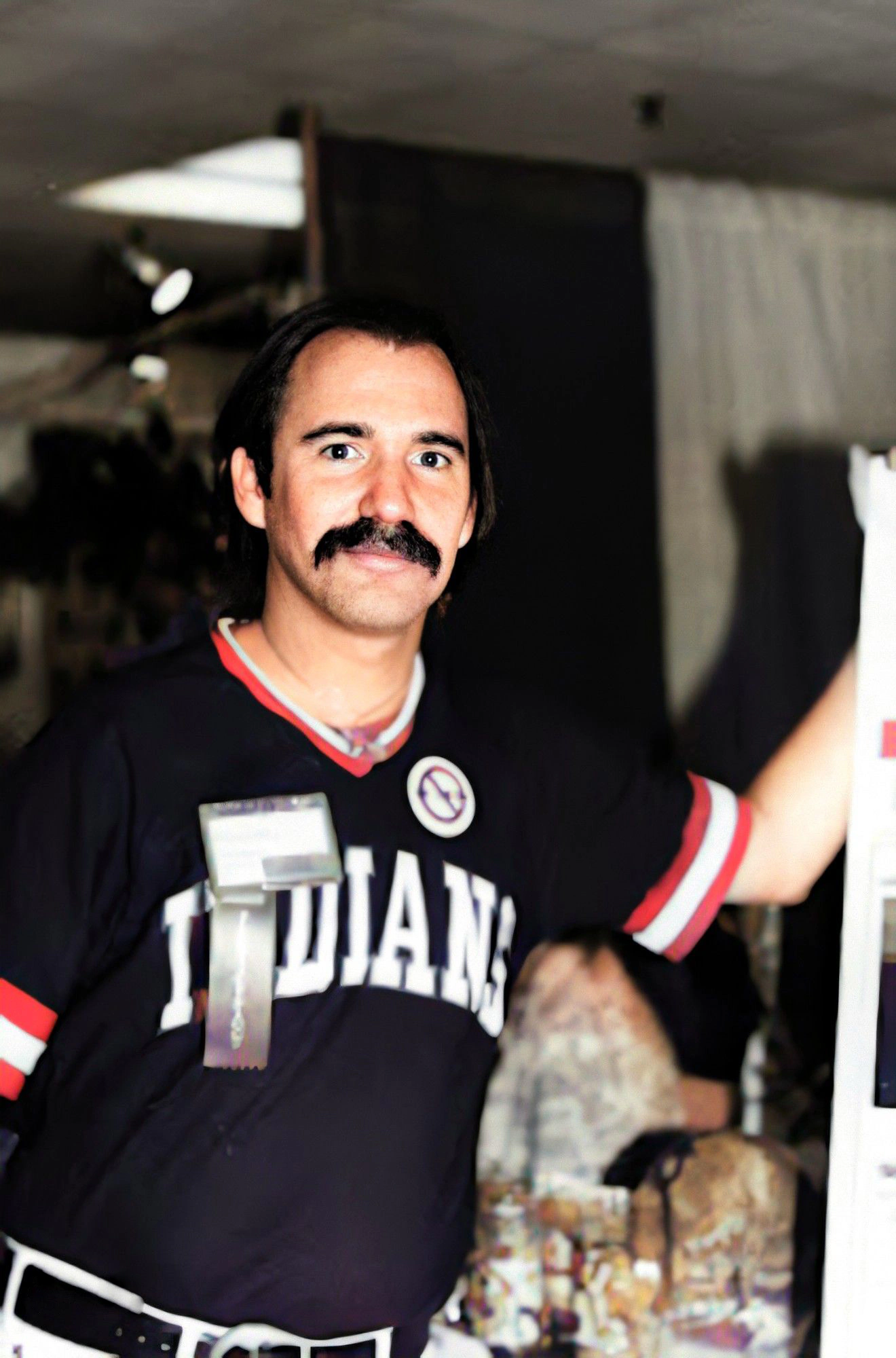
| 1 Quotes | |
| Known as | O. Niemand, Susan Doenim |
| Occup. | Author |
| From | USA |
| Born | January 10, 1947 Cleveland, Ohio |
| Died | April 27, 2002 New Orleans, Louisiana |
| Cause | Cancer |
| Aged | 55 years |
| Cite | |
Citation Formats
APA Style (7th ed.)
George alec effinger biography, facts and quotes. (2026, March 27). FixQuotes. https://fixquotes.com/authors/george-alec-effinger/
Chicago Style
"George Alec Effinger biography, facts and quotes." FixQuotes. March 27, 2026. https://fixquotes.com/authors/george-alec-effinger/.
MLA Style (9th ed.)
"George Alec Effinger biography, facts and quotes." FixQuotes, 27 Mar. 2026, https://fixquotes.com/authors/george-alec-effinger/. Accessed 2 Apr. 2026.
Early Life and Background
George Alec Effinger was born in Cleveland, Ohio, on January 10, 1947, and came of age in the industrial Midwest at a moment when American science fiction was widening beyond engineering optimism into satire, psychology, and cultural critique. He grew up in a period shaped by postwar prosperity, the Cold War, civil rights conflict, and the early counterculture, all of which left marks on his fiction. Even when he later became associated with cyberpunk and speculative noir, his imagination retained something distinctly Midwestern: skeptical, observant, and alert to the way ordinary people are pressed by systems larger than themselves. He was an American writer of science fiction, fantasy, and sharp literary pastiche, but he was never easily confined to one lane.
His family background is less documented than his work, yet the outline of his sensibility is clear from the beginning. Effinger was drawn to language, parody, and genre from an early age, and he developed a taste for both pop culture and high literary play that would define his career. He belonged to the generation after the so-called Golden Age of science fiction - a generation that inherited the field's gadgets and futures but wanted more ambiguity, more sexuality, more irony, and more urban grit. Illness and financial instability would later shadow much of his adult life, but even his darkest work reveals an energetic intelligence, a comic instinct, and a refusal to sentimentalize suffering.
Education and Formative Influences
Effinger attended what is now Case Western Reserve University in Cleveland, where he studied English and absorbed a range of literary models broader than those usually associated with commercial science fiction. His early influences included not only genre writers but also satirists, detectives, and formal stylists; one can feel in his fiction the pressure of Raymond Chandler, Alfred Bester, Fritz Leiber, and the New Wave's interest in altered consciousness and unstable identity. He began publishing in the late 1960s and early 1970s, entering a field transformed by Harlan Ellison, Samuel R. Delany, Ursula K. Le Guin, and Philip K. Dick. From them, and from the social turbulence of the era, he learned that speculative fiction could be comic and violent, intellectual and streetwise, culturally hybrid and morally unresolved.
Career, Major Works, and Turning Points
Effinger first gained notice through short fiction that mixed wit, metafiction, and emotional unease. His story "Schrodinger's Kitten" later became one of his best-known shorter works, emblematic of his ability to join quantum playfulness to genuine pathos. He also wrote the admired fantasy novel The Wolves of Memory and produced clever, often underappreciated exercises in parody and media tie-in work, including novels connected to the shared-world and franchise ecosystems that sustained many writers of his generation. His decisive breakthrough came with When Gravity Fails (1987), followed by A Fire in the Sun (1989) and The Exile Kiss (1991), the Marid Audran sequence set in a future Middle Eastern city inspired in part by New Orleans, North Africa, and the polyglot pressures of global modernity. These novels arrived as cyberpunk was crystallizing, yet Effinger's version of the mode differed from William Gibson's cool abstraction: it was warmer, dirtier, more anthropological, and more attentive to class, religion, pleasure, bodily modification, and the improvisations of survival. Chronic health problems, debt, and publishing frustrations repeatedly interrupted his momentum, and projected continuations of the Marid Audran saga remained unfinished, giving his career a poignantly broken arc.
Philosophy, Style, and Themes
Effinger's fiction is preoccupied with identity as performance under pressure. His characters wear personalities, swap behavioral modules, inhabit aliases, or discover that selfhood is contingent, rented, chemically nudged, or technologically revised. Yet he was never merely fascinated by gimmickry. The recurring question in his work is what remains human when memory, desire, and social role are all subject to editing. He wrote with a comic surface that often concealed loneliness, shame, and fear of erasure. His urban futures are crowded with hustlers, sex workers, petty criminals, believers, exiles, and addicts - people at the edges of official power - because he understood that the future would not be experienced first by elites but by the precarious. This gave his cyberpunk a moral density: beneath the wisecracks lies grief for damaged people learning to live inside systems they cannot control.
That psychology also explains the bite of his humor. “Premature burial works just fine as a cure for adolescence”. is funny because it is cruelly overfinal; like much of Effinger's wit, it compresses embarrassment, mortality, and contempt for easy maturation myths into a single deadpan thrust. He distrusted uplift and preferred transformation with a cost. His prose style often fused hard-boiled cadence with lush sensory clutter, making cities feel lived-in rather than diagrammed. Unlike futurists who treated culture as a backdrop, Effinger made it the engine of plot and consciousness: slang, ritual, appetite, taboo, and local codes shape destiny as much as hardware does. Across his work, one feels a writer drawn to masks because he knew how fragile the face beneath them could be.
Legacy and Influence
George Alec Effinger died on April 27, 2002, in New Orleans, a city whose mixture of decadence, improvisation, and survival suits the memory of his work. His reputation rests most firmly on When Gravity Fails and its sequels, which remain among the most distinctive novels adjacent to cyberpunk and among the genre's most persuasive attempts to imagine a future not centered on Anglo-American assumptions. He helped push science fiction toward multicultural urbanism, toward identities shaped by code-switching and bodily revision, and toward a noir understanding of technology as something embedded in appetite and inequality. Writers and critics continue to value him not only for innovation but for tonal range: he could be savage, tender, ridiculous, and prophetic in the span of a page. His body of work is smaller than admirers wish, but it endures because it speaks to a modern self that is always being rewritten and never entirely at home.
Our collection contains 1 quotes written by George, under the main topics: Dark Humor.
George Alec Effinger Famous Works
- 2003 Budayeen Nights (Short Stories)
- 1991 The Exile Kiss (Novel)
- 1989 A Fire in the Sun (Novel)
- 1987 When Gravity Fails (Novel)
Source / external links