
George Allen, Sr. Biography Quotes 17 Report mistakes
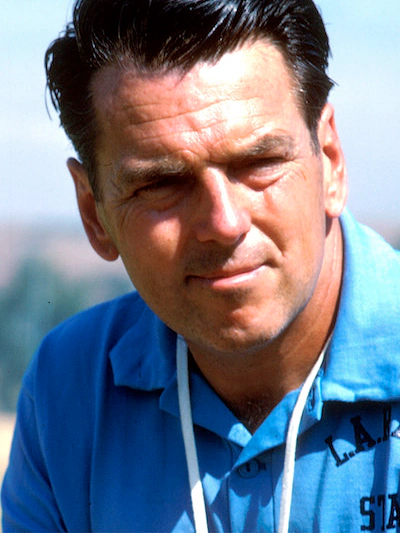
| 17 Quotes | |
| Born as | George Herbert Allen |
| Occup. | Coach |
| From | USA |
| Born | April 29, 1918 Detroit, Michigan, USA |
| Died | December 31, 1990 |
| Aged | 72 years |
| Cite | |
Citation Formats
APA Style (7th ed.)
George allen, sr. biography, facts and quotes. (2026, February 11). FixQuotes. https://fixquotes.com/authors/george-allen-sr/
Chicago Style
"George Allen, Sr. biography, facts and quotes." FixQuotes. February 11, 2026. https://fixquotes.com/authors/george-allen-sr/.
MLA Style (9th ed.)
"George Allen, Sr. biography, facts and quotes." FixQuotes, 11 Feb. 2026, https://fixquotes.com/authors/george-allen-sr/. Accessed 22 Mar. 2026.
Early Life and Background
George Herbert Allen was born on April 29, 1918, in the United States, in a generation shaped by the aftershock of World War I and the hard arithmetic of the Great Depression. Those national pressures mattered for a future coach: scarcity rewarded discipline, and public life increasingly celebrated organized sport as both outlet and training ground for civic character. Allen came of age when college football and basketball were turning into mass rituals, and when the language of competition - effort, loyalty, toughness - felt inseparable from ideas of citizenship.By temperament, Allen seemed to gravitate toward systems: preparation, repetition, and the belief that small advantages compound. In the years when the country mobilized for World War II and then reorganized itself for postwar prosperity, coaching grew into a managerial profession as much as a sideline vocation. Allen's later reputation would reflect that era's faith in planning - the conviction that outcomes could be engineered through habits, staffing, and relentless attention to detail.
Education and Formative Influences
Details of Allen's early schooling and athletic career are less securely documented in the popular record than those of many headline coaches, but his formation fits a recognizable mid-century pattern: sport as an apprenticeship in authority, and coaching as the extension of that apprenticeship into leadership. The period's most influential coaching cultures emphasized controlled aggression, psychological readiness, and the conversion of individual talent into coordinated execution - lessons that were reinforced across American institutions from the military to the factory floor.Career, Major Works, and Turning Points
Known primarily as a coach, Allen built his identity in the practical realm rather than through manifestos or memoirs: practice fields, film rooms, recruiting networks, and the constant calibration of morale. In an America that increasingly measured success by results and visibility, he represented the type of professional who treated winning as a craft - not a mood - and who understood that a team's ceiling was often set by its preparation. His career unfolded against the broader transformation of sports into big business, where coaching demanded not only tactical knowledge but also public composure, talent evaluation, and the stamina to endure seasons that never truly ended.Philosophy, Style, and Themes
Allen's coaching psychology centered on forward motion - a refusal to romanticize yesterday or to let setbacks become identity. “Forget the past - the future will give you plenty to worry about”. The line captures a mind trained to convert anxiety into usefulness: tomorrow's opponent, tomorrow's practice, tomorrow's adjustment. It is not optimism so much as triage - a belief that attention is finite and should be spent where it can still change the scoreboard.He also framed success as an ethical obligation, insisting that ability is only potential until disciplined into performance. “Success is what you do with your ability. It's how you use your talent”. That emphasis reveals a coach wary of glamour and allergic to excuses; talent, in his view, merely increases responsibility. His style pushed athletes toward a professional standard of effort, as if the season were a daily audition for adulthood. Under pressure, he returned to persistence as a virtue that outlasts circumstance: “One of the most difficult things everyone has to learn is that for your entire life you must keep fighting and adjusting if you hope to survive”. The psychological core is adaptability - the idea that grit without adjustment becomes stubbornness, but adjustment without grit becomes surrender.
Legacy and Influence
Allen's enduring influence rests less on a single famous innovation than on a durable coaching template: prepare harder than your opponent, treat improvement as continuous, and define character as the ability to respond to adversity with work. In a century when American sport increasingly mirrored American life - competitive, media-saturated, and unforgiving - he embodied the coach as a builder of habits and a manager of pressure. His legacy persists in the everyday language of locker rooms and offices alike, where success is still measured not by promise but by the stubborn, repeatable act of getting better.Our collection contains 17 quotes written by George, under the main topics: Witty One-Liners - Motivational - Never Give Up - Sports - Work Ethic.
Other people related to George: George Allen (Politician)