
George Berkeley Biography Quotes 15 Report mistakes
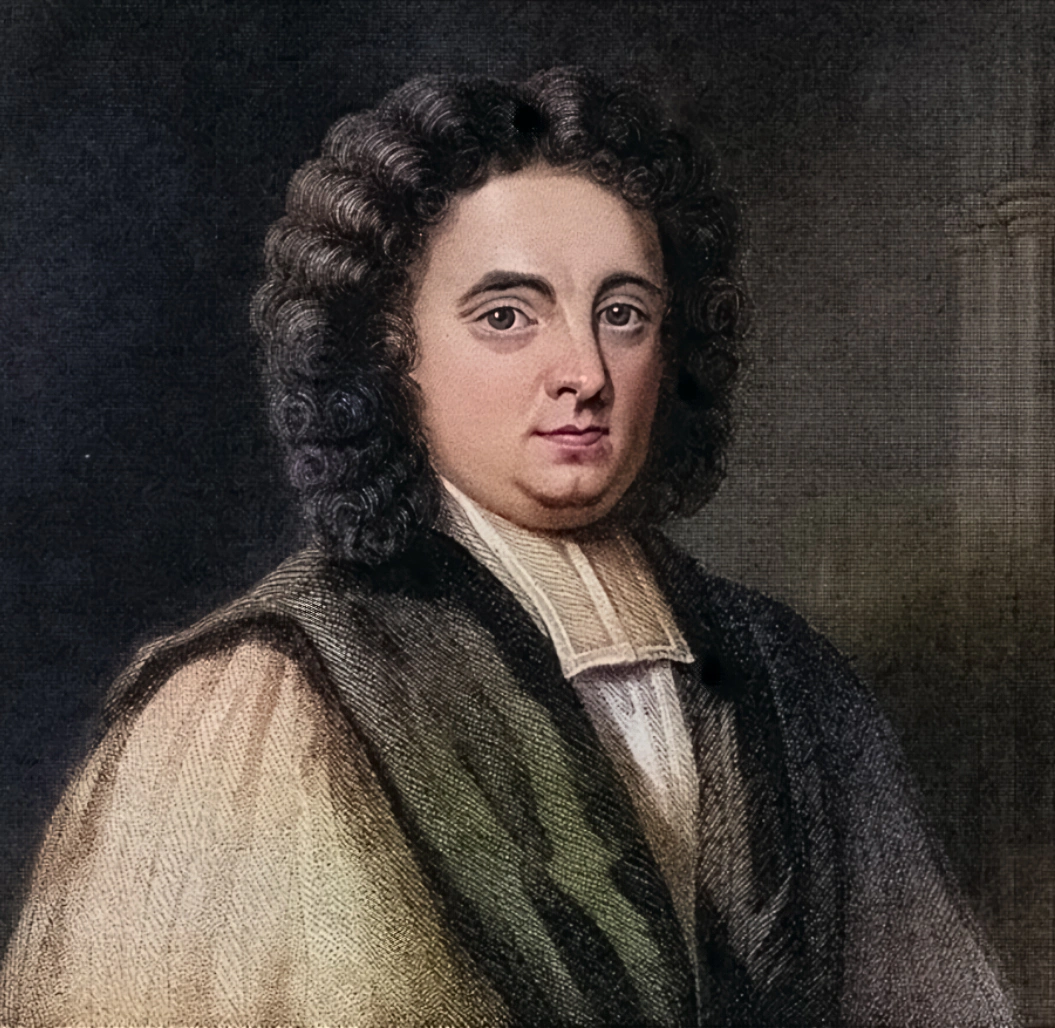
| 15 Quotes | |
| Known as | Bishop Berkeley |
| Occup. | Philosopher |
| From | Ireland |
| Born | March 12, 1685 Kilcrin, County Kilkenny, Ireland |
| Died | January 14, 1753 Oxford, England |
| Cause | Natural Causes |
| Aged | 67 years |
| Cite | |
Citation Formats
APA Style (7th ed.)
George berkeley biography, facts and quotes. (2026, February 11). FixQuotes. https://fixquotes.com/authors/george-berkeley/
Chicago Style
"George Berkeley biography, facts and quotes." FixQuotes. February 11, 2026. https://fixquotes.com/authors/george-berkeley/.
MLA Style (9th ed.)
"George Berkeley biography, facts and quotes." FixQuotes, 11 Feb. 2026, https://fixquotes.com/authors/george-berkeley/. Accessed 27 Mar. 2026.
Early Life and Background
George Berkeley was born on March 12, 1685, at Dysert Castle near Thomastown, County Kilkenny, into the Anglo-Irish Protestant world that had consolidated power after the Williamite settlement. Ireland in his youth was a place of political aftershocks and confessional boundaries, where the Church of Ireland served as both spiritual authority and social ladder. Berkeley grew up amid this tension between land, law, and belief, a setting that sharpened his lifelong sense that ideas are never merely private - they organize whole societies.From early on he showed a temperament drawn to first principles and to the moral stakes of thinking. He lived close to poverty and privilege at once: the countryside of Kilkenny, with its older Gaelic memory, and the institutional networks of the Ascendancy. That doubleness - provincial and cosmopolitan, pastoral and polemical - would later surface in his writing, which moves from subtle arguments about perception to urgent plans for education, religion, and public virtue.
Education and Formative Influences
In 1700 Berkeley entered Trinity College Dublin, then a stronghold of mathematical and philosophical learning in the wake of Descartes, Locke, and Newton. He studied classics, logic, and the new science, and he absorbed both the promise and the anxiety of a mechanized worldview that seemed to leave mind and God at the margins. Trinity also formed his clerical identity: he was elected a Fellow and took holy orders, learning to write with the precision of a logician and the cadence of a preacher. Locke's theory of ideas became his main foil, while the mathematical culture around him - and debates over optics and vision - gave him the technical vocabulary to challenge material substance on its own terrain.Career, Major Works, and Turning Points
Berkeley published his first major works in rapid succession: An Essay Towards a New Theory of Vision (1709), A Treatise Concerning the Principles of Human Knowledge (1710), and Three Dialogues between Hylas and Philonous (1713), building the case for immaterialism - the claim that what we call physical objects exist as ideas perceived by minds, sustained by God. He traveled in England and on the Continent, served as chaplain, and became a celebrated controversialist. His most dramatic public project was the Bermuda scheme, a plan to found a college to educate clergy for the Atlantic world; he lived at Newport, Rhode Island (1728-1731), waiting for funding that never arrived. The failure did not break him, but it steered his energies toward practical reform and apologetics: Alciphron (1732) targeted fashionable irreligion; The Analyst (1734) challenged the logical foundations of calculus, needling the scientific establishment; and Siris (1744) mixed metaphysics, medicine, and social critique. In 1734 he became Bishop of Cloyne in Ireland, and after years of pastoral work and writing, he retired to Oxford, dying there on January 14, 1753.Philosophy, Style, and Themes
Berkeley's philosophy was a rescue operation. He believed modern thought had produced skepticism by inventing abstractions - matter as a hidden substrate, and "ideas" as private pictures cut off from reality - and then despairing that such pictures could ever match the world. His cure was to bring experience back under the governance of spirit: to say that the sensible world is real as experience, and that its order is intelligible because it is the language of a rational God. In his most expansive formulations, “All the choir of heaven and furniture of earth - in a word, all those bodies which compose the frame of the world - have not any subsistence without a mind”. The line is not a mere slogan; it exposes his inner need for a world that cannot drift into meaninglessness, a cosmos that remains intimate - always already addressed to perception, and therefore to responsibility.His style mirrors that psychological aim. The Dialogues stage philosophy as conversation because he mistrusted systems that harden into idols; he wanted arguments to feel like clarifications, the sweeping away of self-made fog. “We have first raised a dust and then complain we cannot see”. This is Berkeley diagnosing the mind's own complicity in confusion - a moral as well as an intellectual critique. He pressed for an ethics of attention, a discipline of looking until the world becomes legible again. “The eye by long use comes to see even in the darkest cavern: and there is no subject so obscure but we may discern some glimpse of truth by long poring on it”. Behind the optimism is a pastoral impulse: the philosopher as physician of the intellect, countering despair with patient perception, and countering cynicism with the insistence that truth is not unreachable, only misread.
Legacy and Influence
Berkeley's immaterialism became a permanent provocation in modern philosophy: attacked as paradox, revived as insight, and repeatedly rediscovered whenever thinkers confront the dependence of "world" on mind, language, or models. He shaped later debates on perception, phenomenalism, and idealism, influencing figures from Hume (as adversary and catalyst) to Kant (as a problem to be outflanked) and, much later, analytic philosophy's renewed interest in sense-data and the philosophy of perception. As a bishop and social critic he also left a record of moral seriousness in an age of expanding commerce and scientific prestige - a reminder that arguments about what exists are inseparable from questions about what kind of life is livable, and what kind of world can still feel, to a thinking person, worth inhabiting.Our collection contains 15 quotes written by George, under the main topics: Truth - Wisdom - Sarcastic - Freedom - Deep.
George Berkeley Famous Works
- 1732 Alciphron, or the Minute Philosopher (Philosophical Dialogue)
- 1721 De Motu (Philosophical treatise)
- 1713 Three Dialogues between Hylas and Philonous (Philosophical Dialogue)
- 1710 A Treatise Concerning the Principles of Human Knowledge (Philosophical treatise)
- 1709 An Essay Towards a New Theory of Vision (Philosophical treatise)
Source / external links