
George Bernard Shaw Biography Quotes 167 Report mistakes
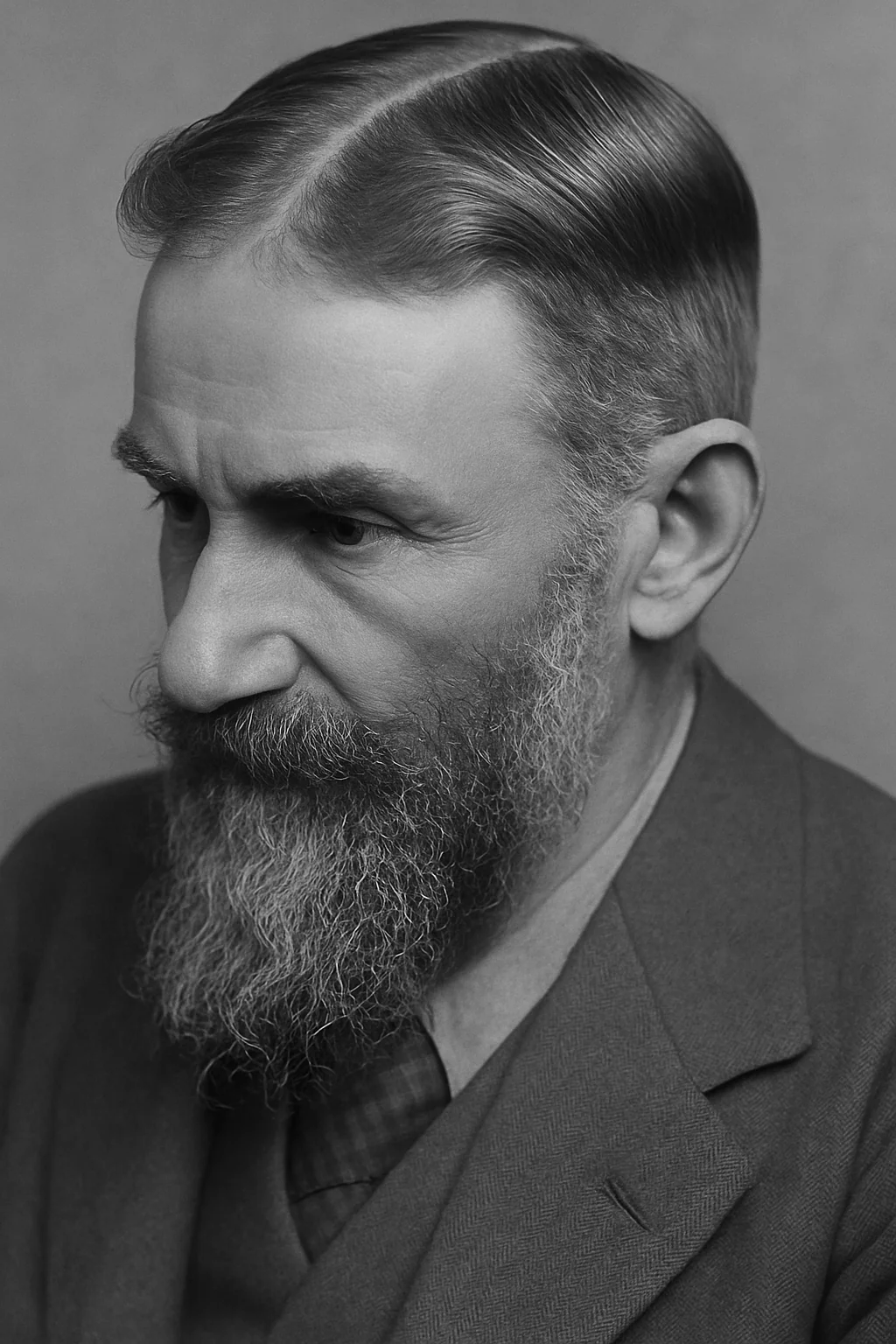
| 167 Quotes | |
| Occup. | Dramatist |
| From | Ireland |
| Born | July 26, 1856 Dublin, Ireland |
| Died | November 2, 1950 Hertfordshire, England |
| Aged | 94 years |
| Cite | |
Citation Formats
APA Style (7th ed.)
George bernard shaw biography, facts and quotes. (2026, February 1). FixQuotes. https://fixquotes.com/authors/george-bernard-shaw/
Chicago Style
"George Bernard Shaw biography, facts and quotes." FixQuotes. February 1, 2026. https://fixquotes.com/authors/george-bernard-shaw/.
MLA Style (9th ed.)
"George Bernard Shaw biography, facts and quotes." FixQuotes, 1 Feb. 2026, https://fixquotes.com/authors/george-bernard-shaw/. Accessed 24 Mar. 2026.
Early Life and Background
George Bernard Shaw was born on 26 July 1856 in Dublin, Ireland, into a Protestant, lower-middle-class household shadowed by economic insecurity and domestic discord. His father, George Carr Shaw, was a struggling grain merchant whose alcoholism and drift created an atmosphere of quiet embarrassment; his mother, Lucinda Elizabeth Shaw (nee Gurly), sought dignity through music, later studying and performing with the voice teacher George John Vandeleur Lee. Shaw grew up watching respectability and failure coexist under one roof, an early lesson in how social masks operate - and how easily they crack.Dublin in Shaw's youth was a city of sharp class gradients and colonial tension, and he formed an instinctive skepticism toward received authority, whether clerical, political, or familial. He worked as a clerk before leaving Ireland in 1876 for London, carrying little money but a fierce conviction that he would make himself by intellect. The move also severed him from the parochial constraints of Dublin life and placed him in the industrial metropolis where modern politics, mass culture, and the theater could collide.
Education and Formative Influences
Shaw's formal schooling was uneven and, by his own account, uninspiring; his real education was self-directed and voracious. In London he educated himself in reading rooms and cheap seats, absorbing Shakespeare, the English novel, political economy, and especially music and drama, while forming the habit of turning every idea into an argument. The intellectual climate of late-Victorian London - Darwin after-effects, secular debate, labor agitation, and the rise of organized socialism - shaped him as much as any book, and he found in rational inquiry and public disputation a substitute for the certainties his early life had not supplied.Career, Major Works, and Turning Points
After years of poverty and failed novels, Shaw broke through as a critic, writing on music and theater with an unmistakable mix of precision and provocation, then redirected that critical intelligence into playwriting. His early plays - including "Widowers' Houses" (1892) and "Mrs Warren's Profession" (written 1893) - attacked respectable hypocrisy by tying private virtue to public exploitation; "Arms and the Man" (1894) and "Candida" (1894) showed he could be entertaining without surrendering the argument. As a leading Fabian Society voice, he fused drama with social analysis, producing major works such as "Man and Superman" (1903), "Major Barbara" (1905), and "Pygmalion" (1913), while his wartime polemics, especially "Common Sense About the War" (1914), made him notorious for refusing patriotic conformity. Later achievements included "Saint Joan" (1923), a historical tragedy of conscience and institutions, and he received the Nobel Prize in Literature in 1925, remaining a public intellectual into old age until his death on 2 November 1950 in Ayot St Lawrence, England.Philosophy, Style, and Themes
Shaw's inner life was governed by a drive to puncture cant: he distrusted the emotional comforts people build to avoid thinking, and he used wit as a scalpel rather than a cushion. His theater is built on the premise that society runs on dangerous fictions that must be spoken aloud to lose their power. He insisted on the right to offend consensus because, for him, progress begins where piety ends - “All great truths begin as blasphemies”. That sentence captures not just his public stance but his private temperament: a man who felt most morally awake when challenging the language of the respectable.His style is argumentative comedy - debates disguised as scenes, paradoxes that reverse the audience's reflexes, and characters who reveal themselves through what they rationalize. Shaw returned obsessively to marriage, money, and power as systems that claim to be natural while operating like contracts. His skeptical psychology is distilled in “There is no subject on which more dangerous nonsense is talked and thought than marriage”. , a line that fits his plays' repeated exposure of romantic rhetoric as a tool of social control. Just as often he mocked the ego's addiction to conflict and posturing - “I learned long ago, never to wrestle with a pig. You get dirty, and besides, the pig likes it”. - reflecting a mind that preferred strategic clarity over performative outrage, even while thriving on controversy.
Legacy and Influence
Shaw helped remake modern drama by proving that plays could be popular while intellectually insurgent, using laughter to escort audiences into uncomfortable thought. He influenced theatrical realism and political theater across the English-speaking world, from debates about class and capitalism to the staging of ideas as dramatic action, and his prefaces and criticism became models for the writer as public thinker. Works like "Pygmalion" and "Saint Joan" remain enduring not only for their craft but for their audacity: they insist that institutions, language, and intimacy are not fate but arguments - and therefore can be rewritten.Our collection contains 167 quotes written by George, under the main topics: Witty One-Liners - Motivational - Ethics & Morality - Truth - Wisdom.
Other people related to George: Alan Jay Lerner (Dramatist), James Agate (Critic), Moss Hart (Playwright), Edward Elgar (Composer), Beatrice Potter Webb (Sociologist), Hesketh Pearson (Actor), Frank Harris (Author), Beatrice Webb (Sociologist)
Frequently Asked Questions
- George Bernard Shaw education: He attended Wesley College, Dublin, but mainly self-educated through reading and attending public lectures
- George Bernard Shaw family: Shaw was the youngest of three children, born to George Carr Shaw and Lucinda Elizabeth Shaw
- George Bernard Shaw Nobel Prize: Shaw won the Nobel Prize in Literature in 1925
- George Bernard Shaw works: Shaw wrote over 60 plays including Arms and the Man, Caesar and Cleopatra, and The Doctor's Dilemma
- George Bernard Shaw most famous works: Pygmalion, Saint Joan, Man and Superman, Major Barbara
- How old was George Bernard Shaw? He became 94 years old
Source / external links