
George Canning Biography Quotes 7 Report mistakes
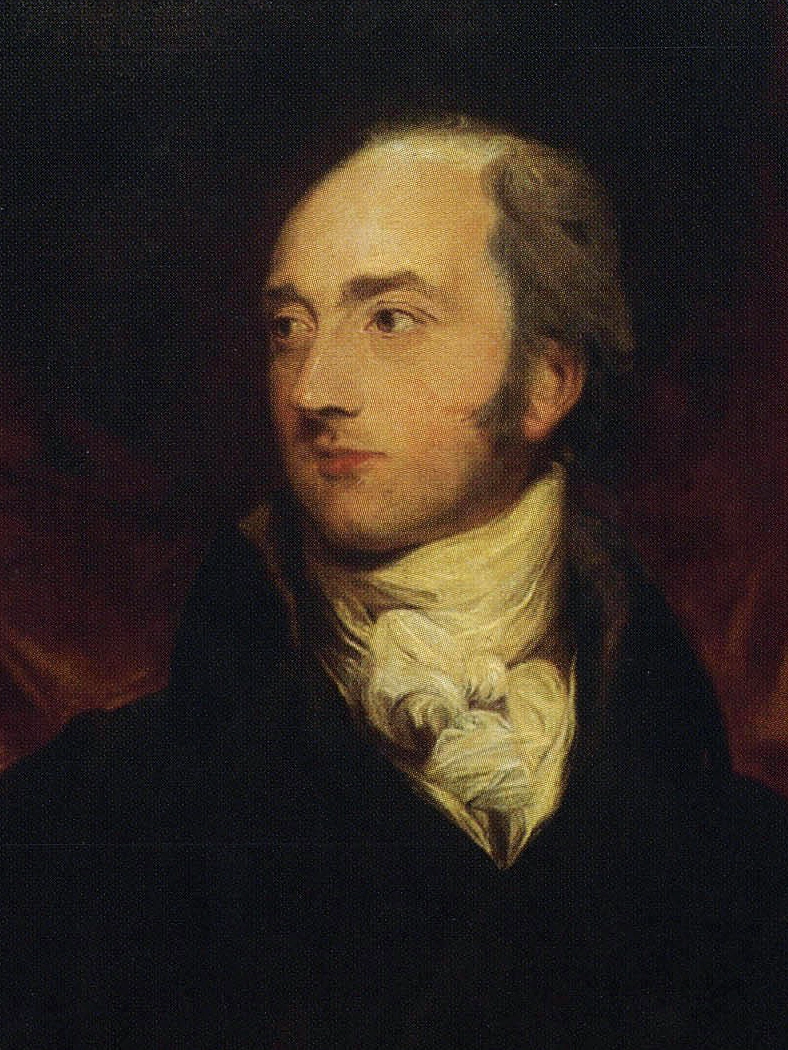
Attr: Thomas Lawrence, CC0
| 7 Quotes | |
| Occup. | Statesman |
| From | England |
| Born | April 11, 1770 London, England |
| Died | August 8, 1827 Chiswick, London, England |
| Aged | 57 years |
| Cite | |
Citation Formats
APA Style (7th ed.)
George canning biography, facts and quotes. (2026, February 11). FixQuotes. https://fixquotes.com/authors/george-canning/
Chicago Style
"George Canning biography, facts and quotes." FixQuotes. February 11, 2026. https://fixquotes.com/authors/george-canning/.
MLA Style (9th ed.)
"George Canning biography, facts and quotes." FixQuotes, 11 Feb. 2026, https://fixquotes.com/authors/george-canning/. Accessed 6 Mar. 2026.
Early Life and Background
George Canning was born on April 11, 1770, in London, into a family whose fortunes had collapsed and whose future depended on talent rather than land. His father, also George Canning, a failed barrister and writer, died when the boy was very young, leaving his mother, Mary Ann Costello, to seek precarious work on the stage. The social distance between the theatrical world and respectable politics was wide in Georgian England, and Canning grew up with a keen sense of how quickly reputation could be lost and how carefully it had to be managed.Rescue came through kinship and patronage - the era's true currency. His wealthy uncle Stratford Canning took him in and financed his upbringing, effectively refashioning a near-orphan of uncertain standing into a young gentleman with a public future. That early experience - dependence followed by self-invention - helped form the hard edge beneath Canning's charm: he learned to read rooms, cultivate protectors, and strike first with words when status was in doubt, a defensive wit that later became a political weapon.
Education and Formative Influences
Canning was educated at Eton and then Christ Church, Oxford, where he excelled in classics and debate, absorbing both the polish of elite schooling and the combative culture of parliamentary oratory. He helped found the "Microcosm" at Eton, practicing the satiric voice that would later surface in the anti-Jacobin press and in his Commons performances. In the 1790s he attached himself to William Pitt the Younger and the circle of Tory modernizers trying to reconcile finance, empire, and security in the shadow of the French Revolution - a formative collision of ideals and fear that taught Canning to treat liberty and order as a single strategic problem rather than a moral slogan.Career, Major Works, and Turning Points
Entering Parliament in 1793, Canning rose quickly as a Pittite, serving as Under-Secretary for Foreign Affairs, then Treasurer of the Navy, and later as Paymaster of the Forces. His early fame mixed satire and statecraft: he helped animate the Anti-Jacobin campaign against revolutionary radicalism while developing a reputation as one of the House's most devastating speakers. The decisive turn in his career came with high office under Lord Liverpool: as Foreign Secretary (1822-1827) he pursued a more flexible, interest-based diplomacy, backing constitutional forces in Portugal and supporting the independence of Spain's former colonies in the Americas. His phrase about "calling the New World into existence" became shorthand for his attempt to prevent European reactionary powers from reimposing an old imperial order across the Atlantic. In 1827, after years of rivalry with the ultra-Tories and a long feud with Lord Castlereagh that had even led to a duel in 1809, Canning became Prime Minister - only to die after a few months in office on August 8, 1827, exhausted by illness and the strain of governing without a stable party base.Philosophy, Style, and Themes
Canning's political psychology fused insecurity with mastery. He trusted the lever of timing and the theater of language, believing that hesitation was not neutrality but surrender - a reflex captured in his maxim, “Indecision and delays are the parents of failure”. The line was not merely managerial advice; it reflected the experience of a man who had watched careers and nations fall through drift, and who sought to seize initiative before events could harden into fate. His speeches often aimed to turn complex dilemmas into choices that sounded inevitable, forcing opponents to answer his framing rather than their own.He was also a realist about how persuasion is manufactured. “I can prove anything by statistics except the truth”. reads like an early warning from inside the machine of modern government: the state was becoming numerical, bureaucratic, and data-driven, and Canning understood how easily figures could be made to flatter policy. Yet he was not cynical in the simple sense; he wanted the appearance of principle to align with the necessities of power. That is why his most famous boast - “I called the New World into existence, to redress the balance of the Old”. - functions as both strategy and self-portrait. It reveals his belief that Britain could stabilize Europe not only by armies and treaties but by shaping the global system - commerce, recognition, naval reach - so that reactionary empires could not dictate the future. His style, glittering and cutting, could wound as easily as it could lead; friends and allies sometimes felt used, because he treated politics as an argument conducted under time pressure, where elegance was a kind of force.
Legacy and Influence
Canning left no single magnum opus, but his legacy is written into the evolution of British conservatism and foreign policy. He helped shift Tory politics away from mere restoration toward a guarded acceptance of change, preparing ground later occupied by Peel and the practical reformers. Internationally he anticipated a Britain that would prefer influence to annexation and balance-of-power diplomacy to continental crusades, while still using the empire's commercial and naval tools to shape outcomes. His brief premiership became a parable of brilliance constrained by faction, yet his rhetoric and strategic imagination endured: the modern British statesman as performer, technician, and global calculator owes much to the example - and the warning - of George Canning.Our collection contains 7 quotes written by George, under the main topics: Witty One-Liners - Truth - Resilience - New Beginnings - Decision-Making.
Other people related to George: Henry Addington (Statesman), Henry John Temple (Statesman)