
George Crook Biography Quotes 17 Report mistakes
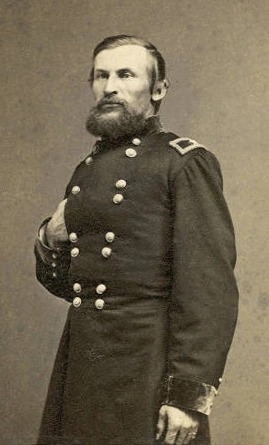
| 17 Quotes | |
| Born as | George R. Crook |
| Known as | Nantan Lupan "Grey Wolf" |
| Occup. | Soldier |
| From | USA |
| Born | September 8, 1828 Taylorsville, Ohio |
| Died | March 21, 1890 Chicago, Illinois |
| Aged | 61 years |
| Cite | |
Citation Formats
APA Style (7th ed.)
George crook biography, facts and quotes. (2026, February 11). FixQuotes. https://fixquotes.com/authors/george-crook/
Chicago Style
"George Crook biography, facts and quotes." FixQuotes. February 11, 2026. https://fixquotes.com/authors/george-crook/.
MLA Style (9th ed.)
"George Crook biography, facts and quotes." FixQuotes, 11 Feb. 2026, https://fixquotes.com/authors/george-crook/. Accessed 29 Mar. 2026.
Early Life and Background
George R. Crook was born on September 8, 1828, in Taylor County, Virginia (later West Virginia), into a young republic already pushing beyond the Appalachians. The Crooks were part of the hard-edged border culture that produced surveyors, militia men, and ambitious officers - people for whom endurance, practical judgment, and reputation mattered more than polish. That temperament would cling to him: spare in self-presentation, slow to indulge sentiment, and unusually attentive to logistics and ground truth.He came of age as the United States argued over slavery, empire, and the meaning of citizenship, and as the Army became a machine for both war and governance on contested land. Crook would spend most of his adult life inside that machine, often sympathetic to the people it displaced while still enforcing the policy of a nation committed to expansion. The resulting tension - between professional duty and moral observation - became the central psychological pressure of his career.
Education and Formative Influences
Crook entered the United States Military Academy at West Point in 1848 and graduated in 1852, trained in an officer culture that prized engineering, discipline, and measurable results. Commissioned in the 4th U.S. Infantry, he quickly moved into the long, unglamorous routines of the frontier Army: scouting, building posts, escorting supply trains, and learning how distance and terrain could defeat theory. Those early western assignments, and his later exposure to Native scouts as indispensable partners, formed his skepticism toward armchair strategy and his belief that most "Indian problems" were, at root, problems of hunger, land, and administration.Career, Major Works, and Turning Points
During the Civil War Crook rose as a tough, capable commander in the Army of the Cumberland and in West Virginia, leading hard marches and raids that helped break Confederate control in the Appalachians; he earned promotion to brigadier general of volunteers and later major general. After 1866 he returned to the Regular Army and became one of the era's defining Indian-fighting commanders, campaigning against the Paiute and Shoshone in the Great Basin and then against the Apache in Arizona, where he expanded the use of Native scouts and pushed mobile field columns into rugged country. As commander in the Great Sioux War of 1876, he fought at the Rosebud and later faced intense political scrutiny; in 1877 he pursued the Nez Perce, and in the 1880s he led operations against the Chiricahua Apaches, including the long effort to capture Geronimo. His later years were consumed by the administrative burdens of the Department of Arizona and then the Department of the Platte, where he navigated Washington politics, settler demands, and the human consequences of reservation policy until his death on March 21, 1890, in Chicago.Philosophy, Style, and Themes
Crook's style was defined by movement, reconnaissance, and an almost clinical respect for what the land and the enemy could actually do. He preferred light columns, persistent pursuit, and a flexible chain of information, especially through Native scouts - not romanticized auxiliaries but professionals whose knowledge turned the frontier from myth into a map. Personal experience kept him wary of bravado; his accounts could be bluntly physical, the kind of detail that exposes how pain disciplines the imagination: “When I jerked it out the head remained in my leg, where it remains still. There were a couple of inches of blood on the shaft of the arrow when I pulled it out”. The sentence is not just reportage - it is Crook's way of asserting that war is governed by bodies and limits, not speeches.That realism also shaped his unusually frank commentary on the causes of Native resistance. He insisted that deprivation, not innate hostility, drove many wars: “All the tribes tell the same story. They are surrounded on all sides, the game is destroyed or driven away; they are left to starve, and there remains but one thing for them to do - fight while they can”. In that view, violence was a foreseeable result of policy, and therefore a responsibility of the state, not a mystery of "savagery". Yet Crook's proposed remedies were assimilationist and managerial, grounded in property, farming, and staged change rather than sovereignty: “Give these Indians little farms, survey them, let them put fences around them, let them have their own horses, cows, sheep, things that they can call their own, and it will do away with tribal Indians”. The psychology underneath is paternal and pragmatic at once - a commander trying to end war by reengineering society, confident in his diagnosis and yet constrained by the coercive system he served.
Legacy and Influence
Crook endures as a paradoxical figure of the post-Civil War Army: a relentless field commander who modernized frontier operations, elevated the tactical value of Native scouts, and spoke more candidly than many peers about starvation, broken promises, and administrative failure - while still helping impose the reservation order that made those crises permanent. His campaigns became case studies in mobility, intelligence, and attrition, studied by soldiers long after the frontier closed; his writings and testimony remain crucial primary sources for the era's wars and for the moral compromises of expansion. In the public memory he is neither simple villain nor uncomplicated hero, but a hard professional whose empathy did not overcome his mission, and whose clear-eyed descriptions help later generations see how policy, ecology, and force converged to remake the American West.Our collection contains 17 quotes written by George, under the main topics: Justice - Equality - War - Military & Soldier - Native American Sayings.
Source / external links