
George Gillett Biography Quotes 5 Report mistakes
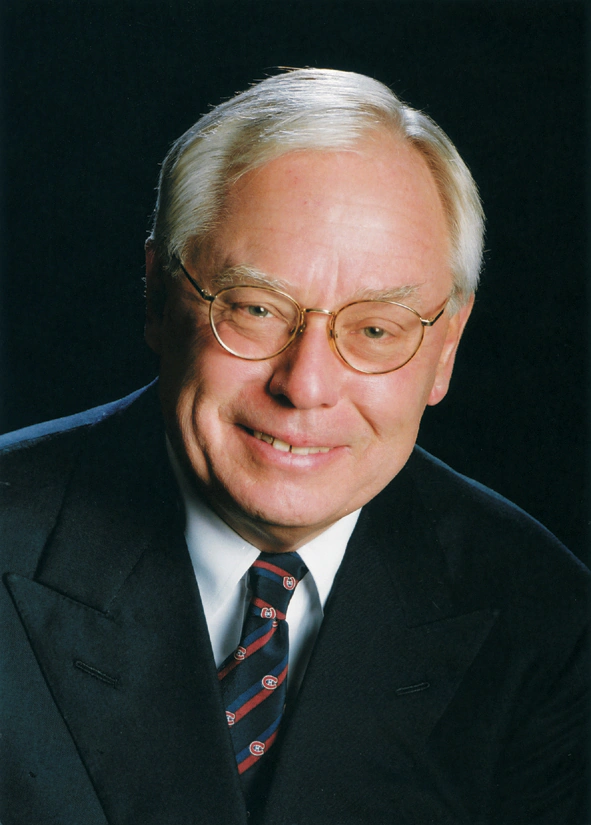
| 5 Quotes | |
| Born as | George Nield Gillett Jr. |
| Known as | George N. Gillett Jr. |
| Occup. | Businessman |
| From | USA |
| Born | October 22, 1938 Eau Claire, Wisconsin, U.S. |
| Age | 87 years |
| Cite | |
Citation Formats
APA Style (7th ed.)
George gillett biography, facts and quotes. (2026, February 11). FixQuotes. https://fixquotes.com/authors/george-gillett/
Chicago Style
"George Gillett biography, facts and quotes." FixQuotes. February 11, 2026. https://fixquotes.com/authors/george-gillett/.
MLA Style (9th ed.)
"George Gillett biography, facts and quotes." FixQuotes, 11 Feb. 2026, https://fixquotes.com/authors/george-gillett/. Accessed 7 Mar. 2026.
Early Life and Background
George Nield Gillett Jr. was born on October 22, 1938, in the United States, into a post-Depression, wartime-shadowed America that soon tilted into the consumer boom of the 1950s. He came of age in a culture where prosperity and anxiety traveled together - the promise of scale, advertising, and suburban expansion on one hand, and the cold-war sense that systems could fail on the other. Those crosscurrents later colored the way he spoke about risk and responsibility: wealth as instrument, not shelter.From early on, Gillett was drawn to the practical mechanics of enterprise - how money is raised, how people are organized, and how decisions compound over time. His biography is often told through deals and holdings, but the more revealing thread is temperament: a competitive, transaction-minded personality that nonetheless sought public, communal arenas in which to test itself. For him, business was rarely an abstract spreadsheet exercise; it was a form of contest, often staged in sports and entertainment where performance is visible and reputations are quickly priced in.
Education and Formative Influences
Public accounts consistently frame Gillett as a self-directed businessman whose most formative education came from operating inside capital markets rather than from a single defining academic institution; he learned by doing, in an era when conglomerates, leveraged finance, and media consolidation were rewriting the American economy. The late 1960s through the 1980s rewarded executives who could juggle financing, branding, and aggressive dealmaking, and Gillett absorbed that language early - the idea that control can be purchased, that governance is a skill, and that narrative is itself an asset.Career, Major Works, and Turning Points
Gillett built his public profile through high-stakes ownership and investment, particularly in sports and media-adjacent ventures, positioning himself within the late-20th-century wave that treated franchises and entertainment properties as global brands rather than purely local institutions. Across decades, his career reflected the era's wider transformation: capital became more mobile, ownership more financialized, and scrutiny more relentless. The turning points in his story are less a linear ascent than a series of recalibrations - expansions that required new leverage, public controversies that forced retrenchment, and periodic reinventions that showed an appetite for risk even when reputation management would have counseled caution.Philosophy, Style, and Themes
Gillett's self-description repeatedly leans toward competition, not commerce, a clue to his inner logic: he pursued markets as arenas, not merely as income streams. “I'm a sportsman, not a businessman. I've always been interested in sports and I enjoy the challenges that come with it”. Psychologically, that framing does two things. It justifies volatility - wins and losses are the cost of playing - and it places identity in the contest itself, a stance that can energize bold moves while also inviting overextension when the game becomes larger than the player.His ethic, when he articulates it, is almost deliberately plain, as if to anchor an acquisitive life to a simple moral grammar. “I believe in hard work, in being honest and fair, and treating people the way I want to be treated”. That insistence reads like an attempt to keep personal conduct legible amid complex corporate structures where accountability can blur. It is paired with a pragmatic resilience that treats setbacks as tuition: “I've never looked at anything as a mistake. You learn from everything you do”. Taken together, these statements suggest a man managing his own narrative - not denying error, but reframing it as iteration - and a leader who wants to be judged less by perfect foresight than by endurance and method.
Legacy and Influence
Gillett's lasting significance lies in how clearly his career captures a modern American pattern: the blending of finance, sports, and media into a single field of power where identity, community, and capital continuously renegotiate their terms. To admirers, he embodied the idea that ambitious ownership can professionalize and globalize institutions; to critics, he exemplified the tensions that surface when heritage brands are treated as portfolios. Either way, his biography remains a case study in late-20th-century deal culture - its optimism, its hazards, and the psychological need, in the middle of public scrutiny, to insist that one is still playing a game one understands.Our collection contains 5 quotes written by George, under the main topics: Sports - Health - Success - Honesty & Integrity - Learning from Mistakes.
Source / external links