
George H. W. Bush Biography Quotes 20 Report mistakes
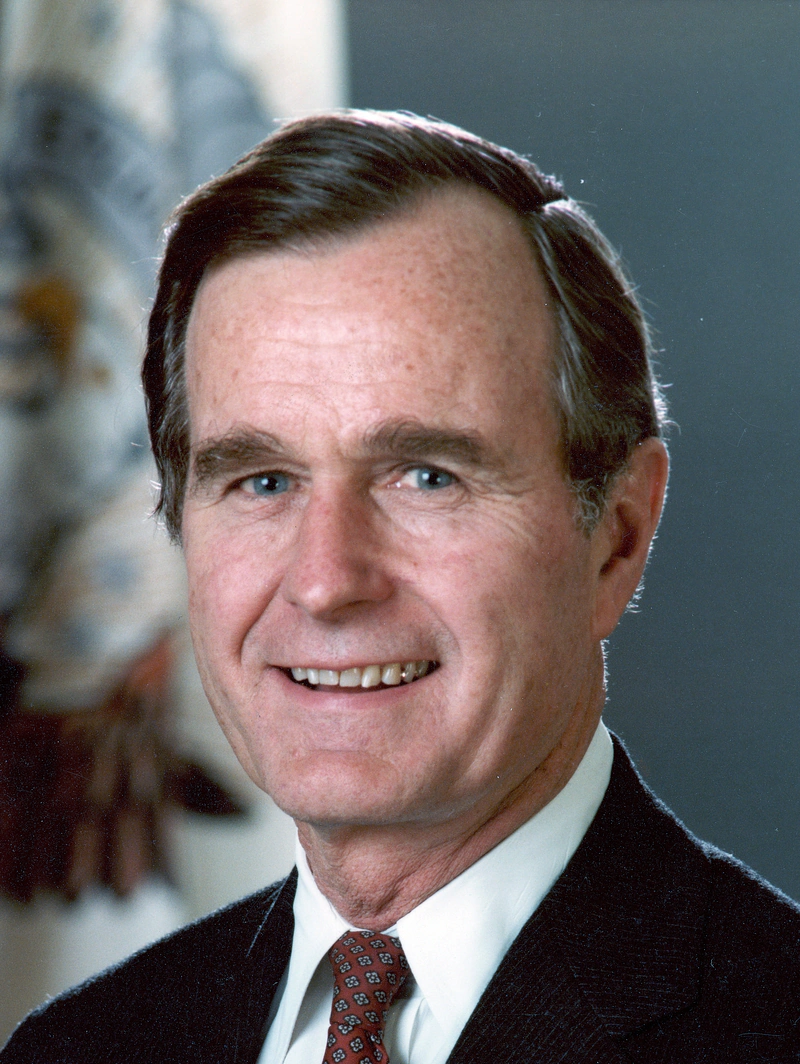
| 20 Quotes | |
| Born as | George Herbert Walker Bush |
| Known as | George Bush |
| Occup. | President |
| From | USA |
| Born | June 12, 1924 Milton, Massachusetts, United States |
| Died | November 30, 2018 Houston, Texas, United States |
| Cause | vascular Parkinsonism |
| Aged | 94 years |
| Cite | |
Citation Formats
APA Style (7th ed.)
George h. w. bush biography, facts and quotes. (2026, February 11). FixQuotes. https://fixquotes.com/authors/george-h-w-bush/
Chicago Style
"George H. W. Bush biography, facts and quotes." FixQuotes. February 11, 2026. https://fixquotes.com/authors/george-h-w-bush/.
MLA Style (9th ed.)
"George H. W. Bush biography, facts and quotes." FixQuotes, 11 Feb. 2026, https://fixquotes.com/authors/george-h-w-bush/. Accessed 12 Feb. 2026.
Early Life and Background
George Herbert Walker Bush was born on June 12, 1924, in Milton, Massachusetts, into a patrician Republican world shaped by finance, public service, and East Coast expectation. His father, Prescott Bush, was an investment banker who later became a U.S. senator from Connecticut; his mother, Dorothy Walker Bush, brought the social confidence of the Walker family. Privilege did not insulate him from the era's hard edges: the Great Depression and then World War II pressed even the affluent toward duty, and Bush grew up with the assumption that status carried obligations.The family settled largely in Greenwich, Connecticut, where Bush developed a reputation for steady leadership and team-first discipline. In his private makeup, friends often noted a competitive but controlled temperament - a young man trained to win without appearing hungry for it. That reserve would become both armor and limitation across a life spent inside institutions where decorum mattered, even as the national mood later rewarded theatricality.
Education and Formative Influences
Bush attended Phillips Academy in Andover, Massachusetts, captaining teams and absorbing an elite Protestant ethic of service and restraint. On his 18th birthday he enlisted in the U.S. Navy and became one of the youngest aviators in the service; in 1944, flying torpedo bombers in the Pacific, he was shot down near Chichi Jima and rescued by submarine after bailing out over water, an experience that left him with lifelong gratitude and a sober view of risk. After the war he entered Yale University (graduating in 1948), where he played on the baseball team and joined the campus networks that fed the postwar governing class; he married Barbara Pierce in 1945, forming a partnership that anchored him emotionally through triumph, loss, and public scrutiny.Career, Major Works, and Turning Points
Bush moved to Texas and built an oil business in the 1950s, a westward reinvention that gave him entrepreneurial credibility and a new political base; the death of his young daughter, Robin, in 1953 marked the most personal rupture of his life and deepened a faith he rarely displayed flamboyantly. Elected to Congress from Houston in 1966, he lost a Senate race in 1970 but was rewarded with appointments that became his true apprenticeship: U.S. ambassador to the United Nations (1971-73), chairman of the Republican National Committee during Watergate (1973-74), U.S. envoy to China (1974-75), and director of central intelligence (1976-77). After serving two terms as Ronald Reagan's vice president (1981-89), he won the presidency in 1988 and governed amid the end of the Cold War: managing German reunification with allies, responding to Tiananmen's aftermath with a cautious mix of condemnation and back-channeling, and leading the 1990-91 Gulf War coalition to expel Iraq from Kuwait while stopping short of marching to Baghdad. Domestic turning points included the Americans with Disabilities Act of 1990, the 1990 Clean Air Act amendments, and a budget deal that broke his "no new taxes" pledge and helped cost him reelection in 1992; he died on November 30, 2018, after decades as a living link to an older, institution-centered Republicanism.Philosophy, Style, and Themes
Bush's governing philosophy was less a manifesto than a temperament: incremental, alliance-minded, and distrustful of ideological purism when it threatened results. He was a conservative who valued stability, but his conservatism was managerial - the belief that a president's first job is to keep the system working, especially in crisis. That inner posture helps explain both his strengths (coalition war-making, careful diplomacy) and his vulnerabilities (difficulty translating prudence into a compelling public story).He often seemed to argue with himself in public, revealing an instinct for complexity that clashed with an era moving toward sound bites. "I have opinions of my own, strong opinions, but I don't always agree with them". The line reads like a joke, but it also captures a mind trained by briefings, competing memos, and the CIA habit of weighing probabilities rather than certainties. His aversion to rhetorical flamboyance was similarly candid - "I am not one who - who flamboyantly believes in throwing a lot of words around". Beneath the reserve was a moral frame grounded in faith and service; his insistence that "We are not the sum of our possessions". fit a man who had wealth early yet kept returning, almost stubbornly, to duty as the measure of worth.
Legacy and Influence
Bush left a legacy of competence under pressure: the peaceful management of Soviet collapse, the precedent of broad international legitimacy in the Gulf War, and durable domestic laws on disability rights and air quality. Critics fault him for political triangulation, for caution that sometimes shaded into drift, and for decisions that reverberated - from the 1992 campaign's tonal hardening to the long-term consequences of Middle East basing and sanctions. Yet his enduring influence is the model of presidency as stewardship: alliance-building over unilateralism, process over spectacle, and an older idea that public life is a craft practiced with restraint even when history is loud.Our collection contains 20 quotes written by George, under the main topics: Witty One-Liners - Sarcastic - Leadership - Meaning of Life - Kindness.
Other people related to George: Brian Mulroney (Statesman), Alan K. Simpson (Politician), Shirley Temple (Actress), Condoleezza Rice (Statesman), Yasser Arafat (Leader), Daniel Patrick Moynihan (Politician), Steve Forbes (Businessman), Louis Freeh (Lawyer), George Schultz (Public Servant), John Sununu (Politician)
George H. W. Bush Famous Works
- 1999 All the Best: My Life in Letters and Other Writings (Collection)
- 1998 A World Transformed (Non-fiction)
- 1988 Looking Forward (Non-fiction)