
George III Biography Quotes 6 Report mistakes
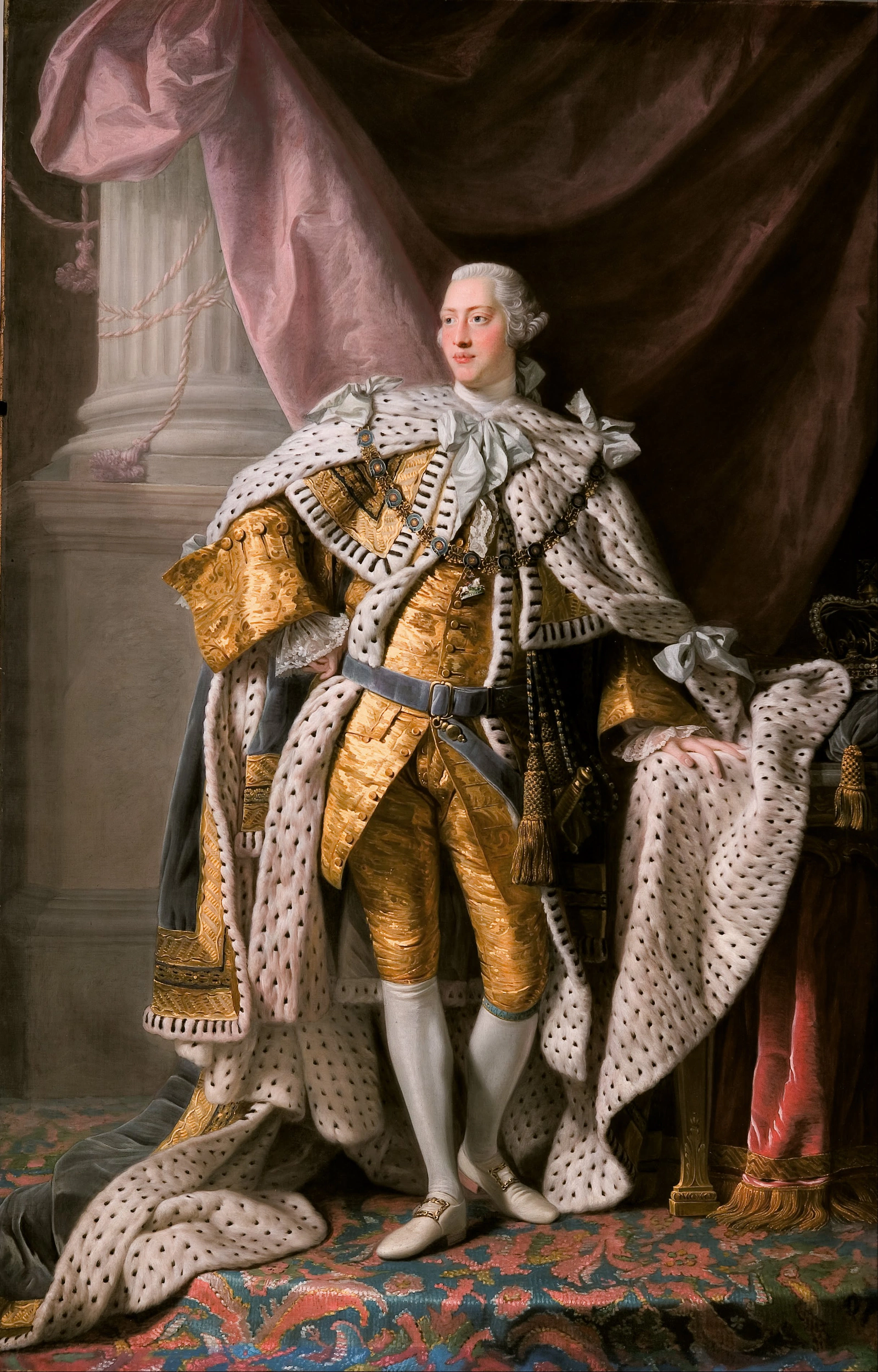
Attr: Allan Ramsay
| 6 Quotes | |
| Known as | King George III |
| Occup. | Royalty |
| From | England |
| Born | June 4, 1738 London, England |
| Died | January 29, 1820 |
| Aged | 81 years |
| Cite | |
Citation Formats
APA Style (7th ed.)
George iii biography, facts and quotes. (2026, February 11). FixQuotes. https://fixquotes.com/authors/george-iii/
Chicago Style
"George III biography, facts and quotes." FixQuotes. February 11, 2026. https://fixquotes.com/authors/george-iii/.
MLA Style (9th ed.)
"George III biography, facts and quotes." FixQuotes, 11 Feb. 2026, https://fixquotes.com/authors/george-iii/. Accessed 6 Mar. 2026.
Early Life and Background
George William Frederick was born on 4 June 1738 in London, the first son of Frederick, Prince of Wales, and Augusta of Saxe-Gotha. His childhood was shaped by the bitter court politics of the Hanoverian dynasty: his father stood in opposition to his own father, King George II, creating a household that was both princely and estranged, proud yet watchful. When Frederick died suddenly in 1751, the young George became heir to a crown he had been trained to regard as both a sacred trust and a fortress against faction.Shy in manner but firm in conviction, he grew up with a strong sense of moral duty and national identity, nourished by his mother and by mentors who emphasized restraint, piety, and the Protestant constitution. In 1761 he married Princess Charlotte of Mecklenburg-Strelitz, beginning an unusually domesticated royal marriage that produced fifteen children and offered the image of stability the nation craved. Yet the private man who cherished routine and family life would be repeatedly dragged into storms of war, party intrigue, and later the slow eclipse of his own mind.
Education and Formative Influences
Unlike his German-born predecessors, George was formed to be visibly English in speech and habit, educated by tutors who drilled him in scripture, history, law, and the mechanics of kingship, and guided by John Stuart, third Earl of Bute, whose vision of a more assertive, morally reformed crown appealed to the prince. He read widely, collected books, and took an earnest interest in agriculture, trade, and naval power, but his learning also encouraged certainty: he absorbed the idea that monarchy should actively steer ministers and defend order, a stance that would repeatedly clash with an increasingly confident Parliament and a rapidly politicized public.Career, Major Works, and Turning Points
George III ascended the throne in October 1760, determined to govern as well as reign, and his early years saw rapid ministerial turnover amid disputes over patronage and the costs of the Seven Years' War; the 1763 peace, the Wilkes agitation, and the first American taxation crises tested his resolve. The defining turning point was the American Revolution: convinced that imperial authority must be upheld, he supported coercive policies that culminated in independence in 1783, a personal and political humiliation that did not, however, end his influence. He later became a symbol of national endurance during the wars of the French Revolution and Napoleon, while his recurrent illness - severe episodes in 1788-1789 and again from 1801, then a final, irreversible decline after 1810 - led to the Regency under his son in 1811. He died blind, deaf, and mentally incapacitated at Windsor Castle on 29 January 1820, after the longest reign in British history to that date.Philosophy, Style, and Themes
George III's inner life mixed conscientiousness with a combustible suspicion of disloyalty. He sought legitimacy not through glamour but through moral example and national rootedness, projecting a king who belonged to his people: “Born and educated in this country, I glory in the name of Briton”. That self-conception strengthened him in crises, but it also narrowed his tolerance for opposition, especially when he equated dissent with the unraveling of the constitution he believed he embodied.His style of rule was laborious and managerial - letters, memoranda, audiences - animated by a belief that firmness restored obedience. In the American conflict his confidence hardened into a psychology of submission and punishment: “Once vigorous measures appear to be the only means left of bringing the Americans to a due submission to the mother country, the colonies will submit”. The tragedy is that this certainty coexisted with a private capacity for self-deprecation and an almost bleak awareness of political theater: “Lord Chancellor, did I deliver the speech well? I am glad of that, for there was nothing in it”. Taken together, these reveal a man who could both overestimate the power of authority and underestimate the force of ideas outside the court.
Legacy and Influence
George III left no single "work" beyond the long imprint of his decisions, yet his reign reshaped Britain: it lost the American colonies, weathered the French revolutionary challenge, and began the passage from a monarch who tried to choose and drive ministers to a system where ministerial authority rested increasingly on Parliament and public opinion. In popular memory he became both the obstinate king of American independence and the pitiable figure of later illness, a dual image that has powered literature, theater, and film. Historically, he endures as a case study in constitutional monarchy under stress - a ruler of genuine domestic virtue and administrative seriousness whose convictions, and later infirmity, helped accelerate the modern British balance between crown, cabinet, and nation.Our collection contains 6 quotes written by George, under the main topics: Witty One-Liners - Ethics & Morality - Writing - War - Betrayal.
Other people related to George: Alan Bennett (Dramatist), Queen Victoria (Royalty), Benjamin Haydon (Artist), Fanny Burney (Novelist), William Pitt (Leader), William Herschel (Scientist), Henry Addington (Statesman), John Harrison (Inventor), Henry Fox (Statesman), Thomas Secker (Clergyman)
Source / external links