
George Mason Biography Quotes 19 Report mistakes
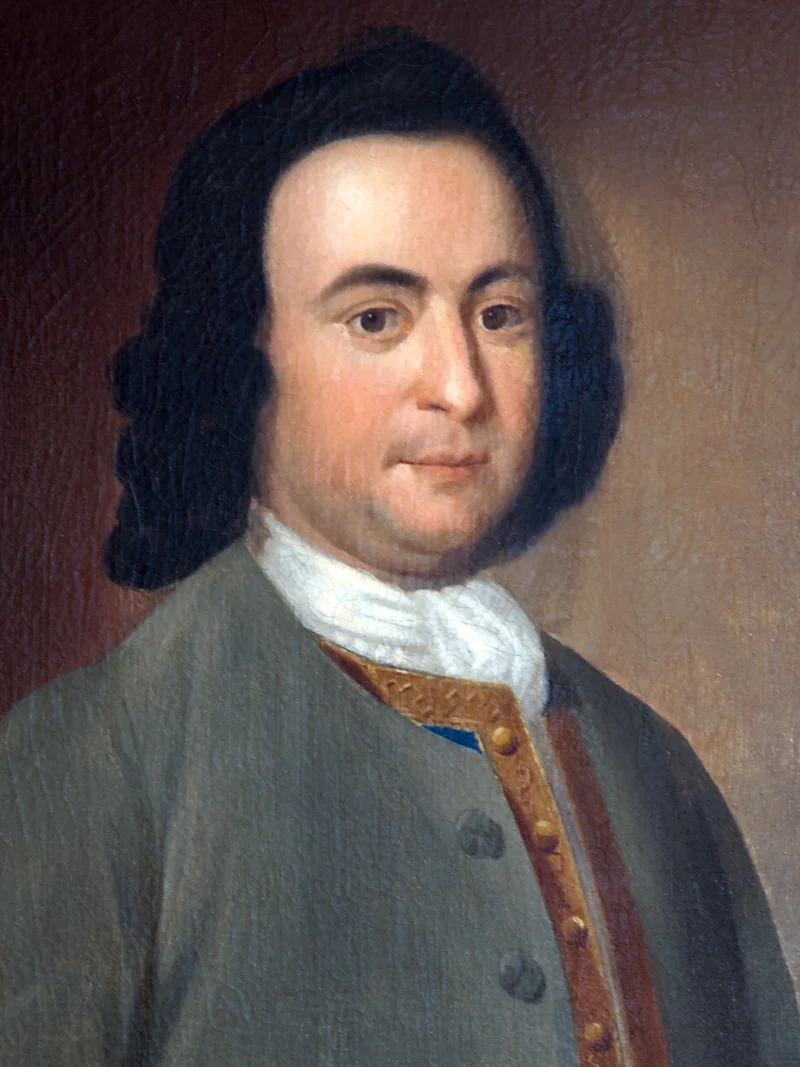
| 19 Quotes | |
| Occup. | Statesman |
| From | USA |
| Born | December 11, 1725 |
| Died | October 7, 1792 |
| Aged | 66 years |
| Cite | |
Citation Formats
APA Style (7th ed.)
George mason biography, facts and quotes. (2026, February 11). FixQuotes. https://fixquotes.com/authors/george-mason/
Chicago Style
"George Mason biography, facts and quotes." FixQuotes. February 11, 2026. https://fixquotes.com/authors/george-mason/.
MLA Style (9th ed.)
"George Mason biography, facts and quotes." FixQuotes, 11 Feb. 2026, https://fixquotes.com/authors/george-mason/. Accessed 26 Mar. 2026.
Early Life and Education
George Mason was born in colonial Virginia in the mid-1720s into a prominent planter family along the Potomac River. His father died in a boating accident when Mason was still a boy, leaving his mother to manage the estate and the education of her children. Bookish and self-directed, Mason absorbed English law and political thought not in formal schools but through private study, notably in the substantial library of his relative and neighbor, the lawyer John Mercer. This immersion in legal treatises, classical history, and Whig political philosophy would shape his lifelong suspicion of concentrated power and his emphasis on the rights of individuals.Planter, Family, and Local Leadership
As a young adult, Mason consolidated and expanded family lands and eventually established his home at Gunston Hall, a plantation that became both a working enterprise and a center of regional influence. He married Ann Eilbeck, with whom he had a large family; after her death he later remarried Sarah Brent. Like other members of the Virginia gentry, he held local offices and helped oversee parish and county affairs. He lived near George Washington, and the two men were often in contact over local improvements, river navigation, and public questions. Mason preferred private life, managing agricultural operations and family matters, but his reputation for judgment and integrity steadily pulled him into wider political responsibilities.From Protest to Revolution
Imperial controversies after the Seven Years War drew Mason into organized protest. He drafted the Fairfax Resolves in 1774, a sweeping county statement against British policies that George Washington helped present and champion. The Resolves called for nonimportation, asserted colonial rights, and mapped out a constitutional response to Parliament's encroachments. Mason's pen, grounded in legal precedent and natural rights arguments, gave coherence to the colony's growing resistance. He was soon at the center of Virginia's revolutionary transformation, serving in committees and helping to frame the colony's new civil order once royal authority collapsed.Architect of the Virginia Declaration of Rights
In 1776 Mason wrote the Virginia Declaration of Rights and contributed substantially to the state constitution. The Declaration proclaimed that all men are by nature equally free and independent, asserted inherent rights, and safeguarded freedoms of the press, religion, and due process. Its language and structure influenced Thomas Jefferson's drafting of the Declaration of Independence and, a decade later, James Madison's framing of the federal Bill of Rights. Mason's Article on religious liberty anticipated the eventual disestablishment of the Anglican Church in Virginia, a cause also advanced by Jefferson and Madison. The Virginia document stands as one of the earliest and clearest articulations of modern rights constitutionalism.Philadelphia and the Limits of Federal Power
Despite chronic ill health and a preference for life at Gunston Hall, Mason accepted appointment to the Constitutional Convention in 1787. In Philadelphia he worked closely at times with figures such as Edmund Randolph and Elbridge Gerry, while frequently aligning with delegates like Luther Martin on questions of federal authority. He consistently pressed for explicit protections of individual rights, safeguards against standing armies, and measures to prevent abuses of power. He condemned the transatlantic slave trade as inhumane and economically corrosive, a position he held even while remaining a slaveholding planter himself. As the Convention moved toward a final draft, Mason grew alarmed at the absence of a bill of rights, the breadth of federal power over commerce, and compromises on slavery. Refusing to sign the Constitution, he authored Objections that circulated widely and framed the Anti-Federalist critique.Ratification Battles and the Bill of Rights
During the Virginia Ratifying Convention of 1788, Mason joined Patrick Henry and others in opposing unconditional ratification. They contended with Federalists led by James Madison, who argued that structural checks would restrain the new government. Although Mason and his allies could not prevent ratification, their arguments forced a political commitment to amendments. Madison, once skeptical, drafted a slate of rights in the new Congress that drew heavily on Mason's 1776 model. The adoption of the first ten amendments in 1791 vindicated Mason's central claim: that a free government must enumerate protections for speech, conscience, due process, and other liberties.Slavery and Moral Complexity
Mason's life reveals the contradictions of his time. He denounced the slave trade and warned that slavery corrupted masters and threatened republican virtue, yet he did not free the people he held in bondage. His plantation economy depended on enslaved labor, and he wrestled with the moral and political implications without resolving them. This tension shadowed his public advocacy of natural rights and remains a central feature of his legacy, linking him to contemporaries such as Washington, Jefferson, and Madison, each of whom confronted the institution with varying degrees of action and restraint.Later Years and Legacy
In his final years Mason withdrew from most public duties, tending to family and estate while maintaining a vigorous private correspondence. Relations with George Washington, once cordial, cooled after the divide over the Constitution, reflecting the era's broader political polarization. Mason died in the early 1790s at Gunston Hall, leaving behind a body of work that shaped both state and federal understandings of rights. His Virginia Declaration of Rights became a foundational template for constitutional liberties, while his insistence on a federal bill of rights altered the trajectory of the new republic. Remembered as a reluctant statesman, he stood for a demanding vision of republican government: limited, accountable, and firmly grounded in the inherent rights of the people.Our collection contains 19 quotes written by George, under the main topics: Justice - Sarcastic - Freedom - Honesty & Integrity - Equality.
Other people related to George: Xander Berkeley (Actor)