
George Matthew Adams Biography Quotes 6 Report mistakes
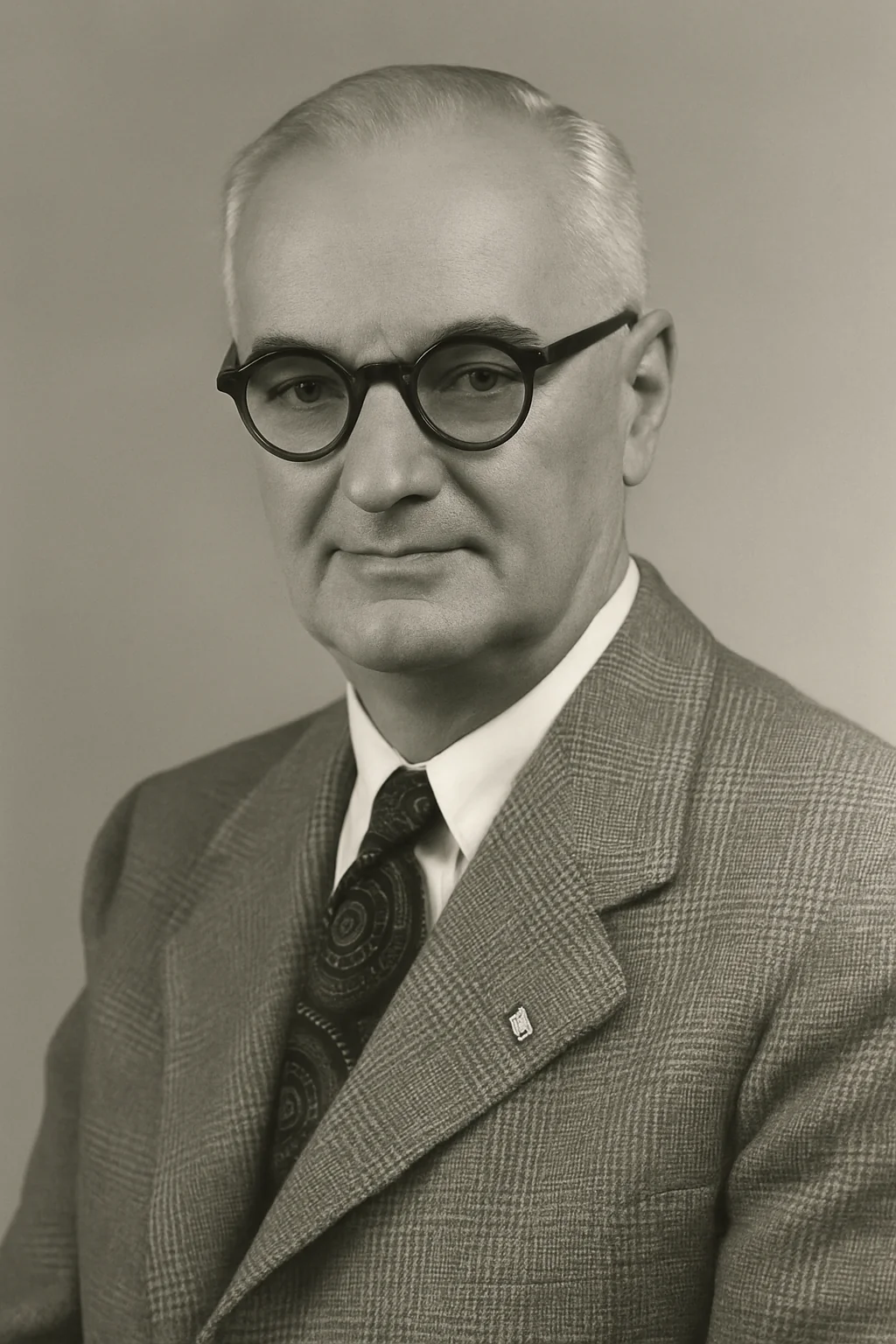
| 6 Quotes | |
| Occup. | Philosopher |
| From | USA |
| Born | August 23, 1878 |
| Died | October 29, 1962 |
| Aged | 84 years |
| Cite | |
Citation Formats
APA Style (7th ed.)
George matthew adams biography, facts and quotes. (2026, February 11). FixQuotes. https://fixquotes.com/authors/george-matthew-adams/
Chicago Style
"George Matthew Adams biography, facts and quotes." FixQuotes. February 11, 2026. https://fixquotes.com/authors/george-matthew-adams/.
MLA Style (9th ed.)
"George Matthew Adams biography, facts and quotes." FixQuotes, 11 Feb. 2026, https://fixquotes.com/authors/george-matthew-adams/. Accessed 12 Feb. 2026.
Early Life and Background
George Matthew Adams was born on August 23, 1878, in the American Midwest, a region then defined by small-town newspapers, church socials, and the moral self-improvement culture that grew alongside industrial expansion. He came of age as the United States shifted from post-Civil War consolidation into a consumer republic - a place newly knitted together by rail, telegraph, and mass-circulation print. That environment bred a particular kind of ambition: not only to rise, but to translate private hopes into public language.Adams was temperamentally drawn to the everyday psychology of aspiration: how ordinary people sustained courage, kept faith with their better intentions, and endured the low-grade anxieties of modern life. Long before his name became synonymous with syndicated encouragement, he watched how community opinion could either enlarge a person or shrink them, and how a well-timed word in a local paper could feel like oxygen. The future "philosopher" in him was less an academic metaphysician than an interpreter of morale - a student of how Americans persuaded themselves to continue.
Education and Formative Influences
Adams attended college in Iowa (then a lively corridor for practical higher education and debate societies), where journalism, public speaking, and the era's belief in character-building converged. He absorbed the late-19th-century confidence that ideas could be "applied" - popularized, syndicated, made useful - and he took seriously the emerging professionalization of writing as both craft and civic tool. The period's currents shaped him: the Chautauqua movement's uplift, the Progressive Era's rhetoric of efficiency and reform, and the new science-tinged language of habit, willpower, and mental hygiene that would later feed his own plainspoken creed.Career, Major Works, and Turning Points
In the early 20th century Adams built his defining enterprise, the George Matthew Adams Service, a newspaper syndicate that distributed columns, features, and later many of the country's best-known comic strips and writers to local papers nationwide. As mass readership expanded, syndication became a power system of culture: it standardized what millions read at breakfast, and it offered writers an economic bridge from local reputation to national presence. Adams proved unusually adept at spotting voices that could travel - humorous, optimistic, human-scaled - and he coupled business discipline with a promoter's feel for morale. Over decades he became a behind-the-scenes architect of American popular taste, while also writing his own short, bracing essays that treated encouragement as a social technology.Philosophy, Style, and Themes
Adams' public philosophy was an ethics of attention: steer the mind, and the life follows. He insisted that inner climate mattered more than circumstance, framing thought as a daily practice rather than a private mystery: "What you think means more than anything else in your life. More than what you earn, more than where you live, more than your social position, and more than what anyone else may think about you". Psychologically, this reveals both a democrat's instinct and a businessman-editor's experience - he had watched how belief could mobilize effort, and how despair could quietly destroy talent before failure ever arrived. His prose was engineered for the column inch: short sentences, sturdy nouns, and a cadence that sounded like advice from a trusted older friend.Yet his optimism was not naive; it was defensive, built for an America rattled by speed, competition, and war. He treated fear as a solvable problem of posture and rhythm, recommending rest and cheerfulness as practical countermeasures: "A cheerful frame of mind, reinforced by relaxation... is the medicine that puts all ghosts of fear on the run". Behind that sentence sits a man who understood nerves - in himself, in the writers he managed, and in the vast audience of workers and homemakers negotiating modern strain. Adams also rejected the lone-genius myth that industrial capitalism liked to sell, arguing for the hidden networks of influence that make any achievement possible: "There is no such thing as a 'self-made' man. We are made up of thousands of others". In his world of syndication - editors, printers, carriers, readers, mentors - success was visibly collective, and his "philosophy" amounted to gratitude turned into method.
Legacy and Influence
Adams died on October 29, 1962, after witnessing the full arc of print's golden age - from small-town weeklies to nationally synchronized culture - and his influence remains embedded in that infrastructure. He helped professionalize and popularize a style of American wisdom literature that sat between sermon, self-help, and civic pep talk, and he advanced the idea that encouragement is not sentimental excess but social fuel. As a syndicator he widened the pipeline through which writers and cartoonists reached mass audiences; as a thinker he left a compact, durable psychology of agency, fear-management, and interdependence that still reads like a blueprint for staying functional in an anxious age.Our collection contains 6 quotes written by George, under the main topics: Motivational - Humility - Happiness - Time - Fear.
Frequently Asked Questions
- George Matthew Adams a cheerful: He said a cheerful, relaxed mind dispels fear.
- You Can George Matthew Adams: His motivational book titled 'You Can.'
- How old was George Matthew Adams? He became 84 years old
George Matthew Adams Famous Works
- 1913 You Can: A Collection of Brief Talks on the Most Important Topic in the World - Your Success (Book)
Source / external links