
George P. Baker Biography Quotes 18 Report mistakes
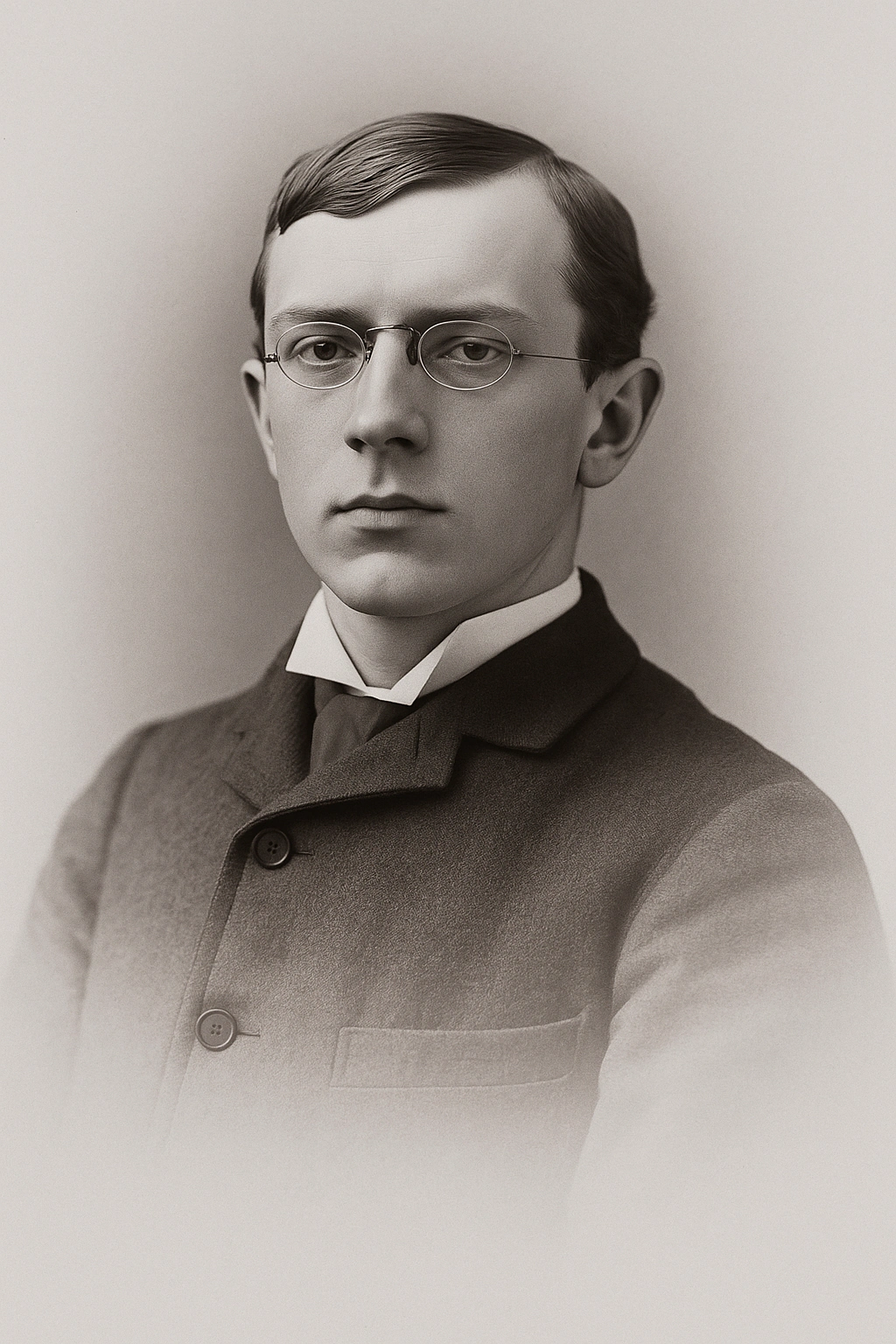
Attr: Pach Brothers - Harvard Art Museum
| 18 Quotes | |
| Born as | George Pierce Baker |
| Occup. | Writer |
| From | USA |
| Born | November 5, 1866 Falmouth, Massachusetts, U.S. |
| Died | March 25, 1935 Cambridge, Massachusetts, U.S. |
| Aged | 68 years |
| Cite | |
Citation Formats
APA Style (7th ed.)
George p. baker biography, facts and quotes. (2026, February 19). FixQuotes. https://fixquotes.com/authors/george-p-baker/
Chicago Style
"George P. Baker biography, facts and quotes." FixQuotes. February 19, 2026. https://fixquotes.com/authors/george-p-baker/.
MLA Style (9th ed.)
"George P. Baker biography, facts and quotes." FixQuotes, 19 Feb. 2026, https://fixquotes.com/authors/george-p-baker/. Accessed 5 Mar. 2026.
Early Life and Background
George Pierce Baker was born on November 5, 1866, in the United States at the hinge of two centuries - late enough to inherit the Civil War's aftershocks, early enough to witness mass immigration, industrial capitalism, and the rise of modern entertainment. His lifetime spanned the period when American culture fought to define itself against European models while simultaneously borrowing from them, and when theater shifted from itinerant repertory and star vehicles toward more systematized training, criticism, and institutional support.
Baker grew into prominence not as a playwright who conquered Broadway but as a writer-critic and teacher who treated drama as an art with craft, history, and ethics. His temperament, as revealed in his criticism and pedagogy, leaned toward disciplined curiosity: he wanted the stage to be pleasurable and popular, yet he distrusted the easy laugh and the cheap thrill when they displaced structure, language, and human consequence. That inner tension - between theater as amusement and theater as serious literature in action - became the animating problem of his career.
Education and Formative Influences
Educated in the elite academic world that was beginning to take the arts seriously as subjects of study, Baker taught at Harvard University and helped legitimate drama inside the university at a time when many still viewed it as morally suspect or merely commercial. He absorbed the methods of literary history and close reading, but he also paid attention to rehearsal rooms, acting, and stage mechanics, aligning himself with the early-20th-century movement that treated playwriting as a teachable craft rather than a mysterious gift.
Career, Major Works, and Turning Points
Baker became best known for creating Harvard's legendary playwriting workshop, English 47, which shaped a generation of American dramatists and screenwriters; among the students associated with his orbit were figures such as Eugene O'Neill and Thomas Wolfe, emblematic of how Baker's classroom bridged literature and performance. His own books and essays - including widely read discussions of dramatic form such as Dramatic Technique and studies of the development of American playwriting - argued for standards rooted in history yet flexible enough to accommodate new subjects and audiences. A major turning point came when he left Harvard to found the Yale School of Drama in the 1920s, institutionalizing professional training and reaffirming his belief that theater required both imagination and discipline, both the artist's freedom and the apprentice's hard practice.
Philosophy, Style, and Themes
Baker wrote about drama with a teacher's clarity and a moralist's worry: what audiences reward, the industry repeats. His criticism insisted that theater is not fully theater on the page, and his emphasis on performance was psychological as well as aesthetic: “Acted drama requires surrender of one's self, sympathetic absorption in the play as it develops”. That sentence doubles as a credo about spectatorship and about character - Baker believed an audience must be invited into a living process, not merely presented with clever writing. The same attitude shaped his classroom methods, which treated rehearsal, revision, and audience response as part of the writer's education.
He was equally preoccupied with how genre manipulates feeling and judgment. “What then is tragedy? In the Elizabethan period it was assumed that a play ending in death was a tragedy, but in recent years we have come to understand that to live on is sometimes far more tragic than death”. The remark signals an inward modernity: Baker recognized that industrial life and psychological realism had altered what pain looked like, and that survival itself could become a sentence. Yet he was not a relativist; he wanted continuity across eras, arguing that dramatic progress depends on memory and revision rather than rupture: “Out of the past come the standards for judging the present; standards in turn to be shaped by the practice of present-day dramatists into broader standards for the next generation”. In Baker's hands, tradition was not a cage but a tool kit - a way to keep theater ambitious while still responsive to contemporary voices.
Legacy and Influence
Baker died on March 25, 1935, having helped shift American drama from a marketplace dominated by managerial taste to a culture that could speak about craft, canon, and training without embarrassment. His enduring influence lives less in a single masterpiece than in the infrastructure he helped build - the workshop model, the professional school, and the notion that playwrights can be formed through rigorous practice guided by historical understanding. In the long run, that may be his most decisive authorship: he wrote not only books and lectures, but an approach to American theater that made room for new writers to take the stage seriously, and to be taken seriously in return.
Our collection contains 18 quotes written by George, under the main topics: Witty One-Liners - Wisdom - Art - Mortality - Writing.
George P. Baker Famous Works
- 1919 Dramatic Technique (Non-fiction)
Source / external links