
George Sand Biography Quotes 27 Report mistakes
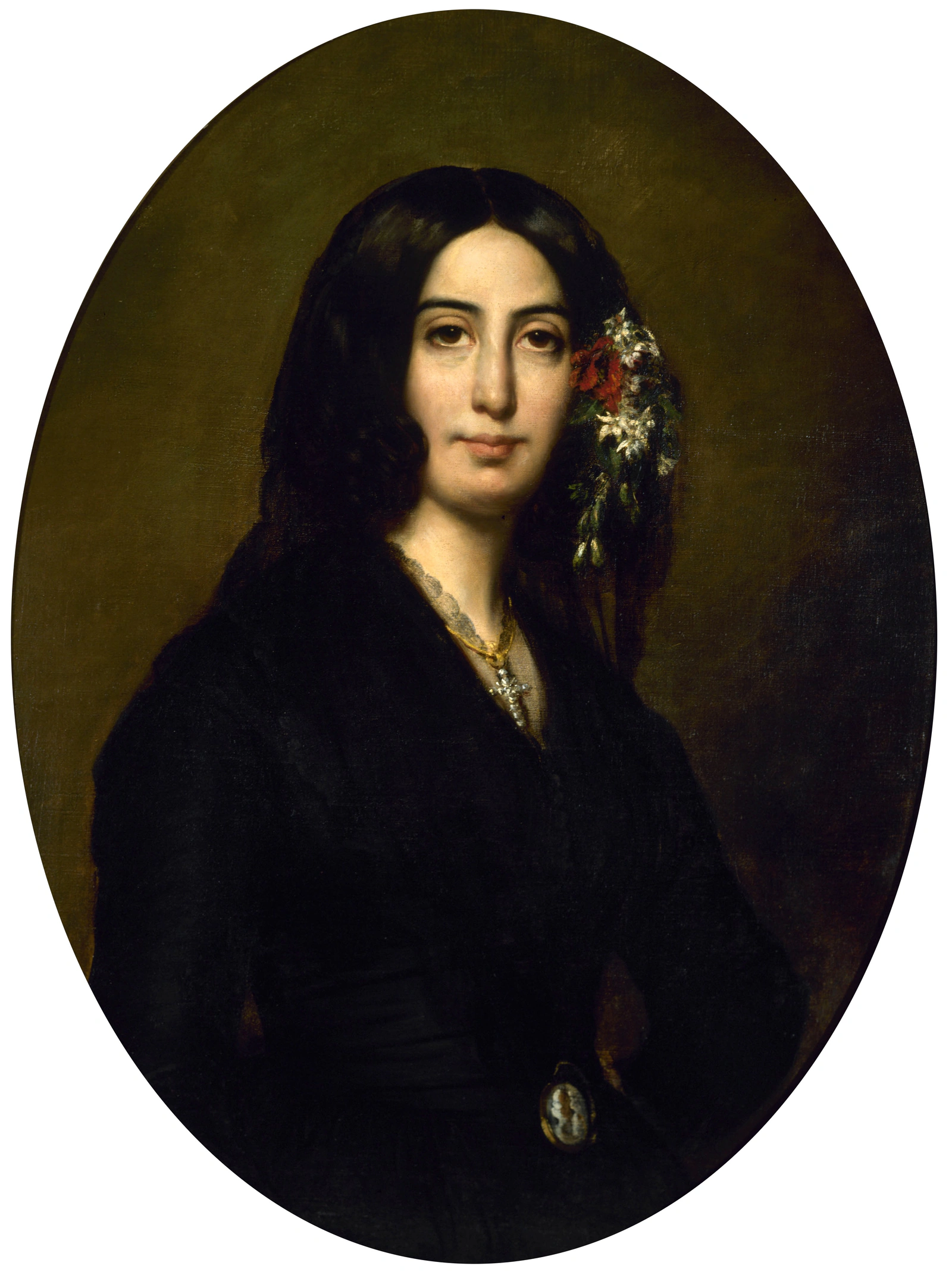
Attr: Auguste Charpentier
| 27 Quotes | |
| Occup. | Novelist |
| From | France |
| Born | July 1, 1804 |
| Died | June 8, 1876 |
| Aged | 71 years |
| Cite | |
Citation Formats
APA Style (7th ed.)
George sand biography, facts and quotes. (2026, February 11). FixQuotes. https://fixquotes.com/authors/george-sand/
Chicago Style
"George Sand biography, facts and quotes." FixQuotes. February 11, 2026. https://fixquotes.com/authors/george-sand/.
MLA Style (9th ed.)
"George Sand biography, facts and quotes." FixQuotes, 11 Feb. 2026, https://fixquotes.com/authors/george-sand/. Accessed 27 Mar. 2026.
Early Life and Background
Amantine Aurore Lucile Dupin, later known to the world as George Sand, was born on July 1, 1804, in Paris, into a France still vibrating from Revolution and Napoleonic upheaval. Her father, Maurice Dupin, a cavalry officer and descendant of the Polish king Augustus II through an illegitimate line, gave her a taste of worldly movement and military restlessness; her mother, Sophie-Victoire Delaborde, came from humbler, Parisian origins. The mismatch of their backgrounds was not a footnote but a pressure system in the child: aristocratic inheritance versus popular vitality, legitimacy versus improvisation, order versus desire.When Maurice died in 1808, Sand was pulled into the gravitational field of her paternal grandmother, Marie-Aurore de Saxe, at Nohant in Berry. The tug-of-war between grandmother and mother became her earliest education in divided loyalties and competing moral languages, and it left her with a lifelong instinct to defend the outcast and to question who gets to define propriety. Nohant - fields, tenants, village talk, seasonal labor - gave her the sensory archive that later made her rural novels feel lived rather than staged, while also giving her a private refuge she would return to when Paris exhausted her.
Education and Formative Influences
She was educated partly at Nohant and, crucially, at the convent of the English Augustinian Sisters in Paris (1818-1820), where intense religiosity, friendship, and solitude sharpened her inward life. Romantic literature and the new language of feeling met a mind already trained by domestic conflict to read motives beneath manners; Rousseau, the memory of revolutionary ideals, and the lived inequality between salon culture and provincial toil all fed her conviction that personal freedom and social reform were inseparable questions.Career, Major Works, and Turning Points
In 1822 she married Baron Casimir Dudevant and settled into a role that quickly felt like captivity; motherhood (Maurice in 1823, Solange in 1828) did not dissolve her need for intellectual work and emotional truth. She moved to Paris in the early 1830s, adopted male attire at times for practical access, and took the pen name George Sand to publish and to be read on equal terms. Her breakthrough came with "Indiana" (1832), a novel of marriage as legalized domination, followed by "Lelia" (1833), "Valentine" (1832), and later the pastoral-social cycle that includes "La Mare au Diable" (1846), "Francois le Champi" (1847), and "La Petite Fadette" (1849). Public passions - her relationship with Alfred de Musset, then the famously stormy years with Frederic Chopin (including the winter in Majorca, 1838-1839) - intersected with a political conscience that culminated in 1848, when she wrote republican journalism and propaganda, only to watch the revolution harden into repression. In later decades she turned more toward theater and to the steady labor of writing at Nohant, mentoring younger artists while defending her hard-won autonomy until her death there on June 8, 1876.Philosophy, Style, and Themes
Sand wrote as if the private life were a political document. The emotional catastrophes that society preferred to hide - erotic disappointment, spiritual hunger, the humiliations of marriage, the loneliness of women who think - become, in her novels, evidence against the social order rather than mere melodrama. She returned obsessively to the question of whether a person can revise the self without self-destruction, and her work often argues that healing is a form of revolt. “We cannot tear out a single page of our life, but we can throw the whole book in the fire”. captures the extremity she recognized in human renewal: when reform is denied, the psyche dreams of total renunciation. Yet her fiction usually chooses continuity over annihilation, seeking a new ethic inside the same life.Her style moves between Parisian debate and Berry speech, between philosophical dialogue and folk tale cadence, insisting that intelligence is not the monopoly of the city. The rural novels in particular treat labor and community not as sentimental scenery but as moral training - a counterweight to ego and a map of mutual dependence. “Work is not man's punishment. It is his reward and his strength and his pleasure”. is not a slogan in her hands; it is a claim about dignity, about how agency is built day by day, especially for those denied formal power. Beneath the political and erotic plots lies a romantic but disciplined humanism: “The artist vocation is to send light into the human heart”. That light, for Sand, is not reassurance - it is illumination of motives, structures, and the possibility of tenderness without servitude.
Legacy and Influence
George Sand endures as one of the 19th century's most prolific and consequential novelists, a writer who turned scandal into method and biography into an argument for social change. She widened the French novel's moral radius by making women, peasants, and the emotionally radical into serious subjects, and she modeled an authorship in which public engagement did not preclude lyric intimacy. Later feminists, realists, and rural regionalists drew from her example, as did writers who saw that a life could be both a contested narrative and a chosen craft - anchored, like hers, between Paris's storms and Nohant's stubborn ground.Our collection contains 27 quotes written by George, under the main topics: Ethics & Morality - Wisdom - Art - Love - Nature.
George Sand Famous Works
- 1848 La Petite Fadette (Novel)
- 1847 François le Champi (Novel)
- 1846 La Mare au Diable (Novel)
- 1842 Consuelo (Novel)
- 1833 Lélia (Novel)
- 1832 Indiana (Novel)
Source / external links