
George Szell Biography Quotes 2 Report mistakes
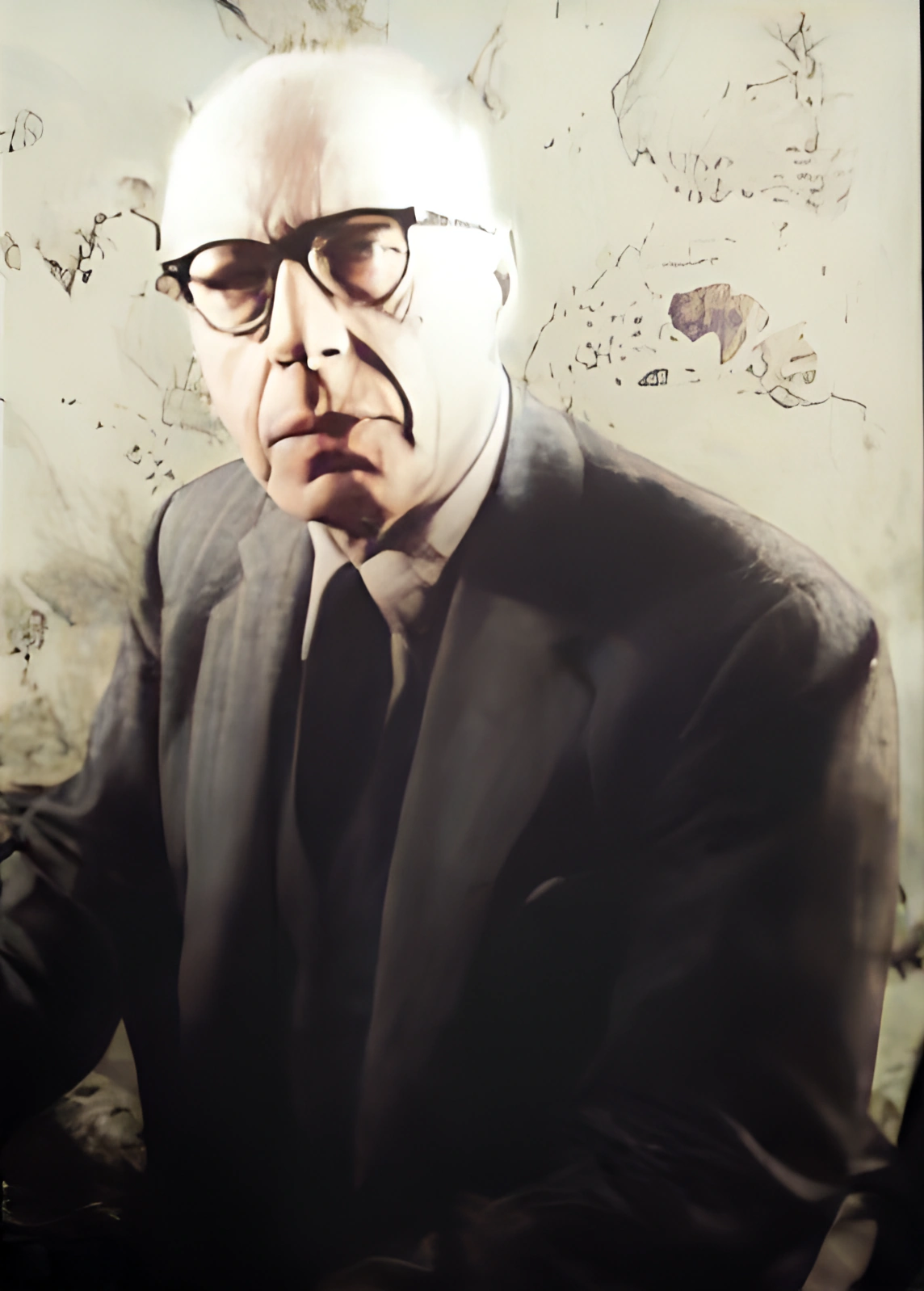
Attr: Carl Van Vechten
| 2 Quotes | |
| Occup. | Composer |
| From | Hungary |
| Born | June 7, 1897 Budapest, Hungary |
| Died | July 29, 1970 Cleveland, Ohio, USA |
| Cause | Heart Attack |
| Aged | 73 years |
| Cite | |
Citation Formats
APA Style (7th ed.)
George szell biography, facts and quotes. (2026, February 11). FixQuotes. https://fixquotes.com/authors/george-szell/
Chicago Style
"George Szell biography, facts and quotes." FixQuotes. February 11, 2026. https://fixquotes.com/authors/george-szell/.
MLA Style (9th ed.)
"George Szell biography, facts and quotes." FixQuotes, 11 Feb. 2026, https://fixquotes.com/authors/george-szell/. Accessed 11 Feb. 2026.
Early Life and Education
George Szell was born in Budapest in 1897, within the multiethnic milieu of the Austro-Hungarian Empire. His family moved to Vienna when he was a child, and the citys rigorous musical culture shaped his formation. Precociously talented at the piano, he also studied theory and composition. Among his formative influences were Viennese pedagogues steeped in the legacies of Brahms and the classical tradition. By his mid-teens he had begun to appear publicly, not only as a pianist but also as a budding conductor. Though he composed in his youth, his aptitude for organization, rehearsal discipline, and clarity of musical thought soon pointed him toward a life on the podium rather than a composing career.Early Career in Europe
Szells professional ascent unfolded across Central European opera houses and orchestras. He was noticed by Richard Strauss, whose recognition proved pivotal. Strauss invited the young musician to assist and to conduct, exposing him to the exacting standards of German opera and to the challenges of preparing complex late-Romantic scores. Over the 1920s and 1930s Szell built a reputation in Berlin, Prague, and other cultural centers as a conductor noted for precision, balance, and transparent textures. He led both opera and symphonic repertoire, honing a style that combined iron discipline with a fastidious ear for detail. Although he programmed his own early compositions on occasion, he increasingly focused on interpreting the Austro-German canon, where his classical instincts and exacting rehearsal methods found their most natural home.Emigration and American Debut
The disruptions of the late 1930s prompted Szell to leave continental Europe. He settled in the United States during the war years and quickly established himself in the American musical scene. He conducted at the Metropolitan Opera in New York and became a valued guest with leading orchestras. Arturo Toscanini, whose fierce standards and drive for structural clarity resonated with Szell, provided important professional support and an influential example. By the mid-1940s Szell had become a United States citizen and was poised to take on a role that would define his legacy.The Cleveland Orchestra
In 1946 Szell became Music Director of The Cleveland Orchestra, a post he would hold until his death in 1970. In Cleveland he applied a comprehensive vision: he reshaped the ensemble through rigorous auditions, refined section leadership, and an unyielding rehearsal ethic. He cultivated a unified string sound, disciplined wind and brass playing, and chamber-like responsiveness across the orchestra. Key principals, including clarinetist Robert Marcellus, horn player Myron Bloom, and timpanist Cloyd Duff, became central to the orchestras character under his leadership. He established a demanding schedule of subscription concerts, tours, and recordings, and he secured annual residencies in New York that showcased the orchestras progress on a national stage.Rehearsal Method and Musical Philosophy
Szell was renowned for meticulous preparation. His rehearsals dissected balance, phrasing, articulation, and rhythm with granular precision. He favored lean sonorities, clear textures, and structural coherence, traits that brought exceptional clarity to Mozart, Haydn, Beethoven, Brahms, and later Romantic repertoire. While he could be steely in rehearsal, his approach aimed to empower musicians to play with unanimity and stylistic understanding. He revised bowings, rethought seating to solve acoustic problems, and insisted on consistency from first desk to last. This ethos helped transform Cleveland into an instrument capable of switching from crystalline Classicism to robust Romanticism without sacrificing transparency.Collaborations and Recordings
Szell forged lasting collaborations with leading soloists. With pianist Leon Fleisher he recorded and performed the Beethoven and Brahms concertos, setting benchmarks for poise, structural insight, and interplay between soloist and orchestra. He also partnered memorably with Rudolf Serkin in Beethoven and with cellist Janos Starker in Romantic concerto repertoire, producing recordings prized for balance and control. Beyond concerto work, Szells concerts and discs with The Cleveland Orchestra in Mozart, Beethoven, Schumann, Brahms, and Dvorak helped define mid-20th-century performance standards for these composers. His relationship with record producers enabled the orchestra to be heard widely, and the combination of disciplined ensemble and natural recorded sound contributed to his international reputation.National and International Profile
Even as he built Cleveland, Szell maintained an active presence with other major orchestras. He guest-conducted across the United States and Europe, returning to the musical centers where he had begun and engaging with new audiences after the war. In the late 1960s, during a transitional period at the New York Philharmonic, he served in an advisory and guest-conducting capacity alongside figures associated with that orchestra such as Leonard Bernstein and Pierre Boulez. His appearances affirmed his authority in the core repertoire and demonstrated his ability to demand and obtain high standards from ensembles not under his day-to-day direction.Mentorship and Influence
Szells impact extended to younger conductors and orchestral players. Among those who benefited from his guidance in Cleveland was James Levine, who served as an assistant conductor and absorbed Szells methods of preparation and rehearsal. Within the orchestra, principals such as Robert Marcellus and Myron Bloom influenced generations of wind and brass players through their playing and teaching, amplifying Szells standards far beyond the concert hall. The orchestras disciplined culture, forged in daily work, became a model emulated by ensembles across the United States.Later Years and Legacy
In his final seasons, Szell balanced intensive work in Cleveland with select guest engagements. The opening of the Blossom Music Center as the orchestras summer home broadened its reach, while tours reinforced its standing as a world-class ensemble. Although he had begun as a pianist-composer, by the end of his life he was known above all as a conductor who synthesized Viennese tradition with modern exactitude. He died in 1970, still at the helm in Cleveland.George Szell left a legacy defined by transformation. He built The Cleveland Orchestra into one of the worlds leading ensembles through relentless attention to detail, a classical sense of proportion, and a belief that every musical decision should serve clarity and structure. His partnerships with artists like Leon Fleisher, Rudolf Serkin, and Janos Starker, his shaping of principals such as Robert Marcellus, Myron Bloom, and Cloyd Duff, and his interactions with major figures including Richard Strauss, Arturo Toscanini, Leonard Bernstein, Pierre Boulez, and James Levine situate him at the center of 20th-century orchestral life. His recordings continue to serve as reference points, and his standards of rehearsal and execution remain touchstones for conductors and orchestras worldwide.
Our collection contains 2 quotes written by George, under the main topics: Music - Leadership.
Other people related to George: Eugene Ormandy (Musician), Elisabeth Schwarzkopf (Musician), Artur Rodzinski (Musician), Isaac Stern (Musician)
Source / external links