
George Vancouver Biography Quotes 3 Report mistakes
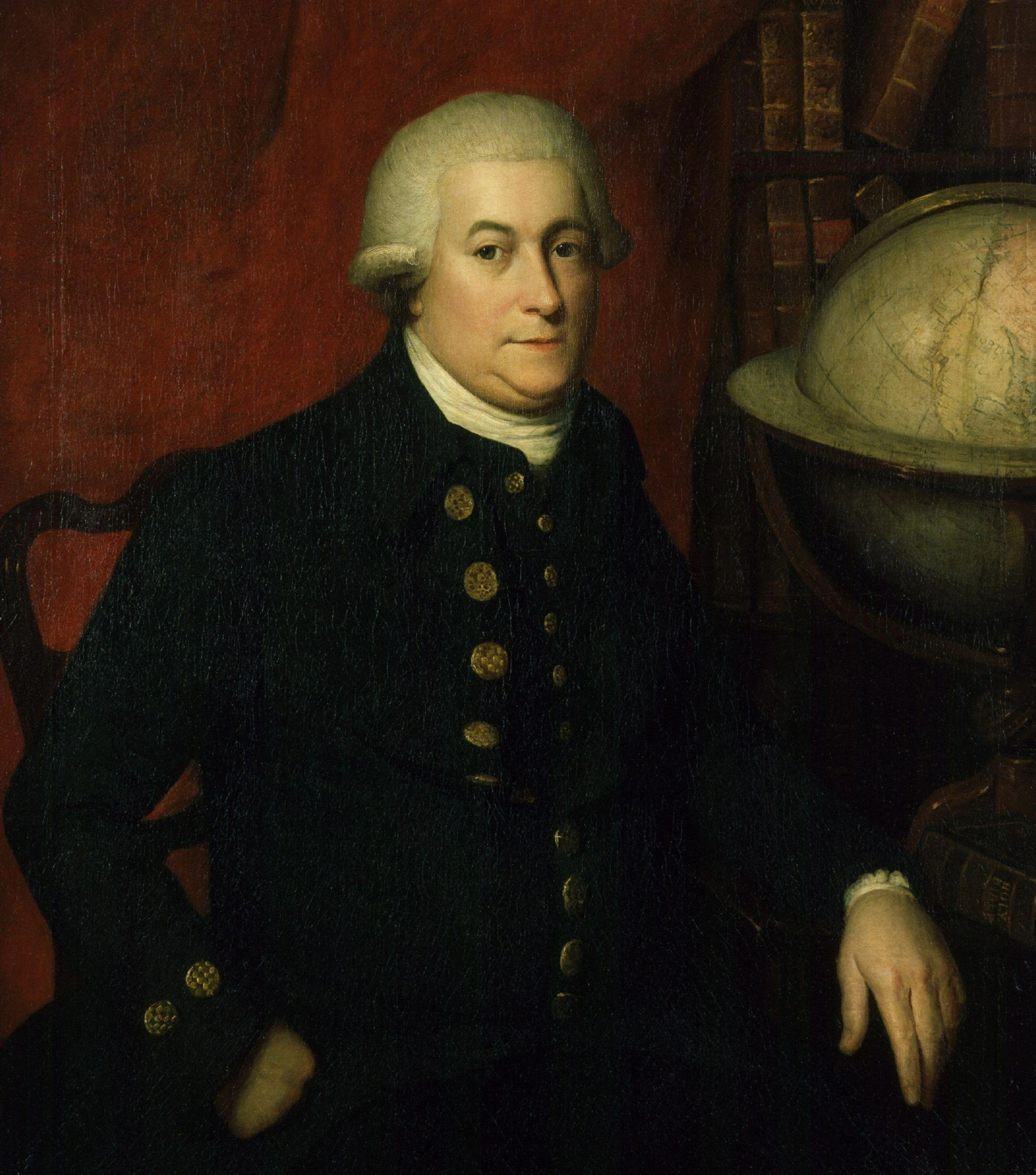
| 3 Quotes | |
| Occup. | Explorer |
| From | England |
| Born | June 22, 1757 King's Lynn, Norfolk, England |
| Died | May 12, 1798 Petersham, Surrey, England |
| Aged | 40 years |
| Cite | |
Citation Formats
APA Style (7th ed.)
George vancouver biography, facts and quotes. (2026, February 11). FixQuotes. https://fixquotes.com/authors/george-vancouver/
Chicago Style
"George Vancouver biography, facts and quotes." FixQuotes. February 11, 2026. https://fixquotes.com/authors/george-vancouver/.
MLA Style (9th ed.)
"George Vancouver biography, facts and quotes." FixQuotes, 11 Feb. 2026, https://fixquotes.com/authors/george-vancouver/. Accessed 6 Mar. 2026.
Early Life and Background
George Vancouver was born on June 22, 1757, in the English port town of King's Lynn, Norfolk, a place shaped by tides, trade, and the practical mathematics of navigation. His father, John Jasper Vancouver, was of Dutch descent and worked in customs, a reminder that Britain in the mid-18th century ran on paperwork as much as cannon. The household stood close to the maritime world without belonging to the aristocracy that often supplied the navy's captains, and that social fact mattered - Vancouver would spend his life proving competence inside an institution built on rank.He came of age during the long imperial struggle with France and Spain, when ships were both laboratories and weapons. Britain's navy promised advancement to boys who could endure discipline and learn fast, and the sea offered a kind of stripped-down identity: watchkeeping, endurance, and accurate observation counted more than eloquence. Vancouver's later reserve - sometimes read as coldness - fit a culture where emotion was managed because lives depended on routine.
Education and Formative Influences
Vancouver entered the Royal Navy as a boy, likely in his early teens, and received the service's hard education: seamanship, astronomy, chartwork, and the social grammar of command. His decisive formative influence was Captain James Cook, under whom he served on Cook's third voyage (1776-1780) in the Pacific, including time around the Pacific Northwest and the North Pacific. Cook's method - careful surveying, standardized logs, and the belief that knowledge could be made by repeated measurements - became Vancouver's professional conscience, as did the era's uneasy mix of Enlightenment curiosity and imperial intent.Career, Major Works, and Turning Points
After the American Revolutionary War, Vancouver rose through naval ranks and was chosen for an unusually delicate task: a surveying expedition to the Pacific Northwest bound up with the Nootka Crisis, the Anglo-Spanish dispute over seizures and sovereignty on the coast. Commanding HMS Discovery with HMS Chatham, he sailed in 1791 and spent 1792-1794 charting an immense stretch of shoreline from California northward, entering Puget Sound, threading the Strait of Georgia, and proving the insularity of what is now Vancouver Island by systematic circumnavigation. He met Spanish counterparts such as Juan Francisco de la Bodega y Quadra at Nootka Sound, negotiating protocols that were never fully resolved by the men on the spot. Returning to England in 1795, he poured his remaining strength into publication. His three-volume A Voyage of Discovery to the North Pacific Ocean and Round the World (1798, issued posthumously) fixed his reputation as a master surveyor even as illness and professional quarrels, including a bitter dispute with Thomas Pitt, shadowed his last years.Philosophy, Style, and Themes
Vancouver's inner life is best approached through the voice he left on the page: controlled, procedural, and intensely sensory when the coast demanded precision. He wrote as if the world could be stabilized by naming points, taking bearings, and comparing colors of water and sky. “The sea has now changed from it's natural, to river coloured water, the probable consequence of some streams falling into the bay, or into the ocean to the north of it, through the low land”. The sentence is not merely descriptive; it reveals a mind that turned perception into inference, translating impression into a model of unseen geography. Where romantic travelers sought sublimity, Vancouver sought the reliable chain of cause and effect that could guide the next ship.His themes were discipline and jurisdiction - a surveyor's patience paired with an officer's sense of entitlement to order. “Not considering this opening worthy of more attention, I continued our pursuit to the Northwest, being desirous to embrace the advantages of the prevailing breeze”. That choice of breeze over curiosity captures him: he could close a door on a tempting inlet if it threatened the larger plan, sacrificing wonder to schedule, safety, and the geometry of a coastline still to be measured. Yet the Pacific Northwest was not an empty problem set; it was a contested human landscape. "A British declaration be taken against Martinez for 'capturing and robbing us"". In such moments his calm prose hardens into grievance and statecraft, betraying the anxiety beneath the professionalism: the fear that violence and improvisation could unravel the rules that kept empires - and ships - intact.
Legacy and Influence
Vancouver died on May 12, 1798, in Petersham near Richmond, only forty years old, worn down by ill health and conflict, but his charts outlived him as working tools of empire and commerce. Places bear his name - the city of Vancouver, Vancouver Island, and many smaller features - not because he "discovered" inhabited shores, but because he rendered them legible to European navigation with exceptional accuracy. His expedition also stands as a documentary hinge: it preserved a detailed snapshot of late-18th-century coastal societies and ecological conditions just before intensified colonization transformed them. As a biographical figure, Vancouver embodies the Enlightenment officer at full stretch - emotionally restrained, empirically minded, and morally entangled - leaving behind a map-shaped legacy that still structures how the region is imagined and traversed.Our collection contains 3 quotes written by George, under the main topics: Justice - Ocean & Sea.
George Vancouver Famous Works
Source / external links