
George Whitefield Biography Quotes 30 Report mistakes
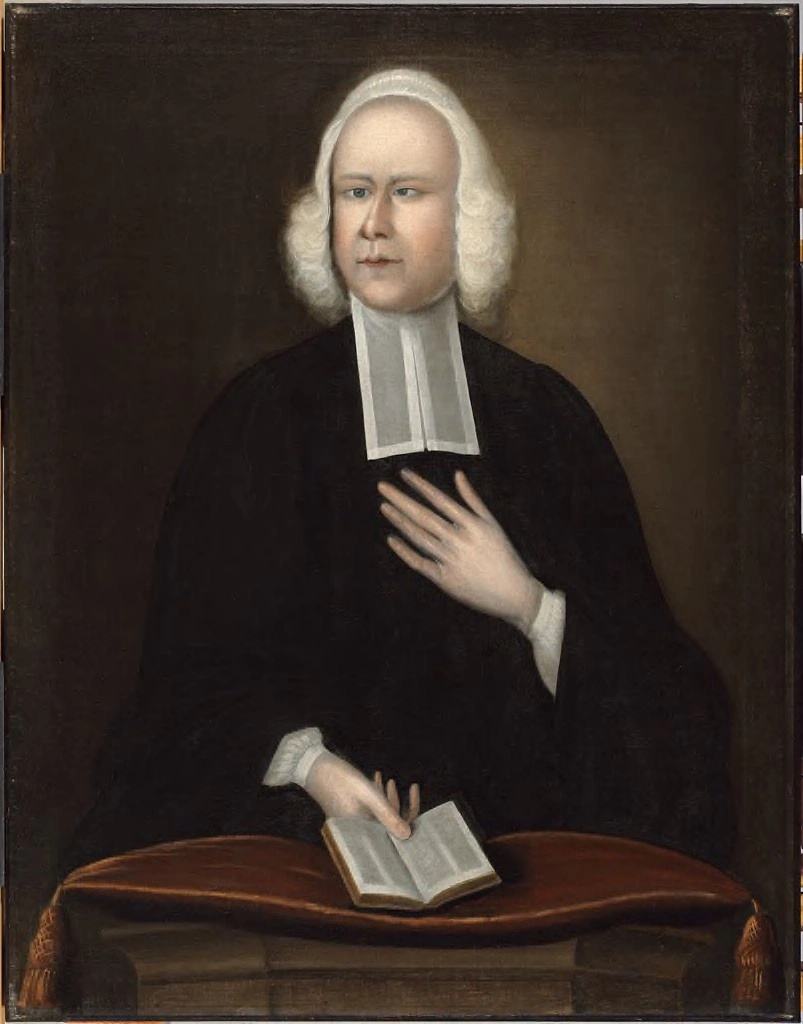
Attr: Joseph Badger
| 30 Quotes | |
| Occup. | Clergyman |
| From | England |
| Born | December 16, 1714 Gloucester, England |
| Died | September 30, 1770 Newburyport, Massachusetts |
| Aged | 55 years |
| Cite | |
Citation Formats
APA Style (7th ed.)
George whitefield biography, facts and quotes. (2026, February 11). FixQuotes. https://fixquotes.com/authors/george-whitefield/
Chicago Style
"George Whitefield biography, facts and quotes." FixQuotes. February 11, 2026. https://fixquotes.com/authors/george-whitefield/.
MLA Style (9th ed.)
"George Whitefield biography, facts and quotes." FixQuotes, 11 Feb. 2026, https://fixquotes.com/authors/george-whitefield/. Accessed 5 Mar. 2026.
Early Life and Background
George Whitefield was born on December 16, 1714, in Gloucester, England, at the Bell Inn, where his father kept an inn and his mother, Elizabeth, managed the household and business after his father died. The noise of travelers, drink, and town talk formed an early contrast with the inward seriousness that later marked him. He grew up amid the social churn of a provincial cathedral city - craftsmen, sailors, and the poor living close to the respectable - and learned early how quickly reputation rises and falls in public view.In his own recollections he judged his youth harshly, describing himself as drawn to theater, vanity, and what he later called "sin" with an intensity that suggests not merely moralizing but a lasting sensitivity to conscience. That temperament - quick to feel guilt, quick to feel joy - became the engine of his preaching. Whitefield never wrote like a detached cleric; he sounded like a man who believed his own life had been rescued at the edge of a precipice, and he spoke as if every listener stood there too.
Education and Formative Influences
Whitefield entered Pembroke College, Oxford, as a servitor in the early 1730s, working to pay his way and absorbing the era's Anglican learning even as he sought more than formal religion. At Oxford he fell in with the "Holy Club" around John and Charles Wesley, where methodical devotion, fasting, and works of mercy were practiced with unusual intensity. The decisive influence was the doctrine of the new birth, mediated through Scripture and devotional writers, which turned his scrupulosity into a coherent evangelical certainty. Ordained deacon in the Church of England in 1736, he preached his first sermons with such emotional force that reports of conversions and offended hearers traveled quickly beyond Oxford and Gloucester.Career, Major Works, and Turning Points
Whitefield's career unfolded as a transatlantic public ministry at the heart of the 18th-century revivals later called the Great Awakening. After an early voyage to Georgia in 1738, he returned repeatedly to Britain and the American colonies, crossing the Atlantic more than a dozen times and preaching to crowds that sometimes numbered in the tens of thousands, often outdoors when churches closed their doors. His dramatic delivery - tears, vivid images of judgment and mercy, direct appeals - made him the most famous itinerant preacher in the English-speaking world, aided by the growth of print culture that spread his journals, sermons, and letters. He founded and tirelessly fundraised for the Bethesda Orphan House near Savannah, a philanthropic project intertwined with his preaching and reputation. The major turning points were his embrace of open-air evangelism after contact with Howell Harris and others in the Welsh revival, and his break with the Wesleys over predestination: Whitefield became the leading Calvinistic voice in the revival while maintaining personal affection for John Wesley despite public controversy.Philosophy, Style, and Themes
Whitefield's inner life was shaped by urgency. He believed the soul stood under a real deadline, and that love must speak plainly even when it wounds pride. That psychology is captured in his conviction that provocation can be a sign of truth: “It is a poor sermon that gives no offense; that neither makes the hearer displeased with himself nor with the preacher”. The offense he sought was not social rebellion for its own sake but spiritual awakening - the collapse of self-deception before God. His preaching aimed to press listeners into decision, and his own relentless travel reads like an enacted theology of haste.He also framed the revival as radically inclusive at the level of grace, even when his era's social structures remained stubbornly unequal. His proclamation, “For in Jesus Christ there is neither male nor female, bond nor free; even you may be the children of God, if you believe in Jesus”. , shows how he could address crowds as a single moral audience, leveling status by insisting on the same need for conversion. The cadence of his exhortation matched his sense of forward motion and spiritual athletics: “Press forward. Do not stop, do not linger in your journey, but strive for the mark set before you”. Stylistically he fused Anglican Scripture-saturation with theatrical presence - a talent sharpened in youth and disciplined by his later piety - producing sermons that were less essays than events, designed to be heard by miners, merchants, enslaved people, and governors alike.
Legacy and Influence
Whitefield died on September 30, 1770, in Newburyport, Massachusetts, after preaching to the end, and was buried beneath the pulpit of Old South Presbyterian Church there - a symbolic resting place for a man who lived as a voice. His legacy is paradoxical: a Church of England cleric who normalized itinerancy and outdoor preaching, a unifying celebrity who also sharpened doctrinal lines, a philanthropist whose orphan house fundraising was inseparable from personal fame, and a revivalist whose message of new birth helped set the emotional and rhetorical patterns of modern evangelicalism. He influenced generations of Protestant preaching in Britain and America, modeling mass communication before modern media, and he remains a central figure for understanding how 18th-century religion, print, and popular culture combined to reshape public life on both sides of the Atlantic.Our collection contains 30 quotes written by George, under the main topics: Witty One-Liners - Mortality - Faith - God - Humility.
Source / external links