
Georges Clemenceau Biography Quotes 13 Report mistakes
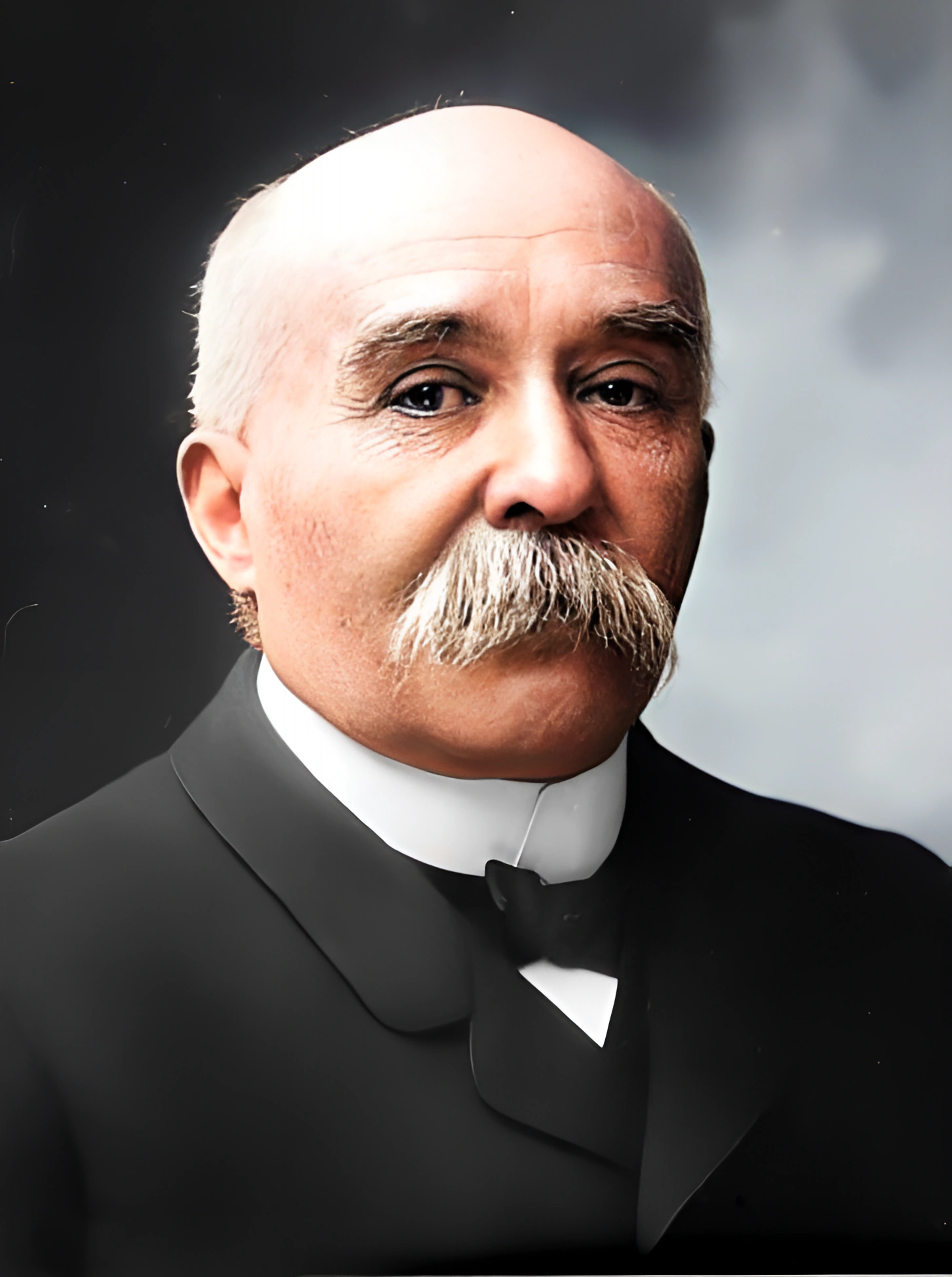
Attr: Paul Nadar
| 13 Quotes | |
| Born as | Georges Benjamin Clemenceau |
| Occup. | Leader |
| From | France |
| Born | September 28, 1841 Mouilleron-en-Pareds, France |
| Died | November 24, 1929 Paris, France |
| Cause | Natural Causes |
| Aged | 88 years |
| Cite | |
Citation Formats
APA Style (7th ed.)
Georges clemenceau biography, facts and quotes. (2026, February 11). FixQuotes. https://fixquotes.com/authors/georges-clemenceau/
Chicago Style
"Georges Clemenceau biography, facts and quotes." FixQuotes. February 11, 2026. https://fixquotes.com/authors/georges-clemenceau/.
MLA Style (9th ed.)
"Georges Clemenceau biography, facts and quotes." FixQuotes, 11 Feb. 2026, https://fixquotes.com/authors/georges-clemenceau/. Accessed 25 Mar. 2026.
Early Life and Background
Georges Benjamin Clemenceau was born on September 28, 1841, at Mouilleron-en-Pareds in the Vendee, a region still haunted by memories of counterrevolution and civil war. His family placed him firmly in the Republican camp: his father, a physician with Voltairean anticlerical convictions, treated patients and argued politics with the same brisk certainty, and the household breathed suspicion of throne and altar. The Second Republic collapsed into Napoleon III's Second Empire during Clemenceau's childhood, teaching him early that regimes could change overnight while power - police, censorship, patronage - endured.Temperamentally, he was less a conciliator than a fighter. Friends and enemies alike would later describe the compact, intense Clemenceau as a man who carried conflict like a moral duty, convinced that public life was a test of will. In youth he absorbed the blunt provincial virtues of the west - stubbornness, work, and an unsentimental view of violence - yet he aimed for Paris, where ideas and ambition were sharpened into weapons.
Education and Formative Influences
In Paris he trained in medicine, earning his doctorate in 1865, but the clinic could not contain him; the Empire's repression did. He wrote, agitated, and was jailed for republican activities, then lived in the United States after 1865, working as a teacher in Connecticut and observing American democracy close up. The experience gave him both admiration for civic energy and a lifelong willingness to puncture national mythologies, while the French disasters of 1870-1871 - defeat by Prussia, the fall of the Empire, the Paris Commune and its bloody suppression - fixed his belief that modern politics would be decided by organization, nerves, and the capacity to endure.Career, Major Works, and Turning Points
Clemenceau entered the new Third Republic as mayor of Montmartre and deputy for Paris, becoming a leading figure of the Radical Left: anticlerical, fiercely parliamentary, and hostile to colonial adventure when it diverted resources from national defense. As a journalist and founder of L'Aurore, he proved as dangerous with a pen as with a vote, helping to drive the Dreyfus Affair toward justice by backing Emile Zola and turning the case into a referendum on the Republic itself. He rose to national command twice: first as minister of the interior and then premier in 1906-1909, when he combined social reform with hard policing of strikes, earning both the title "Tiger" and a reputation for steel. His defining turn came in November 1917, when France, exhausted by war and mutiny, chose him as premier; he imposed discipline, coordinated closely with Allied leaders, and drove the country to victory. At the Paris Peace Conference of 1919 he demanded security against Germany, shaping the harsh edge of Versailles, yet he lost the 1920 presidential election and spent his final years writing memoirs, traveling, and tending the cultivated solitude of old age until his death on November 24, 1929.Philosophy, Style, and Themes
Clemenceau's inner life was organized around action as a moral imperative. He distrusted systems that explained away responsibility, and he distrusted sentiment even more, because sentiment blurred choices. His famous confession, “I don't know whether war is an interlude during peace, or peace an interlude during war”. , was not a flirtation with militarism so much as a bleak diagnosis: the modern state lived under permanent threat, and any politics that pretended otherwise was self-deception. From that premise followed his insistence on vigilance, preparedness, and the grim craft of alliance.His style was surgical - short sentences, irony, impatience with cant - and it matched his view of leadership as sustained pressure. “It is far easier to make war than peace”. captured his skepticism about treaties that lacked enforcement, and it illuminated his behavior at Versailles, where he sought concrete guarantees because he expected fear and revenge to outlast signatures. Yet beneath the hard exterior was a paradoxical humility about learning and change: “Everything I know I learned after I was thirty”. It reads like a late-blooming boast, but it also exposes the engine of his endurance - an adult willingness to revise tactics without surrendering core convictions about the Republic, secularism, and national survival.
Legacy and Influence
Clemenceau endures as the Third Republic's archetypal war leader and as a warning about the costs of victory. In France he symbolizes republican toughness - the politician who could defend a liberal state with illiberal methods when he judged the stakes existential - and his name remains inseparable from 1917-1919, when morale, manpower, and alliance management mattered as much as battles. Internationally, his relentless search for security shaped the post-World War I settlement and fed later debates over whether Versailles was necessary realism or shortsighted severity. His memoirs and journalism, sharp as a scalpel, left a model of political prose that treats rhetoric as a tool of combat, and his life continues to provoke the central question he never stopped asking: how to preserve a democracy in a world that repeatedly tempts it toward force.Our collection contains 13 quotes written by Georges, under the main topics: Witty One-Liners - Motivational - Wisdom - Freedom - Failure.
Other people related to Georges: Aristide Briand (Statesman)
Georges Clemenceau Famous Works
- 1927 In the Evening of My Thought (Book)
- 1912 South America To-Day (Book)
Source / external links