
Georges Courteline Biography Quotes 2 Report mistakes
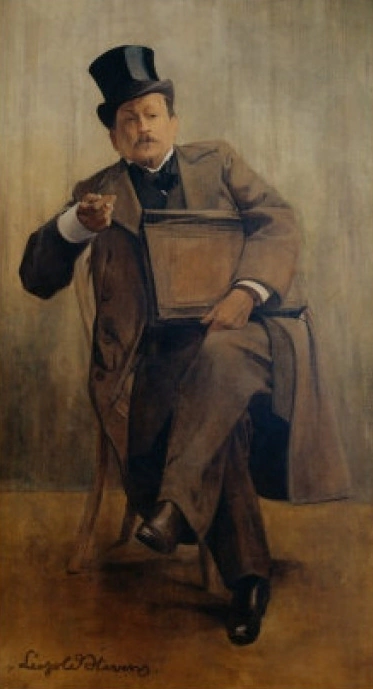
| 2 Quotes | |
| Born as | Georges Victor Marcel Moinaux |
| Occup. | Dramatist |
| From | France |
| Born | June 25, 1858 Tours, France |
| Died | June 25, 1929 Paris, France |
| Aged | 71 years |
| Cite | |
Citation Formats
APA Style (7th ed.)
Georges courteline biography, facts and quotes. (2026, March 26). FixQuotes. https://fixquotes.com/authors/georges-courteline/
Chicago Style
"Georges Courteline biography, facts and quotes." FixQuotes. March 26, 2026. https://fixquotes.com/authors/georges-courteline/.
MLA Style (9th ed.)
"Georges Courteline biography, facts and quotes." FixQuotes, 26 Mar. 2026, https://fixquotes.com/authors/georges-courteline/. Accessed 26 Mar. 2026.
Early Life and Background
Georges Courteline was born Georges Victor Marcel Moinaux in Tours on June 25, 1858, into a literary and theatrical household that gave him both material and method. His father, Jules Moinaux, was a successful humorist and librettist whose journalism and comic writing exposed the young boy to Parisian satire, backstage talk, and the precise mechanics of ridicule. Courteline grew up in the shadow of the Second Empire and came of age as France absorbed the humiliation of the Franco-Prussian War, the fall of Napoleon III, and the unsettled early decades of the Third Republic. That instability mattered: the bureaucracy, militarism, and petty officialdom he later mocked were not abstractions but the visible texture of modern French life.
His childhood also carried strain. The domestic world was less serene than the image of a cultivated bourgeois family might suggest, and Courteline developed early the wary eye of someone who sees vanity, hypocrisy, and self-interest operating beneath polite surfaces. The pseudonym "Courteline" helped separate the son from the father while preserving the inheritance of comic observation. From the beginning he was drawn less to grand heroics than to the comedy of institutions - offices, barracks, marriages, tribunals - where people hid behind procedure and custom. That instinct, sharpened by irritation as much as wit, would become the core of his dramatic gift.
Education and Formative Influences
He was educated in France during the republican reorganization of public life, but his decisive schooling came outside classrooms. Like many young men of his generation, he performed military service, an experience that furnished the raw material for some of his most famous anti-military satire. The barracks taught him the tyranny of routine, the absurdity of rank, and the comic tragedy of men reduced to regulations; these impressions later surfaced in Les Gaites de l'escadron and related sketches. He also worked in the civil service, notably in a government office in Paris, where he observed clerks, supervisors, and endless paperwork with anthropological precision. Alongside this practical apprenticeship ran literary influences: the satirical journalism of the nineteenth century, the exact social eye of Flaubert, the naturalist atmosphere of the period, and the boulevard theater's mastery of timing. Yet Courteline was never simply a naturalist or farceur; he fused documentary detail with a moral skepticism that made the everyday seem at once ludicrous and faintly cruel.
Career, Major Works, and Turning Points
Courteline emerged in the 1880s and 1890s as one of the sharpest comic dramatists of the Third Republic, first through journalism and prose sketches, then through theater. Les Gaites de l'escadron established his reputation by turning military life into a theater of pettiness and incompetence. He followed it with a string of short plays and narratives that anatomized bourgeois habits and administrative absurdity: Boubouroche, with its portrait of masculine self-deception; Messieurs les ronds-de-cuir, his merciless study of office life; and courtroom and domestic comedies such as La Paix chez soi and Un Client serieux. In 1893, his success on the stage confirmed that he had found his ideal form: brief, concentrated comedy built on official language, repetition, and the collapse of dignity. Recognition gradually turned him from satirical outsider into established man of letters; he was elected to the Academie Goncourt and later to the Academie francaise. Yet his best work never lost the sting of someone who had looked from below at institutions pretending to be rational.
Philosophy, Style, and Themes
Courteline's art rests on a bleak but liberating assumption: human beings are inconsistent, selfish, vain, and often ridiculous, especially when clothed in authority. He was not a reformer in the solemn sense. He distrusted uplift, preferred exposure, and understood that comedy becomes most devastating when it records ordinary speech exactly. His dialogue is clipped, repetitive, bureaucratic, and therefore unforgettable; people damn themselves by the formulas they rely on. The office memorandum, the military order, the marital quarrel, the judge's pronouncement - these are his chosen music. He saw institutions not as majestic structures but as machines for preserving habit and masking incompetence. His humor can seem light on the surface, yet it is powered by indignation at the ways language protects stupidity and power.
At the psychological center of his work lies a pitiless knowledge of self-excuse. “If it was necessary to tolerate in other people everything that one permits oneself, life would be unbearable”. That epigram captures his deepest theme: the human talent for granting oneself indulgence while punishing others for the same faults. The line could serve as the secret law of Boubouroche, of jealous husbands, officious clerks, pompous officers, and magistrates intoxicated by their own role. Equally revealing is his worldly acceptance of squandered experience: “It is better to waste one's youth than to do nothing with it at all”. Behind the wit is neither romantic rebellion nor moral sermon, but a preference for lived folly over sterile correctness. Courteline's comedy is therefore double-edged - scornful of illusion, yet oddly tender toward weakness, because weakness is the common condition from which all his absurd tyrannies arise.
Legacy and Influence
Courteline died in Paris on June 25, 1929, on his seventy-first birthday, leaving behind a body of work that remains central to the French comic tradition. He helped define a specifically modern satire of bureaucracy and institutional language that runs forward into twentieth-century theater, radio comedy, and administrative farce. Later dramatists and humorists found in him a model of compression: scenes built from tiny humiliations, official cliches, and the exposure of social pretense. His France was the France of clerks, corporals, litigants, and married couples rather than heroes, and for that reason it has lasted. Whenever comedy reveals how systems are inhabited by vanity, fear, and routine, Courteline is present - dry, exact, and still uncomfortably current.
Our collection contains 2 quotes written by Georges, under the main topics: Ethics & Morality - Youth.
Other people related to Georges: Alphonse Allais (Writer)