
Georges Jacques Danton Biography Quotes 7 Report mistakes
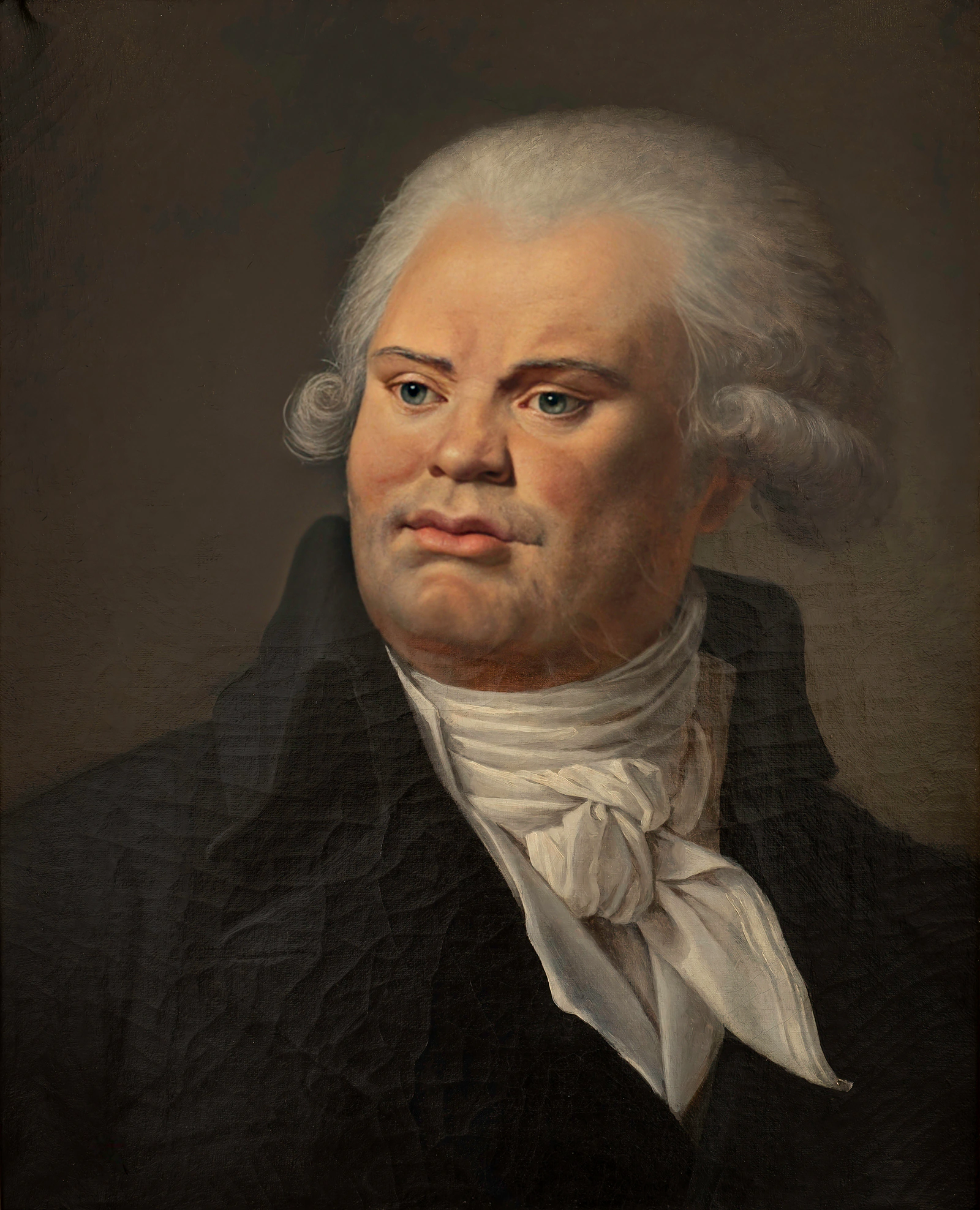
| 7 Quotes | |
| Occup. | Revolutionary |
| From | France |
| Born | October 26, 1759 |
| Died | April 5, 1794 |
| Aged | 34 years |
| Cite | |
Citation Formats
APA Style (7th ed.)
Georges jacques danton biography, facts and quotes. (2026, February 11). FixQuotes. https://fixquotes.com/authors/georges-jacques-danton/
Chicago Style
"Georges Jacques Danton biography, facts and quotes." FixQuotes. February 11, 2026. https://fixquotes.com/authors/georges-jacques-danton/.
MLA Style (9th ed.)
"Georges Jacques Danton biography, facts and quotes." FixQuotes, 11 Feb. 2026, https://fixquotes.com/authors/georges-jacques-danton/. Accessed 12 Feb. 2026.
Early Life and Background
Georges Jacques Danton was born on 1759-10-26 in Arcis-sur-Aube, a small market town in Champagne whose rhythms were agricultural and legal rather than courtly. His family belonged to the respectable provincial middle strata; his father, a local officer of justice, died when Danton was young, leaving the household to be held together by a widowed mother and kin networks that valued advancement through offices and learning. The roughness of his youth - including a disfiguring injury that left his face pockmarked and one side slightly misshapen - became part of the physical legend: a body that looked like it had already survived something, and a voice said to fill rooms.Paris, when Danton arrived as a young man, was a metropolis of lawyers, pamphlets, cafes, and hunger, but also of ambition in the shadow of an increasingly discredited monarchy. He married Antoinette Gabrielle Charpentier in 1787 and settled into the life of an avocat with a growing practice. Domestic stability did not dull his political appetite; it trained it. He learned the price of bread, the cruelty of legal formalities, and the way reputations are made in public - all ingredients of the revolutionary theater he would soon help script.
Education and Formative Influences
Danton was educated locally before moving through the Parisian legal world, studying law and absorbing the argumentative style of the bar, where persuasion mattered as much as doctrine. Enlightenment ideas and the language of rights were in the air, but Danton's temperament was less abstract than many philosophes: he was formed by the practical arts of advocacy, the sociability of clubs, and the street-level pressures of a capital that could turn politics into a matter of survival overnight. The Estates-General and the early National Assembly years taught him how quickly legitimacy could shift from birth to performance.Career, Major Works, and Turning Points
With the Revolution, Danton emerged as a force in the Cordeliers Club and in the militant politics of the Paris sections, helping channel popular anger into organized pressure. He was a prominent figure around the insurrection of 10 August 1792 that toppled the monarchy and soon after became Minister of Justice, where he pushed urgent measures against internal and external enemies as France entered total war. Elected to the National Convention, he voted for the execution of Louis XVI and helped shape the emergency architecture of revolutionary government, including the early formation of the Committee of Public Safety. Yet the logic of emergency devoured its creators: after his wife's death in 1793 and amid accelerating Terror, Danton argued for moderation and negotiations, aligning with the so-called Indulgents around Camille Desmoulins, while rivals cast him as corrupt and insufficiently vigilant. Arrested in March 1794, he was tried by the Revolutionary Tribunal under tightened rules designed to silence him, and executed by guillotine on 1794-04-05.Philosophy, Style, and Themes
Danton's political psychology was built around velocity: act first, justify second, and seize the moral initiative before opponents define the situation. His most famous imperative, "Audacity, more audacity, always audacity". , is not mere bravado but a theory of revolutionary time: crises compress choice, and hesitation becomes complicity. He understood crowds and assemblies as emotional engines that required visible confidence; his oratory favored blunt verbs, concrete enemies, and the promise of protection for "the people" against aristocrats, traitors, and invaders.At the same time, Danton was unusually candid about the Revolution's darker mechanics. "In revolutions authority remains with the greatest scoundrels". reads as self-warning as much as accusation: he knew that fear rewards the ruthless, and that emergency powers attract those least restrained by scruple. That fatal honesty did not soften his theatrical defiance. On the way to death he reportedly said, "Show my head to the people, it is worth seeing". , a line that captures his fusion of vanity and sacrifice, and his instinct that politics is spectacle even at the scaffold. Danton's theme is tragic agency - the belief that history can be pushed, followed by the realization that momentum can no longer be steered.
Legacy and Influence
Danton endures as the Revolution's great realist: a man of appetite and empathy, capable of both ruthless expedients and late remorse, whose career illustrates how insurgent legitimacy can become institutional coercion. Historians still debate his corruption, his responsibility for revolutionary violence, and whether his calls for clemency were principled or tactical, but his influence is secure in the language of political urgency and the archetype of the charismatic tribune. In literature and film he appears as the counterweight to Robespierre - flesh to virtue, improvisation to doctrine - and his life remains a study in how revolutions recruit whole personalities, then punish the parts that refuse to harden.Our collection contains 7 quotes written by Georges, under the main topics: Motivational - Justice - Legacy & Remembrance - War.
Source / external links