
Gerald Massey Biography Quotes 2 Report mistakes
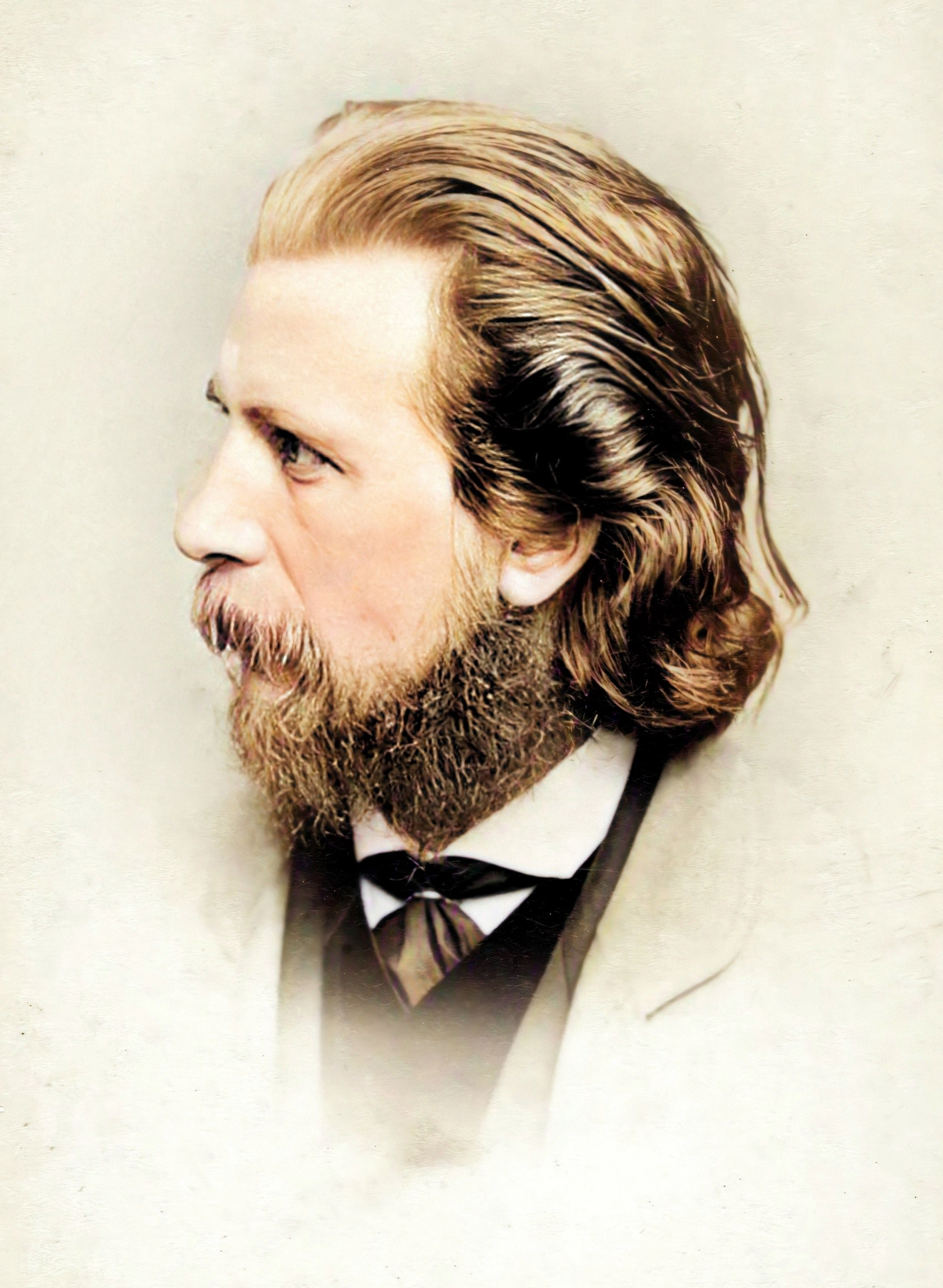
Attr: John & Charles Watkins, CC0
| 2 Quotes | |
| Occup. | Poet |
| From | England |
| Born | May 29, 1828 Hackney, London, England |
| Died | October 29, 1907 London, England |
| Aged | 79 years |
| Cite | |
Citation Formats
APA Style (7th ed.)
Gerald massey biography, facts and quotes. (2026, February 27). FixQuotes. https://fixquotes.com/authors/gerald-massey/
Chicago Style
"Gerald Massey biography, facts and quotes." FixQuotes. February 27, 2026. https://fixquotes.com/authors/gerald-massey/.
MLA Style (9th ed.)
"Gerald Massey biography, facts and quotes." FixQuotes, 27 Feb. 2026, https://fixquotes.com/authors/gerald-massey/. Accessed 6 Mar. 2026.
Early Life and Background
Gerald Massey was born on May 29, 1828, at Tring in Hertfordshire, England, into a poor laboring family whose precariousness shaped his imagination as firmly as any book. His childhood coincided with the aftershocks of early industrial England: rural work was uncertain, wages were thin, and the promise of social mobility was more rhetoric than reality for the working class. The insecurity was not abstract to him - it was felt in the household budget and in the daily knowledge that hunger was never far away.
He began work young, including stints in silk and straw-plait trades, and later as a clerk, learning early how easily dignity could be made conditional on employment. That experience gave him a lifelong sympathy for the self-taught, the underpaid, and the politically excluded. It also trained his ear for the cadences of ordinary speech and the moral heat of popular agitation - the soundscape of meetings, street talk, and cheap print - which later fed the directness and emotional urgency of his verse.
Education and Formative Influences
Massey was largely self-educated, forming himself in the library of necessity: newspapers, popular radical writing, and the broad Victorian poetry that circulated beyond elite schools. He came of age in the era of Chartism and reform campaigns, when the idea that the working man might speak for himself was still contested, and his intellectual formation fused literary aspiration with social conscience. The discipline of self-instruction - reading late, writing amid fatigue, arguing ideas in public rooms - became part of his identity, and it fostered a belief that art should be an instrument of moral awakening as well as beauty.
Career, Major Works, and Turning Points
He emerged as a poet in mid-Victorian London, publishing early volumes that sought both lyrical recognition and a public role for the poet as witness. His reputation widened with Poems and Ballads (1859), and he gained a larger readership through the widely reprinted "The Ballad of Babe Christabel" (later revised as "Havelock's March"), a poem whose domestic pathos and narrative clarity suited Victorian taste while also revealing his instinct for sentimental force as a social language. Over time, his interests broadened beyond poetry toward comparative religion and ancient myth, culminating in the vast, controversial The Natural Genesis (1883) and later works that treated Egypt as a key to religious origins; this turn from lyric to speculation marked a major pivot in his public identity, drawing both fascination and skepticism as he pressed beyond the boundaries of conventional scholarship.
Philosophy, Style, and Themes
Massey's inner life was shaped by an oscillation between deprivation and sudden grace - the memory of hardship alongside an almost mystical attentiveness to unexpected reprieve. His writing repeatedly returns to the idea that human meaning arrives obliquely, not as reward for planning but as encounter: “Not by appointment do we meet delight or joy; they heed not our expectancy; but round some corner of the streets of life they of a sudden greet us with a smile”. This is not merely comfort; it is psychology. The line implies a man trained by uncertainty to scan the ordinary street for signs of mercy, a temperament alert to chance because necessity taught him that scheduled happiness is a luxury.
His style blends Victorian melody with the rhetoric of the platform - emotionally legible, morally pointed, and often inclined to aphorism. Compassion, for him, is not sentimental decoration but a corrective to the misreadings people impose on their own lives: “There's no dearth of kindness In the world of ours; Only in our blindness We gather thorns for flowers”. The moral diagnosis is inward: suffering is real, but so is the self-inflicted wound of cynicism, resentment, and misperception. That same inwardness fueled his later mythic projects, where he sought hidden continuities beneath doctrine and argued that religions, like individuals, misrecognize their origins - an interpretive habit that made him bold, sometimes overreaching, but always driven by the need to find pattern where history looked like loss.
Legacy and Influence
Massey died on October 29, 1907, leaving a divided legacy: a once-prominent poet whose fame waned as literary fashion shifted, and an idiosyncratic mythographer whose Egyptological claims were largely rejected by specialists even as they influenced esoteric and alternative traditions. Yet his career remains a revealing Victorian life-story: a self-made writer carrying working-class memory into print, insisting that poetry speak plainly to suffering, and later refusing the era's neat compartments between art, faith, and history. His enduring significance lies less in institutional acceptance than in the force of his example - a man who treated literature as moral labor, and who, across verse and speculation alike, kept searching for the moment when kindness and meaning turn the corner and “greet us with a smile”.
Our collection contains 2 quotes written by Gerald, under the main topics: Kindness - Joy.
Gerald Massey Famous Works
- 1907 Ancient Egypt: The Light of the World (Book)
- 1894 Gnostic and Historic Christianity (Book)
- 1887 Luniolatry: Ancient and Modern (Book)
- 1886 The Historical Jesus and Mythical Christ (Book)
- 1883 The Natural Genesis (Book)
- 1881 A Book of the Beginnings (Book)
Source / external links