
Gerald Scarfe Biography Quotes 18 Report mistakes
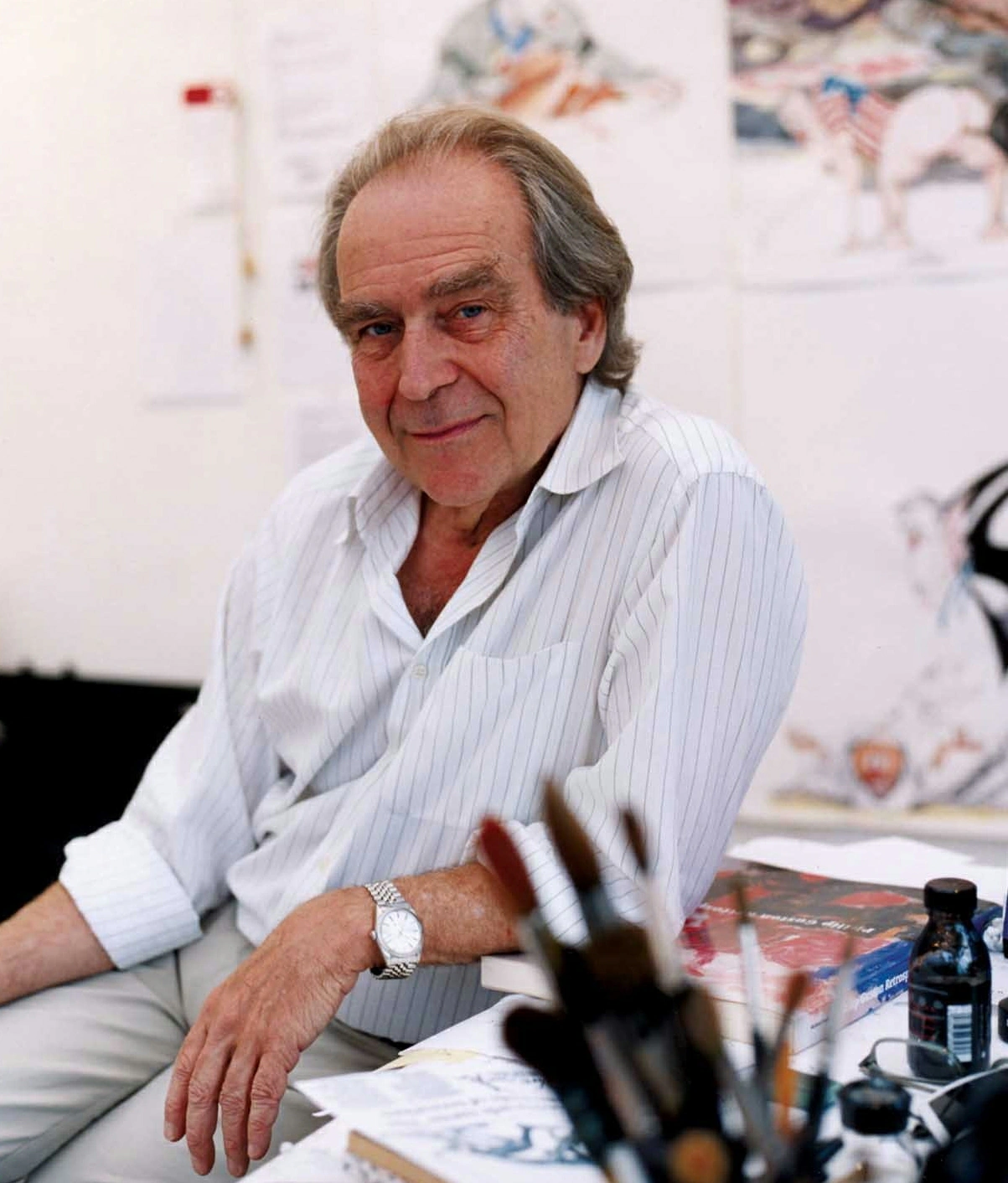
| 18 Quotes | |
| Born as | Gerald Anthony Scarfe |
| Occup. | Artist |
| From | United Kingdom |
| Born | June 1, 1936 St John's Wood, London, England |
| Age | 89 years |
| Cite | |
Citation Formats
APA Style (7th ed.)
Gerald scarfe biography, facts and quotes. (2026, February 11). FixQuotes. https://fixquotes.com/authors/gerald-scarfe/
Chicago Style
"Gerald Scarfe biography, facts and quotes." FixQuotes. February 11, 2026. https://fixquotes.com/authors/gerald-scarfe/.
MLA Style (9th ed.)
"Gerald Scarfe biography, facts and quotes." FixQuotes, 11 Feb. 2026, https://fixquotes.com/authors/gerald-scarfe/. Accessed 5 Mar. 2026.
Early Life and Background
Gerald Anthony Scarfe was born on June 1, 1936, in England, into a childhood bracketed by the Second World War and its long afterimage. His earliest memories were not of heroic pageantry but of rationing, blackouts, and the anxious choreography of civilians preparing for the worst. That atmosphere mattered: Scarfe would grow into an artist for whom politics was not an abstract debate but an intimacy, a pressure on the body, a force that bent posture and expression.The war also taught him the visual language of fear - uniforms, sirens, propaganda posters, and the theatricality of authority. Later, when he became famous for drawing swollen-faced leaders and contorted crowds, it was less a taste for cruelty than a record of how power feels when you are small. His line would become a nervous seismograph: fast, jagged, and allergic to complacency.
Education and Formative Influences
Scarfe trained at St Martin's School of Art in London, arriving as postwar Britain lurched from austerity toward the consumer optimism of the 1950s and early 1960s. The London art world was opening to American illustration, modern advertising, and satire that treated public life as fair game; Scarfe absorbed all of it while keeping one eye on newspapers and the other on the stagecraft of politicians. He began publishing while still young, and by the time Swinging London was being packaged for export, his sensibility was already sharpening against the era's glossy surfaces.Career, Major Works, and Turning Points
Scarfe became one of Britain's defining political cartoonists, associated for decades with The Sunday Times and a wider international press, known for caricatures that made leaders look as if their inner vices had burst through the skin. He expanded beyond editorial work into theatre and film design, most famously creating the animated sequences for Pink Floyd - The Wall (1982), including the imagery for "Another Brick in the Wall" and the film's grotesque authoritarian pageant. His later screen work included character development and conceptual design for Disney's Hercules (1997), an unusual bridge between corrosive satire and mainstream animation. He also traveled to conflict zones as an artist-reporter, adding firsthand witness to an already anti-militarist vision.Philosophy, Style, and Themes
Scarfe's art begins with a premise about truth: that the public mask is never the whole face. His caricatures distort not to lie, but to reveal - turning vanity into obesity, aggression into weaponry, hypocrisy into a grin stretched too far. The line is quick and abrasive, often scratchy, as if speed were an ethical necessity: the drawing must land before the official story hardens. Even when he designs for entertainment, his figures tend to look pressured by the world around them, as if the air itself were political.The deepest motor in Scarfe's work is early fear carried into adulthood and refashioned as critique. He repeatedly returned to wartime childhood sensations - the body made small, instructed, and threatened - and translated them into images of crowds herded, minds regimented, and leaders enlarged to monstrous scale. “All the children had to wear a gas mask in case of a gas attack by the Germans. They tried to make the masks like Mickey Mouse faces so the children would like them. But I didn't. They had big ears on them”. That memory is not anecdote; it is a template for his recurring motif of the human turned into an object, a face redesigned to soothe fear while deepening it. In The Wall, he found an equivalent visual chorus for that trauma: “And having suffered for part of the war when I was a child. I was too young to really understand what was going on but one of my favorite pieces of animation now is that Goodbye Blue Sky in The Wall because that deals directly with that period in time”. His anti-war stance was not fashionable pacifism but lived recoil, extended by later witnessing: “I have been to several wars to draw. I went to Vietnam. And made drawings in Vietnam during that period of the war there, and found that to be a very very sad situation”. Legacy and Influence
Scarfe's enduring influence lies in how he merged reportage, psychology, and grotesque beauty into a single visual grammar recognizable across decades: the politician as symptom, the crowd as anxious organism, the state as theatre. He helped set the tone for modern British caricature - harsher, more expressionist, less interested in charming likeness than in moral pressure - and proved that editorial drawing could migrate into popular culture without losing its teeth. The Wall remains a reference point for political animation, while his work for major studios showed that even commercial character design can carry the signature of dissent.
Our collection contains 18 quotes written by Gerald, under the main topics: Art - Music - Movie - Health - Book.
Other people related to Gerald: Jane Asher (Actress)
Source / external links