
Geraldine Ferraro Biography Quotes 30 Report mistakes
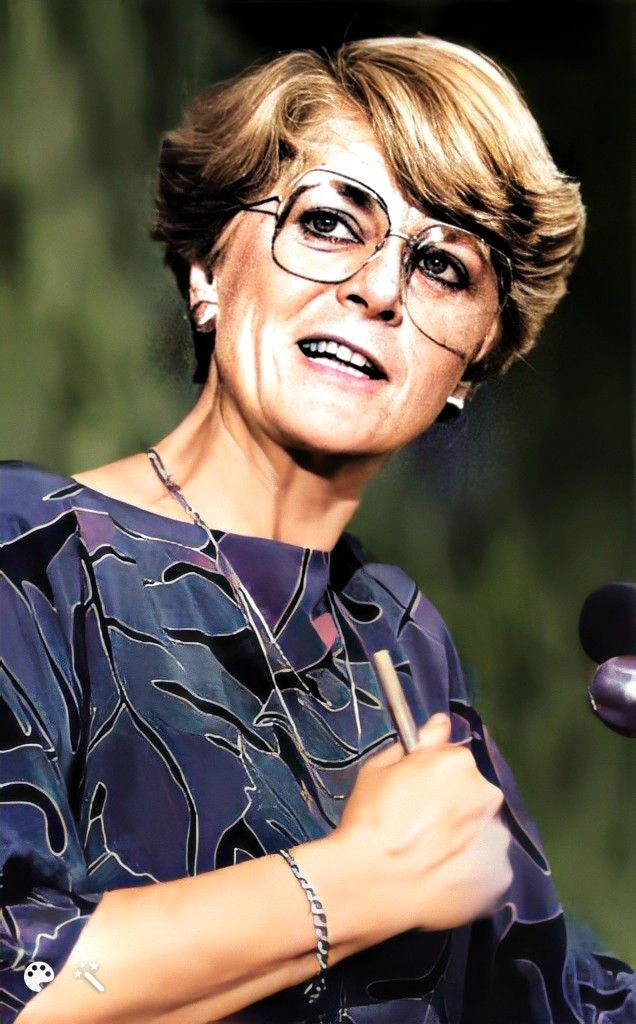
| 30 Quotes | |
| Occup. | Politician |
| From | USA |
| Born | August 26, 1935 Newburgh, New York |
| Died | March 26, 2011 |
| Aged | 75 years |
| Cite | |
Citation Formats
APA Style (7th ed.)
Geraldine ferraro biography, facts and quotes. (2026, March 2). FixQuotes. https://fixquotes.com/authors/geraldine-ferraro/
Chicago Style
"Geraldine Ferraro biography, facts and quotes." FixQuotes. March 2, 2026. https://fixquotes.com/authors/geraldine-ferraro/.
MLA Style (9th ed.)
"Geraldine Ferraro biography, facts and quotes." FixQuotes, 2 Mar. 2026, https://fixquotes.com/authors/geraldine-ferraro/. Accessed 25 Mar. 2026.
Early Life and Background
Geraldine Anne Ferraro was born on August 26, 1935, in Newburgh, New York, to Italian immigrant parents, Antonetta Corrieri and Dominick Ferraro. Dominick, a restaurateur, died when she was young, leaving her mother to piece together stability through long hours and careful thrift. The experience marked Ferraro early: ambition was not a mood but a strategy, and public respectability, especially for a widowed mother in a tight-knit Catholic community, could feel as essential as rent.She grew up in the orbit of New York City and its outer-borough sensibility of hard work, ethnic pride, and political machines that translated neighborhood loyalty into power. Marriage in 1960 to John Zaccaro, a real estate developer, brought her into Queens civic life - parent associations, parish networks, and the practical politics of schools, housing, and local patronage - even as she raised three children and watched second-wave feminism sharpen the question of why so much informal labor by women produced so little formal authority.
Education and Formative Influences
Ferraro attended Mount Saint Mary's Academy and graduated from Marymount Manhattan College in 1956, then earned her JD from Fordham University School of Law in 1960 - a credential still uncommon for women in her circles. Catholic schooling gave her a durable moral vocabulary, but law gave her the instrument: rules could be argued, not merely obeyed. The period's crosscurrents - civil rights organizing, urban unrest, and the rise of a more self-conscious women's movement - framed her sense that citizenship required both empathy for ordinary families and a willingness to confront institutions that hid behind tradition.Career, Major Works, and Turning Points
After years that included teaching and family life, Ferraro became an assistant district attorney in Queens in 1974, where she built a reputation working on cases involving sexual offenses and child abuse, pushing the system to take such crimes seriously. Elected to the US House in 1978 from New York's 9th district, she aligned with Democratic urban liberalism: Social Security and Medicare protection, equal rights, and a defense of working- and middle-class pocketbooks. Her national turning point came in 1984 when Walter Mondale selected her as the Democratic nominee for vice president - the first woman on a major party ticket. The campaign elevated her overnight into a symbol and a target: constant scrutiny of her family finances and her husband's business dealings, aggressive questioning of her foreign policy readiness, and an unrelenting media fascination with gender and demeanor. She lost with Mondale in a Reagan landslide, but the nomination cracked open the idea of who could plausibly govern, and she spent subsequent decades as an author, commentator, UN representative, and party advocate, later facing multiple myeloma with public candor until her death on March 26, 2011, in Boston.Philosophy, Style, and Themes
Ferraro's political psyche was built from two tensions she never fully resolved - and did not try to. One was between performance and authenticity. She had the prosecutor's instinct to prepare and the street politician's instinct to improvise, and she admitted, in a line that reads like both a joke and a self-defense mechanism, “If you ask me a question, don't tell me what the question is in advance, 'cause I'd rather not know”. It suggests a temperament that trusted spontaneity over scripting, and it also hints at how she resisted being managed - a useful trait for a woman expected to be "safe" on a ticket built for reassurance.The other tension was between symbolism and results. She understood that her candidacy carried meanings beyond electoral math, and she could name that without sentimentality: "And it was, it was not beating George Bush, believe it or not, the bottom line as far as I was concerned was introducing to the public who Gerry Ferraro was" . That candor reveals a strategist's realism about the 1984 terrain, but also a deeper theme in her life: representation as civic education. Even her late-life public voice, sharpened by age and family, kept returning to intergenerational responsibility - “And I have to tell you as a grandmother, I worry about the fact that my grandchildren are going to be paying for all the spending, including military spending that has gone on, and the tax cuts that have come through”. It is the prosecutor's closing argument transposed to fiscal policy: identify who is harmed, name the choices, and make accountability personal.
Legacy and Influence
Ferraro's enduring influence is less a single statute than a shift in American political imagination. She made the national ticket thinkable for women, not as novelty but as governing possibility, and she forced parties, press, and voters to confront how competence is judged through gendered expectations - voice, family, ambition, "likability" - in ways men rarely face. Later breakthroughs, from women nominees for governor and senator to the 2008 and 2016 presidential cycles and the 2020 election of a woman vice president, unfolded in a landscape she helped redraw. Ferraro's life remains a case study in how barrier-breaking is both triumph and ordeal: a public career fueled by neighborhood grit, legal discipline, and moral seriousness, and a legacy that persists whenever political power is asked to look more like the country it claims to represent.Our collection contains 30 quotes written by Geraldine, under the main topics: Witty One-Liners - Truth - Never Give Up - Sarcastic - Resilience.