
Giacomo Casanova Biography Quotes 34 Report mistakes
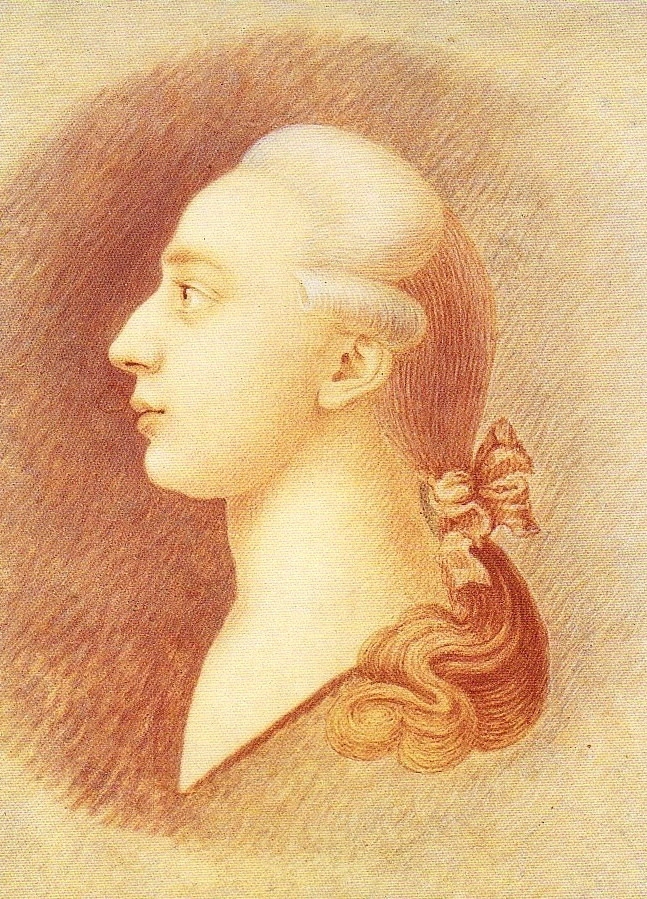
| 34 Quotes | |
| Occup. | Celebrity |
| From | Italy |
| Born | April 2, 1725 |
| Died | June 4, 1798 |
| Aged | 73 years |
| Cite | |
Citation Formats
APA Style (7th ed.)
Giacomo casanova biography, facts and quotes. (2026, February 11). FixQuotes. https://fixquotes.com/authors/giacomo-casanova/
Chicago Style
"Giacomo Casanova biography, facts and quotes." FixQuotes. February 11, 2026. https://fixquotes.com/authors/giacomo-casanova/.
MLA Style (9th ed.)
"Giacomo Casanova biography, facts and quotes." FixQuotes, 11 Feb. 2026, https://fixquotes.com/authors/giacomo-casanova/. Accessed 27 Mar. 2026.
Early Life and Background
Giacomo Girolamo Casanova was born on April 2, 1725, in Venice, a maritime republic already fading from imperial dominance yet still glittering as Europes theater of masks, gambling, and diplomatic intrigue. His parents, Zanetta Farussi and Gaetano Giuseppe Casanova, were actors, and the boys earliest world was the playhouse - applause, shifting identities, and the precarious dignity of performers in a patrician city that loved spectacle while policing status.Frequently ill as a child and sent to live for periods away from his mother, Casanova learned early to treat the body as both limitation and instrument. Venice offered him a lesson in doubleness: devout ritual alongside libertine commerce, republican institutions beside private patronage. That tension - between rules and improvisation - shaped the adult who would test every boundary while insisting on his own rationality.
Education and Formative Influences
Gifted and restless, he studied at Padua, earning a law degree as a teenager while absorbing classical literature, mathematics, music, and the era's philosophical disputes. He took minor orders and briefly pursued an ecclesiastical path, but his temperament suited salons and card tables more than sacristies. The Republics networks of patrons and protectors taught him how talent, charm, and risk could substitute for birth - a lesson he would later apply across courts from Paris to St. Petersburg.Career, Major Works, and Turning Points
Casanova became a professional cosmopolitan: soldier for Venice, violinist at San Samuele, secretary and companion to nobles, gambler, confidence man, and occasional diplomat, moving through Paris, Dresden, Vienna, London, Madrid, and beyond. A decisive turning point came in 1755 when Venetian authorities imprisoned him in the Piombi, the lead-roofed cells of the Doges Palace, for impiety and moral offenses; his audacious 1756 escape made him a European celebrity. He later worked as an informer for Venice, pursued schemes from state lotteries to alchemical cures, and in his final years, isolated at Dux Castle in Bohemia as librarian to Count Waldstein, he wrote his masterpiece, Histoire de ma vie (History of My Life), an unmatched record of Enlightenment society seen from the inside by a man both actor and analyst.Philosophy, Style, and Themes
Casanovas memoir is not merely erotic adventure but a sustained inquiry into freedom, appetite, and self-fashioning in an age that prized reason yet feasted on sensation. He distrusted abstraction that denied the body, and he also distrusted desire that denied judgment: “Man is free; yet we must not suppose that he is at liberty to do everything he pleases, for he becomes a slave the moment he allows his actions to be ruled by passion”. The sentence reads like self-defense and self-indictment at once, revealing a man who wanted to believe he directed his impulses even as he repeatedly staged his life around them.His psychology turns on a paradoxical erotic humility that doubles as strategy: “I don't conquer, I submit”. Submission here is performance - a way to offer women agency while preserving his own myth of irresistible responsiveness. His famous cynicism about permanence - “Marriage is the tomb of love”. - is less a slogan than a confession of fear: that repetition and legality would expose the limits of enchantment. Stylistically he writes with reportorial precision - money, meals, addresses, etiquette - because for him the material world is the ledger where character reveals itself. He grants enemies their due, sketches philosophers and princes with the same amused exactness, and turns error into narrative capital, making experience, not doctrine, his final authority.
Legacy and Influence
Dying on June 4, 1798, far from Venice, Casanova left behind the modern template of the celebrity adventurer: self-made, hyper-mobile, narrated into existence. History of My Life became a cornerstone of autobiographical literature and a primary source for the social texture of 18th-century Europe - its sexual politics, policing, travel, and intellectual fashions. His name survived as shorthand for seduction, but his deeper influence lies in how he recorded the Enlightenment from the level of streets, bedrooms, theaters, and prisons, showing how a person can be both author and artifact of their time.Our collection contains 34 quotes written by Giacomo, under the main topics: Witty One-Liners - Ethics & Morality - Truth - Wisdom - Friendship.
Source / external links