
Gianni Versace Biography Quotes 7 Report mistakes
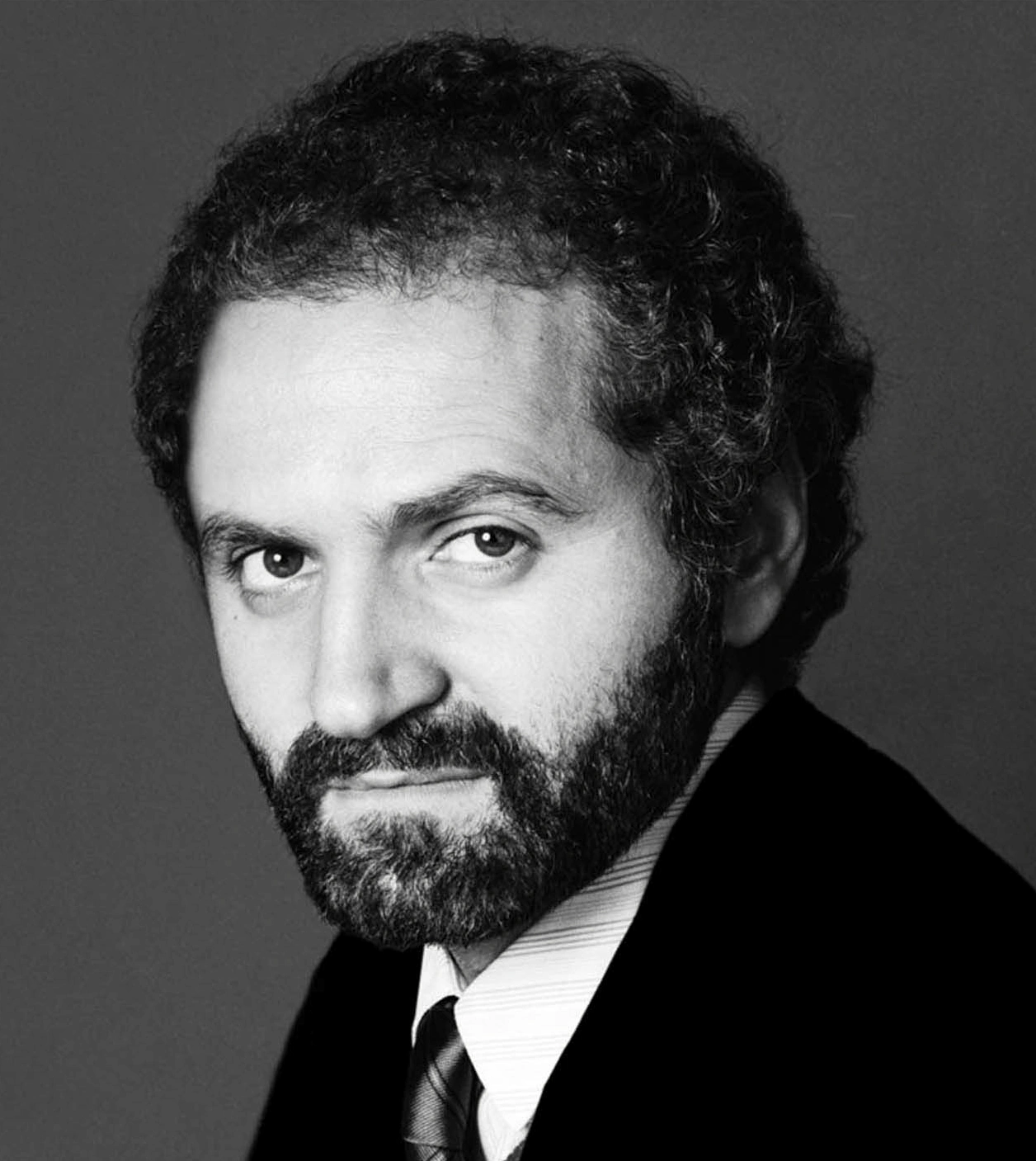
| 7 Quotes | |
| Occup. | Designer |
| From | Italy |
| Born | December 2, 1946 Reggio Calabria, Italy |
| Died | July 15, 1997 Miami Beach, Florida, U.S. |
| Cause | Murder |
| Aged | 50 years |
| Cite | |
Citation Formats
APA Style (7th ed.)
Gianni versace biography, facts and quotes. (2026, February 11). FixQuotes. https://fixquotes.com/authors/gianni-versace/
Chicago Style
"Gianni Versace biography, facts and quotes." FixQuotes. February 11, 2026. https://fixquotes.com/authors/gianni-versace/.
MLA Style (9th ed.)
"Gianni Versace biography, facts and quotes." FixQuotes, 11 Feb. 2026, https://fixquotes.com/authors/gianni-versace/. Accessed 25 Mar. 2026.
Early Life and Background
Gianni Versace was born on December 2, 1946, in Reggio Calabria, at the toe of southern Italy where Greco-Roman ruins, Catholic ceremony, and the daily choreography of the street made spectacle feel native. His mother, Francesca Versace, ran a dressmaking atelier, and the young Versace grew up watching fabric become identity under her hands. The household was practical, ambitious, and tightly bound; Gianni absorbed both the discipline of craft and the appetite for escape that marked postwar Italy as it accelerated from scarcity into consumer modernity.Reggio Calabria in the 1950s and 1960s was far from the fashion capitals, yet it offered a first lesson that style could be armor and provocation at once. Versace learned early to read bodies - how people held themselves, how clothing could exaggerate or liberate them - and to treat adornment as a language rather than decoration. By the time Italy entered the era of televised glamour and mass travel, he was ready to leave the margins for the center.
Education and Formative Influences
Versace did not follow a conventional academic path; his formative education was apprenticeship-by-proximity in his mother's shop and in the broader visual culture of Italy's boom years. He studied the cut and fall of garments, the logic of fittings, and the theatrics of display, while feeding a private obsession with art history - especially classical motifs - and with contemporary music, film, and celebrity. Those influences fused into a sensibility that treated the runway as a stage and the wearer as protagonist, a mindset that later aligned naturally with photographers, stylists, and pop stars.Career, Major Works, and Turning Points
After moving to Milan in the early 1970s, Versace designed for established labels before launching Gianni Versace S.p.A. and presenting his first women's collection in 1978, quickly followed by menswear, accessories, and a brand architecture that made the logo itself a talisman. The Medusa head - at once classical and hypnotic - became shorthand for a new Italian luxury: sensual, graphic, unapologetically modern. Through the 1980s and early 1990s he expanded into boutiques worldwide, couture-level Atelier Versace, and collaborations that tightened fashion's bond with celebrity culture; the "supermodel" era, the front-row-as-theater phenomenon, and the era's glossy excess were inseparable from his vocabulary of bondage references, baroque prints, chain-mail, and sharply tailored power silhouettes. In 1992 he bought the Casa Casuarina mansion in Miami Beach, turning personal space into a public myth; on July 15, 1997, he was murdered on its steps, a death that froze his image at 50 and made the house's succession and identity an international story.Philosophy, Style, and Themes
Versace's work began with a candid, almost anatomical reverence: “I like the body. I like to design everything to do with the body”. That was not merely erotic marketing; it was a design ethic. He cut clothes to declare the body's presence - with slashes, corsetry, metal mesh, and engineered stretch - but he also framed the body as a site of agency, where confidence could be manufactured through silhouette and surface. In an era negotiating feminism, AIDS, and the commodification of desire, he refused to sanitize sexuality, insisting that glamour could be a form of defiance as well as pleasure.His psychological signature was contrast: classic and trash, sacred and profane, refinement and danger, all made legible through high craft. “I try to contrast; life today is full of contrast... We have to change”. That appetite for collision helps explain both his magnetism and his polarizing reputation; he wanted the viewer to feel something immediate, even if it risked offense. When he joked, “You dress elegant women. You dress sophisticated women. I dress sluts”. , he was puncturing the industry's moral hierarchy and exposing how "respectability" is often just another costume. Beneath the bravado was a designer attuned to performance: clothing as an amplifier of the persona people already carry, and the runway as a place where modern myths - the star, the vamp, the warrior - could be rehearsed in public.
Legacy and Influence
Versace's enduring influence lies in how thoroughly he recalibrated luxury toward pop immediacy without abandoning workmanship: bold prints as brand DNA, the logo as cultural icon, the runway as media event, and the designer as auteur who speaks fluent celebrity. He helped cement the supermodel as global protagonist, normalized the cross-pollination of fashion with music and stagecraft, and made overt sexuality and assertive femininity compatible with Italian tailoring and classical reference. After his death, the house continued under family stewardship and later new ownership, but the core proposition remained recognizably his: fashion as spectacle with sharp edges, where beauty is not timid, and where power is worn close to the skin.Our collection contains 7 quotes written by Gianni, under the main topics: Witty One-Liners - Motivational - Art - Change - Confidence.
Other people related to Gianni: Donatella Versace (Designer), Judith Light (Actress), Ricky Martin (Musician)
Source / external links