
Gilbert K. Chesterton Biography Quotes 112 Report mistakes
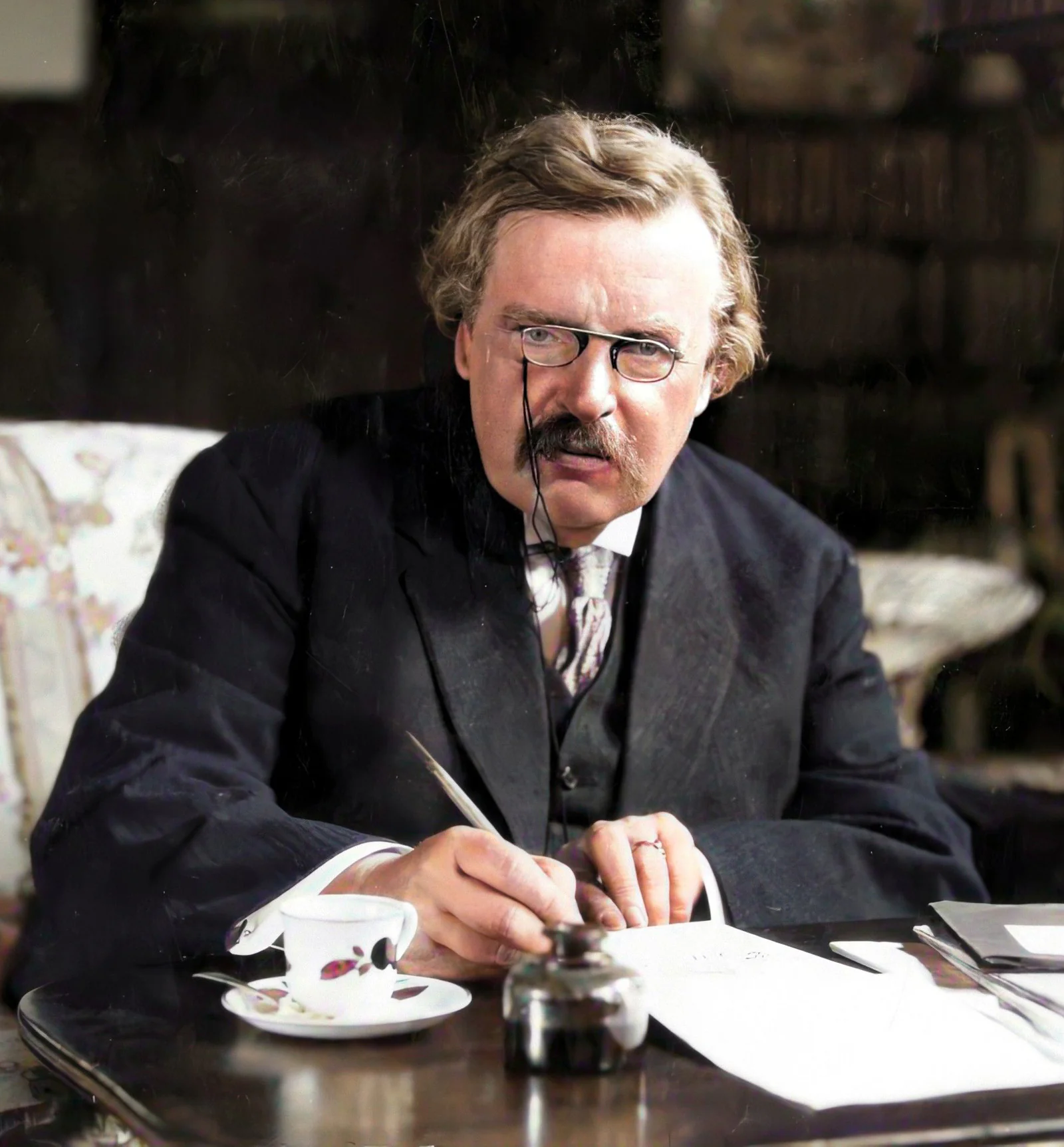
| 112 Quotes | |
| Born as | Gilbert Keith Chesterton |
| Known as | G. K. Chesterton |
| Occup. | Writer |
| From | England |
| Spouse | Frances Blogg |
| Born | May 29, 1874 London, England |
| Died | June 14, 1936 Beaconsfield, Buckinghamshire, England |
| Cause | Heart Attack |
| Aged | 62 years |
| Cite | |
Citation Formats
APA Style (7th ed.)
Gilbert k. chesterton biography, facts and quotes. (2026, February 1). FixQuotes. https://fixquotes.com/authors/gilbert-k-chesterton/
Chicago Style
"Gilbert K. Chesterton biography, facts and quotes." FixQuotes. February 1, 2026. https://fixquotes.com/authors/gilbert-k-chesterton/.
MLA Style (9th ed.)
"Gilbert K. Chesterton biography, facts and quotes." FixQuotes, 1 Feb. 2026, https://fixquotes.com/authors/gilbert-k-chesterton/. Accessed 5 Mar. 2026.
Early Life and Background
Gilbert Keith Chesterton was born on May 29, 1874, in Kensington, London, into a comfortable middle-class household shaped by late-Victorian confidence and anxieties. His father, Edward Chesterton, worked in real estate and kept a small workshop for hobbies - a domestic model of practical competence and imaginative play that stayed with Chesterton. He grew up amid the moral earnestness and class stratification of imperial London, absorbing the city as both an engine of progress and a theater of spiritual hunger.From early on he was large-bodied, quick-witted, and theatrically sociable, yet also prone to interior storms. In his late teens he passed through what he later described as a period of gloom and metaphysical dread - not simply depression, but a fear that reality might be meaningless or illusory. That crisis did not make him a pessimist; it made him a militant celebrant of ordinary existence. His later public joviality had a private edge: he defended joy as a conclusion painfully earned, not as a temperament casually possessed.
Education and Formative Influences
Chesterton attended St Pauls School in London and then studied at the Slade School of Fine Art (University College London), training in drawing and design before turning decisively to letters. The 1890s brought him into contact with Decadent and aesthetic currents, with their flirtations with nihilism and self-invention; he experimented, recoiled, and began to seek a sturdier metaphysic. English literary tradition - Dickens above all - gave him a model of moral energy and comic compassion, while the era's political arguments over poverty, labor, and empire sharpened his sense that ideas were never merely private.Career, Major Works, and Turning Points
He began as a journalist and reviewer, writing for the Daily News and later the Illustrated London News, turning weekly commentary into a high art of paradox and moral diagnosis. The 1900s established him: The Napoleon of Notting Hill (1904) turned local loyalty into prophetic fantasy; Heretics (1905) and Orthodoxy (1908) fused memoir, apologetics, and literary criticism into a distinctive defense of Christian realism; The Man Who Was Thursday (1908) transformed anarchist London into a metaphysical thriller. In 1901 he married Frances Blogg, whose steady Anglican piety and practical discipline anchored his sometimes chaotic working habits. His friendships and public debates - especially with George Bernard Shaw and H.G. Wells - made him a major Edwardian voice. In 1922 he entered the Roman Catholic Church, a culmination of long attraction to sacrament, tradition, and authority; afterward he produced works such as The Everlasting Man (1925) and continued the Father Brown detective stories (from 1910 onward), where humility, confession, and moral perception outmatched mere technique.Philosophy, Style, and Themes
Chesterton wrote like a man fencing with the modern world in bright daylight: playful, argumentative, and relentlessly concrete. He distrusted the cool neutrality of the age because he believed it disguised surrender. “Tolerance is the virtue of the man without convictions”. The line is not a plea for cruelty but a psychological self-portrait: he feared that a soft refusal to judge would end in a hard refusal to love. His essays treat dogma not as a cage but as a map - a way to keep the mind from wandering into fashionable cruelty or bored indifference.His deepest theme was gratitude under threat. Having once felt reality wobble, he insisted on the precariousness that makes wonder possible: “The way to love anything is to realize that it may be lost”. That insight drives his defense of marriage, custom, and the common man; it also explains his delight in limits, rules, and rituals, which for him intensified rather than diminished life. Even his advice about effort carries this same moral psychology - a refusal of perfectionism that turns into a defense of action: “If a thing is worth doing, it is worth doing badly”. Chesterton's prose mirrors the creed: aphoristic, paradox-laden, and musical, moving from jokes to metaphysics without changing the emotional key, because he believed comedy was one of the serious ways truth announces itself.
Legacy and Influence
Chesterton died on June 14, 1936, in Beaconsfield, Buckinghamshire, after decades as one of England's most recognizable public intellectuals. His reputation has risen and fallen with cultural tides - praised for imaginative brilliance and Christian humanism, criticized for polemical excesses and the darker shadows in some of his commentary on Jews that later readers cannot ignore. Yet his enduring influence is unmistakable: as a stylist he shaped modern essay writing, as a thinker he fed 20th-century Christian apologetics and social criticism, and as a storyteller he created Father Brown, a detective whose method is moral imagination. He remains a writer who made the ordinary world feel both more comic and more charged, insisting that sanity, joy, and belief were not naive inheritances but victories won in argument with the age.Our collection contains 112 quotes written by Gilbert, under the main topics: Witty One-Liners - Motivational - Ethics & Morality - Wisdom - Truth.
Other people related to Gilbert: Joseph McCabe (Writer)
Gilbert K. Chesterton Famous Works
- 1912 Manalive (Novel)
- 1911 Father Brown (Short Story Collection)
- 1908 Orthodoxy (Book)
- 1908 The Man Who Was Thursday (Novel)
- 1904 The Napoleon of Notting Hill (Novel)
Source / external links