
Giorgio Armani Biography Quotes 14 Report mistakes
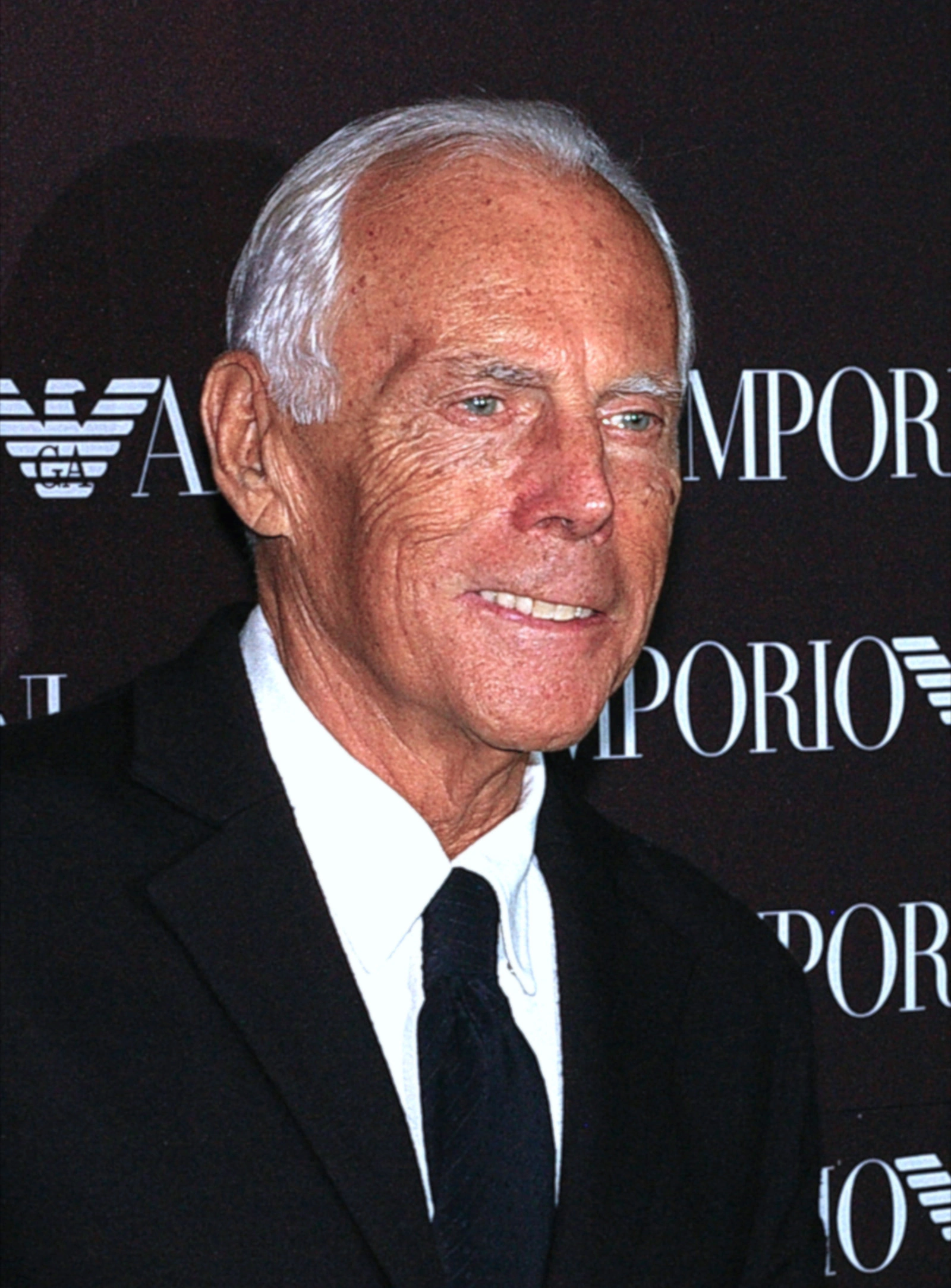
Attr: Jan Schroeder, CC BY-SA 3.0
| 14 Quotes | |
| Occup. | Designer |
| From | Italy |
| Born | July 11, 1934 Piacenza, Italy |
| Died | September 4, 2025 Milan, Italy |
| Aged | 91 years |
| Cite | |
Citation Formats
APA Style (7th ed.)
Giorgio armani biography, facts and quotes. (2026, February 11). FixQuotes. https://fixquotes.com/authors/giorgio-armani/
Chicago Style
"Giorgio Armani biography, facts and quotes." FixQuotes. February 11, 2026. https://fixquotes.com/authors/giorgio-armani/.
MLA Style (9th ed.)
"Giorgio Armani biography, facts and quotes." FixQuotes, 11 Feb. 2026, https://fixquotes.com/authors/giorgio-armani/. Accessed 5 Mar. 2026.
Early Life and Background
Giorgio Armani was born on July 11, 1934, in Piacenza, Emilia-Romagna, a provincial city shaped by Catholic restraint and, soon, by war. His parents, Ugo Armani and Maria Raimondi, raised Giorgio with his siblings Sergio and Rosanna in a household where money and mood could tighten without warning. The Second World War pressed itself into his earliest memories - sirens, rationing, and the moral theater of survival that taught Italian families to make do, to repair, to conceal fear behind composure. That atmosphere would later rhyme with his work: the preference for quiet authority, for clothing that armored without shouting.The adult Armani often sounded less like a celebrity than a private man who had trained himself to disappear into precision. He was drawn to faces and gestures, to the way a jacket changes a silhouette and, with it, a person. The young man who watched people in the street and in shop windows was also learning Italy itself - the norths industrious sobriety, the countrys postwar hunger for elegance, and the subtle power of looking controlled when life is not.
Education and Formative Influences
After school in Piacenza, Armani moved toward medicine, studying at the University of Milan with a focus that was more dutiful than passionate; anatomy and the disciplined gaze mattered, but the vocation did not hold. Military service interrupted him, and on returning he entered the commercial life of Milan, first at La Rinascente, the department store that served as an informal academy for postwar Italian taste. There he learned fabric, merchandising, and the psychology of desire, absorbing the citys emerging design culture just as Italian cinema and industrial style were becoming global signals of modernity.Career, Major Works, and Turning Points
Armanis professional hinge came in the 1960s and early 1970s: he trained as a window dresser and buyer, then became a designer, notably working for Nino Cerruti at Hitman, where he refined mens tailoring into something lighter and more modern. In 1975 he founded Giorgio Armani S.p.A. in Milan with his longtime partner and business strategist Sergio Galeotti, and quickly defined a new uniform - deconstructed jackets with softened structure and a neutral, architectural palette. The 1980 film American Gigolo, with Richard Gere dressed in Armani, turned that uniform into an international language of cool power, while the 1980s and 1990s saw the house expand into Emporio Armani, Armani Jeans, fragrances, accessories, hotels, and a tightly controlled luxury ecosystem. Through economic booms and recessions, he defended independence, kept the brand anchored in Milan, and built one of Italys most consequential fashion enterprises, remaining creatively central until his death on September 4, 2025.Philosophy, Style, and Themes
Armanis style was not built on spectacle but on calibration: the exact shoulder line, the softened lapel, the brown that reads as black in evening light. He treated clothing as a social instrument, not merely decoration, insisting that design should dignify the wearer rather than consume them. “I believe that my clothes can give people a better image of themselves - that it can increase their feelings of confidence and happiness”. In that belief is his psychological signature: a shy observer translating empathy into proportion, offering an attainable serenity to bodies under scrutiny.His work consistently argued for permanence against churn, which made him a quiet antagonist to fashion as noise. “The difference between style and fashion is quality”. And quality, for him, was not fetish but ethics: the refusal to date, the ambition to outlast a season and therefore outlast insecurity. “I love things that age well - things that don't date, that stand the test of time and that become living examples of the absolute best”. Behind the famous minimalism was a discipline that bordered on asceticism - a man who understood that restraint can be more commanding than display, and that anonymity, paradoxically, can be a route to authority.
Legacy and Influence
Armani changed the modern wardrobe by changing its psychology: he offered a way to look powerful without looking aggressive, sensual without looking performative, wealthy without looking gaudy. His deconstructed tailoring reshaped menswear and womenswear, his neutrals and fluid lines redefined corporate and red-carpet dressing, and his brands diffusion lines helped set the template for contemporary luxury groups. In an era of accelerating trends, his enduring influence lies in the argument he made with every jacket and coat - that elegance is a form of self-possession, and that the most persuasive design often speaks in a lowered voice.Our collection contains 14 quotes written by Giorgio, under the main topics: Motivational - Wisdom - Art - Work Ethic - Equality.
Other people related to Giorgio: Herb Ritts (Photographer)
Frequently Asked Questions
- Giorgio Armani young: As a young man in Italy, he worked in retail and later as a fashion designer before launching his own label in 1975.
- What is Giorgio Armani net worth? Common estimates put his net worth in the range of about $6–10+ billion, varying by source and year.
- Giorgio Armani owner: He founded and remained the main owner of the Armani fashion group (Giorgio Armani S.p.A.).
- Giorgio Armani wife: He never married and did not have a wife.
- Giorgio Armani perfume: He launched Armani fragrances, including the popular Acqua di Giò line.
- How old was Giorgio Armani? He became 91 years old
Source / external links