
Giotto di Bondone Biography Quotes 6 Report mistakes
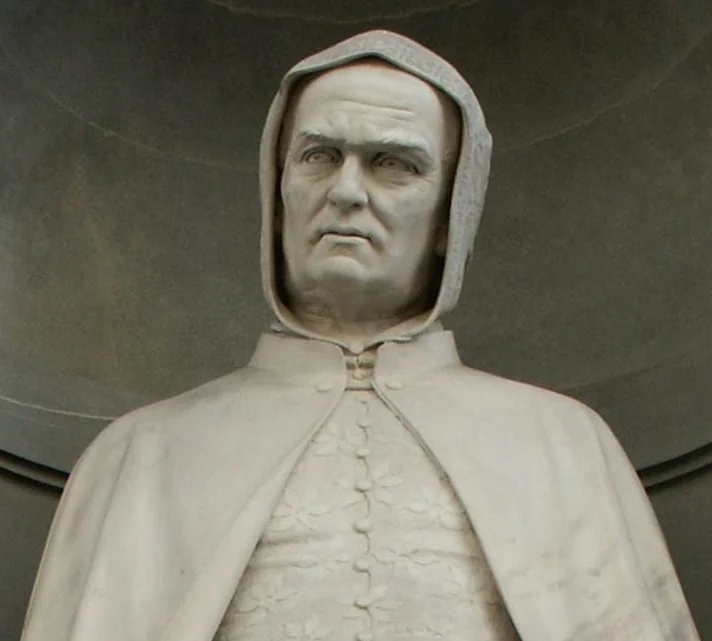
| 6 Quotes | |
| Known as | Giotto |
| Occup. | Artist |
| From | Italy |
| Born | 1266 AC Florence, Republic of Florence |
| Died | January 8, 1337 |
| Cite | |
Citation Formats
APA Style (7th ed.)
Giotto di bondone biography, facts and quotes. (2026, February 11). FixQuotes. https://fixquotes.com/authors/giotto-di-bondone/
Chicago Style
"Giotto di Bondone biography, facts and quotes." FixQuotes. February 11, 2026. https://fixquotes.com/authors/giotto-di-bondone/.
MLA Style (9th ed.)
"Giotto di Bondone biography, facts and quotes." FixQuotes, 11 Feb. 2026, https://fixquotes.com/authors/giotto-di-bondone/. Accessed 24 Mar. 2026.
Early Life and Background
Giotto di Bondone was born around 1266 in the Tuscan countryside near Florence, traditionally linked to the village of Vespignano in the Mugello. Italy in his youth was a mosaic of communes and lordships where merchant wealth, civic rivalries, and papal-imperial politics shaped patronage. Florence, expanding its markets and churches, demanded images that could instruct congregations as powerfully as sermons. In that environment, painting was not a private art but a public language, commissioned by mendicant orders, guilds, and ambitious families seeking salvation, prestige, and memory.Later anecdotes - especially Giorgio Vasari's tale of the shepherd boy discovered drawing sheep on a rock by Cimabue - cannot be verified, yet they preserve an essential truth about Giotto's reputation: he was perceived early as a natural observer who could translate lived experience into sacred narrative. His earliest years likely involved workshop labor, mixing pigments, preparing panels, and absorbing the rhythm of commissions, while hearing the new Franciscan emphasis on Christ's humanity and the believer's emotional participation. That shift in devotion would become the emotional engine of his art.
Education and Formative Influences
Giotto's training emerged from the late Byzantine-Italo "maniera greca" still dominant in Tuscan altarpieces, but he redirected it through close looking and sculptural thinking. Whether or not Cimabue was his formal master, Giotto learned from Florentine painters, from the radical preaching culture of Santa Croce and Santa Maria Novella, and from the new plasticity of sculpture associated with Nicola and Giovanni Pisano. He also absorbed the practical intelligence of building sites and liturgical spaces - how a figure reads from the nave, how a gesture carries across an arch, how a story must unfold scene by scene for viewers who were often illiterate but visually sophisticated.Career, Major Works, and Turning Points
By the 1290s Giotto was receiving major commissions, and his style quickly spread beyond Florence. Works associated with his early maturity include the Assisi frescoes in the Upper Church of San Francesco (attribution debated but historically central to his legend), where the Life of Saint Francis offered a new, credible theater of bodies in space. His defining triumph came in Padua with the fresco cycle of the Scrovegni (Arena) Chapel, completed around 1305, culminating in a Last Judgment that fused doctrinal clarity with psychological immediacy. He worked for elite patrons and institutions across the peninsula, including the Peruzzi and Bardi Chapels in Santa Croce, Florence, and prestigious papal circles in Rome; his reputation was such that he could be called not just painter but organizer of large teams and complex programs. In 1334 he was appointed capomaestro of Florence Cathedral and designed the campanile that still bears his name, a late turning point that shows how his authority crossed from image-making into civic architecture. He died in Florence on 1337-01-08, leaving projects continued by students and followers.Philosophy, Style, and Themes
Giotto's revolution was not a sudden invention of perspective but a reorientation of attention: sacred history becomes believable because it looks and feels inhabited. He built figures with weight, draped them in garments that describe the body, and staged scenes with a director's economy - a few decisive gestures, a wall or cliff that locks the drama into place, a silence that amplifies grief. His Madonnas are not icons suspended outside time; they are mothers with gravity in their laps. His mourners in the Lamentation do not merely signify sorrow; they enact it, turning devotion into empathetic witnessing.The inner life implied by this art is disciplined, sober, and tender toward human limitation. When a later voice says, “Every painting is a voyage into a sacred harbour”. it captures Giotto's sense that an image must carry a viewer safely from the noise of the world to a moral landing - not through ornament, but through intelligible action and measured emotion. His repeated attention to fragile bodies and communal grief echoes the thought that “The human heart is as a frail craft on which we wish to reach the stars”. Even when he worked in Rome, the seat of contested authority and memory, the mood aligns with: “Rome is the city of echoes, the city of illusions, and the city of yearning”. Giotto answered that yearning by making holiness legible in human terms, as if credibility itself were a form of reverence.
Legacy and Influence
Giotto's enduring influence lies in how decisively he redirected Western painting toward observed reality, narrative coherence, and psychological presence. For contemporaries he embodied the possibility that painting could rival poetry in truthfulness; for later artists he became the hinge between medieval convention and Renaissance inquiry. His language of volume, space, and human feeling set the stage for Masaccio, Fra Angelico, and the Florentine tradition, while his workshop model and monumental cycles shaped how churches told stories for centuries. Even where attributions are contested, the "Giottesque" remains a measurable force: the conviction that belief can be strengthened not by abstraction but by scenes that look like life and therefore reach the soul.Our collection contains 6 quotes written by Giotto, under the main topics: Art - Friendship - Deep - Romantic - Wanderlust.
Other people related to Giotto: Marino Marini (Sculptor)
Source / external links