
Godfrey Reggio Biography Quotes 23 Report mistakes
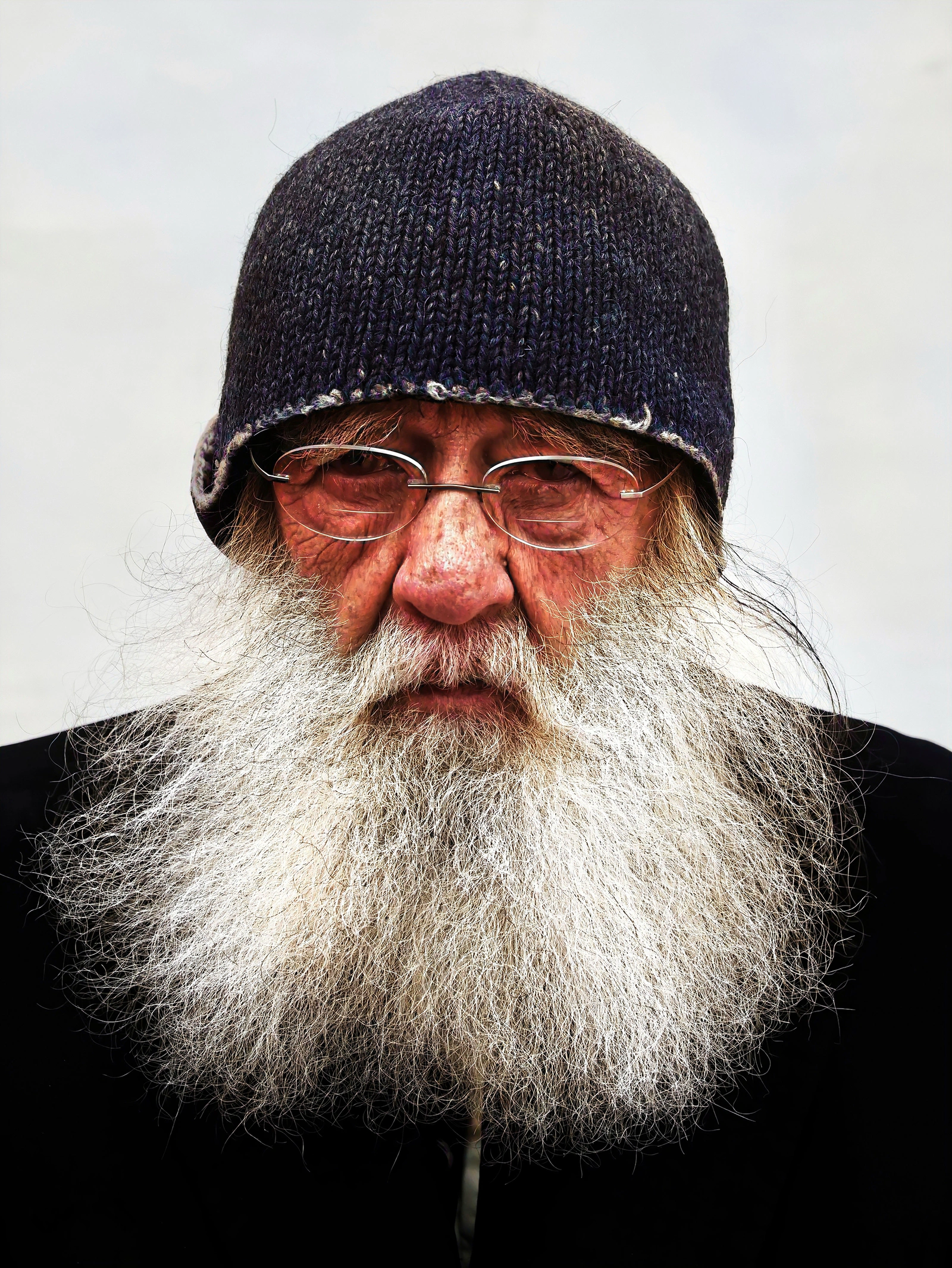
Attr: Peter Weiss, CC BY-SA 4.0
| 23 Quotes | |
| Occup. | Director |
| From | USA |
| Born | March 29, 1940 New Orleans, Louisiana, USA |
| Age | 85 years |
| Cite | |
Citation Formats
APA Style (7th ed.)
Godfrey reggio biography, facts and quotes. (2026, February 11). FixQuotes. https://fixquotes.com/authors/godfrey-reggio/
Chicago Style
"Godfrey Reggio biography, facts and quotes." FixQuotes. February 11, 2026. https://fixquotes.com/authors/godfrey-reggio/.
MLA Style (9th ed.)
"Godfrey Reggio biography, facts and quotes." FixQuotes, 11 Feb. 2026, https://fixquotes.com/authors/godfrey-reggio/. Accessed 24 Mar. 2026.
Early Life and Background
Godfrey Reggio was born on March 29, 1940, in the United States, into a mid-century America reorganizing itself around postwar industry, advertising, highways, and television. That expanding machine-age confidence - and the frictions it produced in cities and families - would later become the raw material of his cinema, even when he refused conventional narration. His films would look outward at crowds, architecture, and systems, but their pressure came from an inward question: what does modern life do to attention, feeling, and moral agency?As a teenager he entered the Roman Catholic Church and spent years in a monastic order (commonly described as the Christian Brothers), taking vows that shaped his habits of contemplation and his skepticism toward the loud certainties of mass culture. He later worked in community and educational settings in New Mexico, including activism around youth and social conditions in Albuquerque. The contrast between contemplative discipline and civic emergency - silence and sirens, prayer and policing, poverty and television - formed his lifelong tension: a desire to reach the public without surrendering to the public's numbing tempo.
Education and Formative Influences
Reggio is largely self-made as an artist, his formation coming less from film school than from the Church, street-level organizing, and the intellectual atmosphere of the 1960s and 1970s, when media theory, environmental anxiety, and critiques of technocracy entered popular debate. In New Mexico he collaborated with institutions and philanthropies (notably the Lannan Foundation) that later supported his experiments, while his friendships with composers and image-makers gave him a working education in montage, rhythm, and the ethics of representation.Career, Major Works, and Turning Points
Reggio emerged internationally with "Koyaanisqatsi" (1982), produced with Francis Ford Coppola, shot by cinematographer Ron Fricke, and driven by Philip Glass's score - a film that replaced plot with a visual symphony of deserts, cities, factories, and faces. It was followed by "Powaqqatsi" (1988) and "Naqoyqatsi" (2002), together known as the Qatsi trilogy, each using montage to contrast human scale with system scale and to ask what "progress" costs. He later continued the inquiry with "Visitors" (2013), a largely black-and-white, dialogue-free meditation on spectatorship and the gaze, and "Once Within a Time" (2022), a late-career push toward a more overtly mythic, fairy-tale register. A decisive turning point was his commitment to wordless cinema: by withholding explanatory voiceover, he forced viewers to supply their own moral accounting - an approach that made the films both widely influential and perennially debated.Philosophy, Style, and Themes
Reggio's central claim is not simply that technology changes society, but that it changes the conditions of experience itself. He argued, “Technology is not neutral”. , meaning that tools carry hidden instructions - about speed, scale, efficiency, and what counts as real - that seep into politics, economics, and intimacy. In this view the modern problem is not misuse but immersion: “It's not that we use technology, we live technology”. The psychological stakes are stark - a fear that the self becomes an annex of its instruments, that attention is trained into reflex, and that moral language arrives too late to name what has already become habitual.His style is the aesthetic corollary of that diagnosis: accelerated time-lapse, monumental architecture, crowds as pattern, faces as witnesses, and music as emotional argument. He treats the image as a public commons and a moral mirror, built to bypass ideological defenses and reach the nervous system first. Reggio framed this as a deliberate paradox: “The language of the moment or, as it were, the language of the order in which we live, is the image. I felt that if I wanted to commune with the public, I should best do so through the language of image. It's a conscious embrace of a contradiction”. His films do not preach; they stage a confrontation between awe and alarm, asking whether viewers can remain human inside the very media environment that anesthetizes them.
Legacy and Influence
Reggio's legacy sits at the crossroads of experimental film, political critique, and popular culture: the Qatsi films became touchstones for later essay cinema, music-video montage, and the visual vocabulary of documentaries about globalization and climate anxiety, while Glass's collaborations helped define a mainstream appetite for minimalist score as philosophical engine. More enduring is Reggio's insistence that modernity is not merely a set of external problems but a perceptual condition - and that cinema, used with rigor, can make that condition visible long enough for questions to re-enter the soul.Our collection contains 23 quotes written by Godfrey, under the main topics: Art - Writing - Deep - War - Movie.
Source / external links