
Gordon Ramsay Biography Quotes 10 Report mistakes
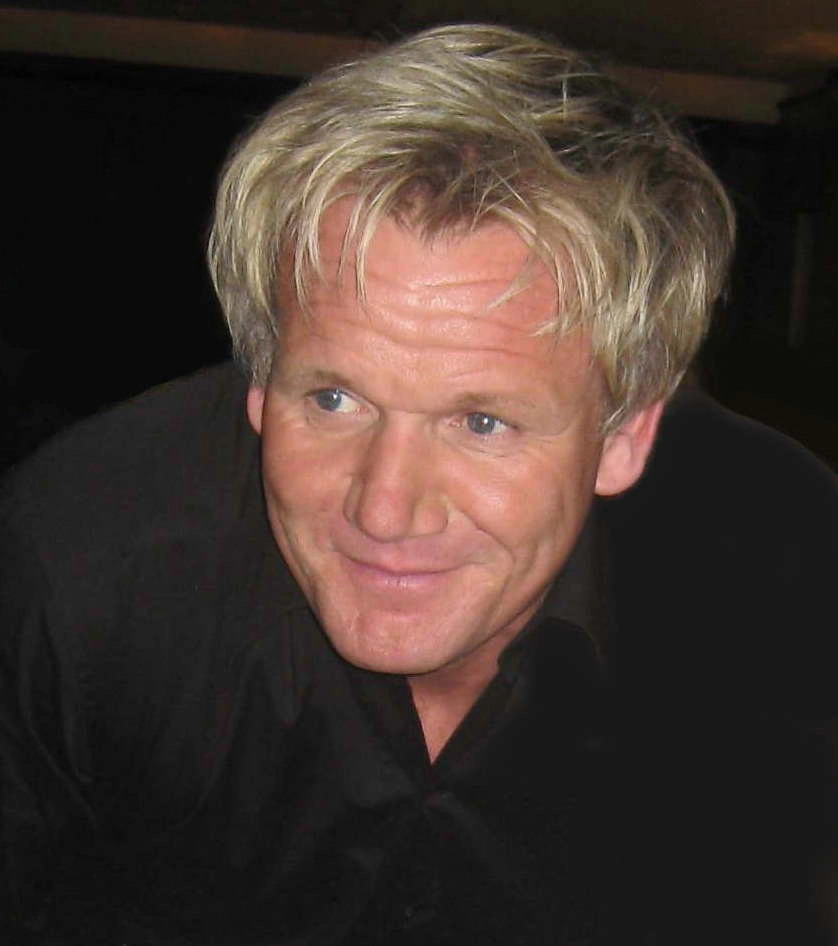
Attr: Allan warren, CC BY-SA 3.0
| 10 Quotes | |
| Occup. | Chef |
| From | United Kingdom |
| Born | November 8, 1966 Johnstone, Renfrewshire, Scotland |
| Age | 59 years |
| Cite | |
Citation Formats
APA Style (7th ed.)
Gordon ramsay biography, facts and quotes. (2026, February 11). FixQuotes. https://fixquotes.com/authors/gordon-ramsay/
Chicago Style
"Gordon Ramsay biography, facts and quotes." FixQuotes. February 11, 2026. https://fixquotes.com/authors/gordon-ramsay/.
MLA Style (9th ed.)
"Gordon Ramsay biography, facts and quotes." FixQuotes, 11 Feb. 2026, https://fixquotes.com/authors/gordon-ramsay/. Accessed 12 Feb. 2026.
Early Life and Background
Gordon James Ramsay was born on November 8, 1966, in Johnstone, Renfrewshire, Scotland, and grew up largely in Stratford-upon-Avon, England, in a working-class household shaped by frequent moves and family strain. The Britain of his childhood was a country in economic transition, where trades, discipline, and reputation mattered, and where a talented, restless boy could feel both caged and propelled by circumstance.Before kitchens, Ramsay dreamed in goals and training schedules, not menus. A gifted footballer, he played at youth level and was scouted by Rangers, but a serious knee injury ended the path that had offered him a clear identity and an escape route. That sudden loss became a psychological hinge: he redirected the same appetite for intensity into a new arena where endurance, hierarchy, and nerve determined who survived the heat.
Education and Formative Influences
Ramsay trained formally in hospitality and later in culinary craft, then sought the hardest rooms he could enter, treating each kitchen like an apprenticeship in character as much as technique. In London he worked under Marco Pierre White at Harvey's, absorbing a brutal standard of precision and tempo; in France he refined classical foundations and elite discipline under chefs such as Albert Roux and Guy Savoy, and he spent time in the orbit of Joël Robuchon, encountering a European brigade system where excellence was non-negotiable and memory was built through repetition.Career, Major Works, and Turning Points
Ramsay returned to London to lead Aubergine, winning acclaim and culminating in Michelin recognition, then took the defining leap in 1998 by opening Restaurant Gordon Ramsay in Chelsea with backing that allowed him to set his own terms; it earned three Michelin stars in 2001 and became the anchor of a global group spanning fine dining, brasseries, and hotel restaurants. Television made him a household name and amplified his managerial mythology: Ramsay's Kitchen Nightmares (UK and US), Hell's Kitchen, and MasterChef (as judge/producer) converted kitchen pressure into narrative, turning service into theater while also educating mass audiences about standards, waste, and leadership. The turning points were not only accolades but scale: the shift from chef to chef-entrepreneur, then to media figure whose brand traveled farther than any dining room, even as the original flagship remained the credibility core.Philosophy, Style, and Themes
Ramsay's philosophy begins with motion: skill is never finished, and complacency is a moral failure in a trade where yesterday's perfection is today's baseline. He has said, "As a chef, you never stop learning". That line is less slogan than self-description - the engine behind his relentless benchmarking against France, his insistence on tasting everything, and his intolerance for cooks who confuse routine with mastery. The public often sees only anger, but the deeper pattern is fear of decline: a man who learned early that injuries, bad luck, and weak standards can erase futures overnight.His style fuses classical French technique with British ingredients and a modern, clean plating that prizes clarity over ornament. The famous profanity and volcanic tempo are not merely performance; they are a tool for enforcing pace and accountability in an environment where seconds matter and errors cascade. Ramsay frames that world bluntly: "Kitchens are hard environments, and they form incredibly strong characters". He also reveals the mindset that makes the hardness feel necessary: "I am what I am. A fighter". In his best services and his best television moments, the fight is not against people but against entropy - overcooked fish, limp leadership, drifting attention - and against the inner temptation to settle.
Legacy and Influence
Ramsay helped redefine what a modern celebrity chef could be: not only a restaurateur with Michelin legitimacy, but a global media educator who translated professional standards into popular culture without fully domesticating their edge. He influenced a generation of cooks and viewers to take technique, seasoning, and brigade discipline seriously, while also normalizing the idea that leadership in food is managerial, psychological, and economic - not just creative. His enduring impact sits in that paradox: he elevated craftsmanship and accountability while making the kitchen's pressure visible, turning a once-private world into a public arena where ambition, failure, and recovery play out in real time.Our collection contains 10 quotes written by Gordon, under the main topics: Witty One-Liners - Never Give Up - Work Ethic - Work - Moving On.
Source / external links