
Gore Vidal Biography Quotes 50 Report mistakes
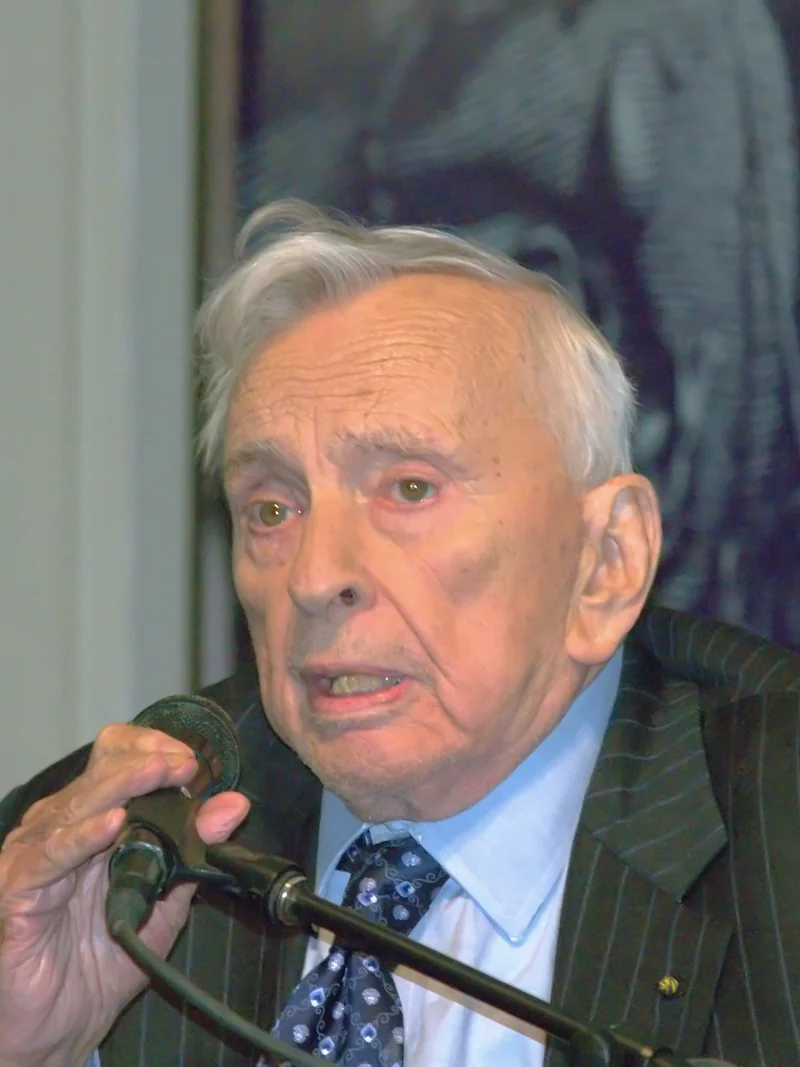
| 50 Quotes | |
| Occup. | Novelist |
| From | USA |
| Born | October 3, 1925 West Point, New York, U.S. |
| Died | July 31, 2012 Los Angeles, California, U.S. |
| Aged | 86 years |
| Cite | |
Citation Formats
APA Style (7th ed.)
Gore vidal biography, facts and quotes. (2026, February 11). FixQuotes. https://fixquotes.com/authors/gore-vidal/
Chicago Style
"Gore Vidal biography, facts and quotes." FixQuotes. February 11, 2026. https://fixquotes.com/authors/gore-vidal/.
MLA Style (9th ed.)
"Gore Vidal biography, facts and quotes." FixQuotes, 11 Feb. 2026, https://fixquotes.com/authors/gore-vidal/. Accessed 31 Mar. 2026.
Early Life and Background
Gore Vidal was born Eugene Luther Gore Vidal on October 3, 1925, in West Point, New York, into a family that treated public life as a hereditary condition. His father, Eugene Luther Vidal, was an early aviation administrator; his mother, Nina Gore, moved in the bright, changeable circles of Washington and New York. The deeper inheritance came through his maternal line: his grandfather Thomas Pryor Gore, the blind senator from Oklahoma, made politics not an abstraction but a daily household language of power, vanity, and rhetoric.Much of Vidal's childhood was spent in the capital's shadow, watching how status is manufactured and how loyalties are traded. As a boy he read aloud to Senator Gore and absorbed the cadence of debate, but also the private cynicism behind it. The split between public virtue and private appetite, which would become one of his lifelong subjects, was not discovered in books first - it was overheard in family conversation and observed in the way respectable people behaved when they thought no one was looking.
Education and Formative Influences
Vidal attended St. Albans School in Washington, D.C., where privilege and competition hardened into an early sense of theatricality: everyone played a role, and the roles were graded. He read voraciously and cultivated a combative intelligence that could be affectionate one moment and prosecutorial the next. In 1943, as the Second World War reordered American confidence and cruelty alike, he joined the U.S. Army and then served in the Army Transportation Corps, experiences that sharpened his skepticism about institutions and provided the raw material for his first novel.Career, Major Works, and Turning Points
Vidal published his breakout debut, "Williwaw" (1946), drawn from wartime service in the Aleutians, then detonated a cultural fuse with "The City and the Pillar" (1948), a novel that treated same-sex desire with an unembarrassed directness that cost him mainstream magazine work for years. He pivoted through the 1950s as a prolific writer of television plays and screenplays (including "The Best Man" and later the script associated with "Ben-Hur"), while quietly building the historical-fiction architecture that would secure his stature: "Julian" (1964) and, later, the "Narratives of Empire" sequence beginning with "Burr" (1973) and continuing through "Lincoln" (1984) and "The Golden Age" (2000). Public notoriety arrived in parallel: he ran for Congress in 1960, became a televised polemicist, and in 1968 turned debate into spectacle in his famously caustic exchanges with William F. Buckley Jr., making his own persona part of the work.Philosophy, Style, and Themes
Vidal wrote as if the American Republic were a classical tragedy staged with modern lighting: the prose lucid, the jokes sharpened like scalpels, the historical detail deployed to expose how myths are retrofitted into facts. He distrusted national pieties not because he lacked patriotism but because he believed patriotism had been converted into branding. Again and again he returned to the press, the academy, Hollywood, and Washington as interlocking machines that manufacture consent while pretending to report reality, insisting that “The corporate grip on opinion in the United States is one of the wonders of the Western world. No First World country has ever managed to eliminate so entirely from its media all objectivity - much less dissent”. Behind the sentence is his psychology: a man who felt most alive when unmasking the stagehands, compelled to puncture the comfortable lie before it settled into doctrine.His treatment of sex was similarly anti-mythic, refusing both prudishness and sentimental liberation narratives. In essays and fiction alike he framed desire as a force that resists taxonomy, arguing against the era's hunger to sort souls into political categories: “There is no such thing as a homosexual or a heterosexual person. There are only homo- or heterosexual acts. Most people are a mixture of impulses if not practices”. That cool refusal to be categorized also protected him; it allowed candor without confession, and it kept the author from becoming a mascot for any tribe. Yet the same temperament could tilt into corrosive wit about status and rivalry - a confession disguised as a punchline in “Whenever a friend succeeds, a little something in me dies”. The line reveals not simple envy but Vidal's sense that culture is a zero-sum tournament, and that the American marketplace rewards the wrong victories.
Legacy and Influence
Vidal died on July 31, 2012, in Los Angeles, having spent decades as both craftsman and conscience - a novelist who could build an engrossing narrative while conducting a running audit of the nation's self-deception. His historical novels helped revive serious popular interest in early American power struggles; his essays modeled a style of public intellectual that was erudite, pugnacious, and suspicious of consensus; and his frankness about desire widened the space for later writers to treat sexuality without melodrama. If his tone sometimes scorched allies as well as enemies, it was inseparable from his enduring contribution: a body of work that insists the United States be read like a text - with attention to who benefits, who speaks, who is silenced, and what the official story is trying to make you forget.Our collection contains 50 quotes written by Gore, under the main topics: Witty One-Liners - Motivational - Truth - Art - Justice.
Other people related to Gore: Melvyn Douglas (Actor)
Gore Vidal Famous Works
- 2002 Dreaming War: Blood for Oil and the Cheney-Bush Junta (Non-fiction)
- 2000 The Golden Age (Novel)
- 1995 Palimpsest: A Memoir (Memoir)
- 1993 United States: Essays 1952–1992 (Collection)
- 1992 Live from Golgotha (Novel)
- 1990 Hollywood (Novel)
- 1987 Empire (Novel)
- 1984 Lincoln (Novel)
- 1976 1876 (Novel)
- 1974 Myron (Novel)
- 1973 Burr (Novel)
- 1972 An Evening With Richard Nixon (as if He Were Dead) (Play)
- 1968 Myra Breckinridge (Novel)
- 1964 Julian (Novel)
- 1960 The Best Man (Play)
- 1954 Messiah (Novel)
- 1952 The Judgment of Paris (Novel)
- 1950 Dark Green, Bright Red (Novel)
- 1948 The City and the Pillar (Novel)
- 1946 Williwaw (Novel)