
Grace Abbott Biography Quotes 5 Report mistakes
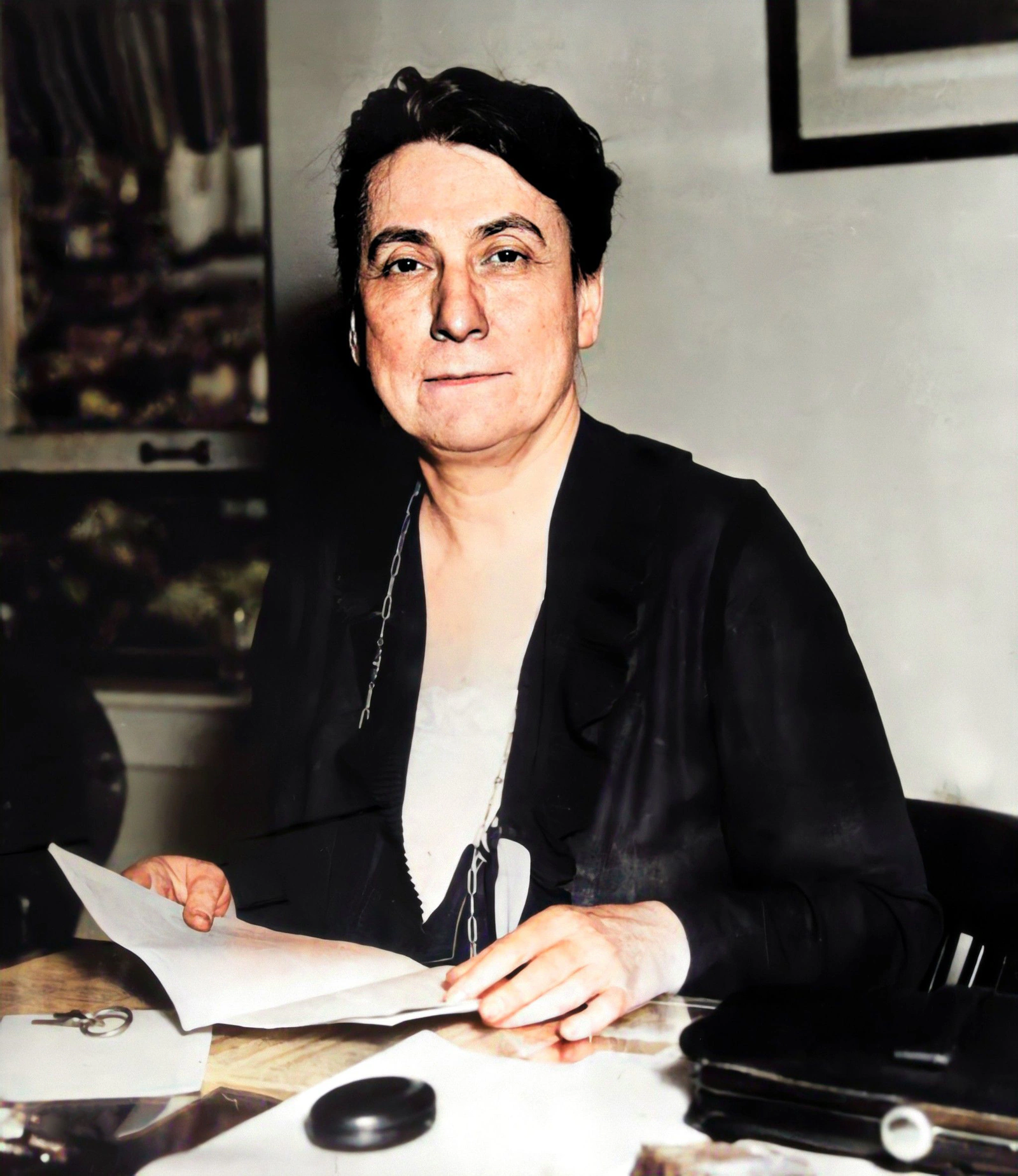
| 5 Quotes | |
| Occup. | Activist |
| From | USA |
| Born | November 17, 1878 Grand Island, Nebraska |
| Died | June 19, 1939 Chicago, Illinois |
| Cause | Influenza |
| Aged | 60 years |
| Cite | |
Citation Formats
APA Style (7th ed.)
Grace abbott biography, facts and quotes. (2026, February 11). FixQuotes. https://fixquotes.com/authors/grace-abbott/
Chicago Style
"Grace Abbott biography, facts and quotes." FixQuotes. February 11, 2026. https://fixquotes.com/authors/grace-abbott/.
MLA Style (9th ed.)
"Grace Abbott biography, facts and quotes." FixQuotes, 11 Feb. 2026, https://fixquotes.com/authors/grace-abbott/. Accessed 12 Feb. 2026.
Early Life and Background
Grace Abbott was born on November 17, 1878, in Grand Island, Nebraska, a prairie railroad town shaped by migration, farm economics, and the hard arithmetic of family labor. She grew up in a household where politics and conscience were everyday subjects: her father, Othman A. Abbott, was a lawyer and Civil War veteran, and her mother, Elizabeth Griffin Abbott, was an outspoken advocate of equal rights and civic reform. That domestic atmosphere did not romanticize public service; it treated it as duty, and it trained Abbott to see law not as abstraction but as a tool that could be bent toward protection.Her closest collaborator and emotional anchor was her older sister, Edith Abbott, who would become a leading social economist and educator. Together, the sisters internalized a late-19th-century Midwestern progressivism that combined moral seriousness with a belief in competent administration. Abbott carried from Nebraska a lifelong sensitivity to how quickly children and immigrants could be converted, in the public imagination, from neighbors into problems - and how easily those labeled "problems" could be exploited when wages fell and fear rose.
Education and Formative Influences
Abbott studied at Grand Island College and then the University of Nebraska, earning a BA in 1901, and went on to graduate work that included study at the University of Chicago and travel in Europe. The decisive influence was not a single professor but the broader Progressive Era faith that investigation must precede reform: statistics, casework, and law were to be braided together. By the time she gravitated to Chicago, she was primed for Hull House's ethic of proximity - living close enough to injustice that it could not be dismissed, yet far enough inside institutions to translate outrage into policy.Career, Major Works, and Turning Points
In Chicago, Abbott joined Hull House and became a leading figure in immigrant protection, directing the Immigrants Protective League and documenting how newcomers were cheated by employment agents, landlords, and officials at every choke point of arrival. Her expertise carried her into national work: during World War I she served on federal boards concerned with immigrants and labor, and in 1921 she became chief of the U.S. Children's Bureau's Child Labor Division, later serving as the Bureau's head (acting chief) after Julia Lathrop. Abbott fought to enforce and defend child labor regulation after the Supreme Court struck down earlier federal statutes, helped build the administrative capacity behind the Sheppard-Towner Maternity and Infancy Act (1921), and became a prominent architect of modern child welfare policy. In the 1930s she advised on Franklin D. Roosevelt's social legislation, contributing to the policy thinking that culminated in the Social Security Act of 1935, especially its provisions for Aid to Dependent Children and public welfare administration. Alongside administration, she wrote and edited extensively - including the influential compilation The Child and the State (1938) - translating field realities into arguments legislators could not easily ignore. She died on June 19, 1939, in Chicago, after years in which the emotional load of reform work was matched by the demands of scholarship and teaching.Philosophy, Style, and Themes
Abbott's inner life was marked by a controlled urgency: she sounded calm on the page, but she wrote like someone who had seen how quickly a family can be ruined by a missing paycheck and how permanently a child can be altered by early work. She understood child labor not as a moral failing of parents but as a structural bargain made under pressure, insisting that "Child labor and poverty are inevitably bound together and if you continue to use the labor of children as the treatment for the social disease of poverty, you will have both poverty and child labor to the end of time". The sentence reveals her psychology - impatient with sentimental fixes, driven by causality, and convinced that the real opponent was not individual vice but the economic system's appetite for cheap, compliant labor.Her style as a reformer was to fuse democratic theory to administrative detail. She argued that limits on hours and minimum ages were not merely humane but civic infrastructure, because "The first and continuing argument for the curtailment of working hours and the raising of the minimum age was that education was necessary in a democracy and working children could not attend school". That emphasis on education shows a strategic mind: she framed child welfare as the preservation of citizenship itself, a way to make legislators defend exploitation openly if they opposed her. Yet she also registered the emotional cost of navigating federal power, confessing, "Sometimes when I get home at night in Washington I feel as though I had been in a great traffic jam". The metaphor is more than fatigue; it captures her awareness that reform is made inside congestion - competing agencies, hostile courts, industry lobbying, and the slow, grinding movement of democratic decision-making.
Legacy and Influence
Abbott helped shift American child welfare from charity to rights-bearing public responsibility, proving that moral concern could be operationalized into standards, inspections, grants, and enforceable rules. Her work strengthened the Children's Bureau as a national center of evidence-based policy, influenced the trajectory from Progressive Era reforms to New Deal social citizenship, and left a template for linking labor regulation, public health, and education as mutually reinforcing protections. She is remembered not only for specific statutes and administrative victories, many contested and revised, but for a durable argument: a democracy that tolerates children as a labor reserve corrodes its own future - and the state has both the authority and the obligation to prevent that corrosion.Our collection contains 5 quotes written by Grace, under the main topics: Witty One-Liners - Justice - Parenting - Human Rights.
Other people related to Grace: Ben Lindsey (Judge)
Source / external links