
Greg Louganis Biography Quotes 11 Report mistakes
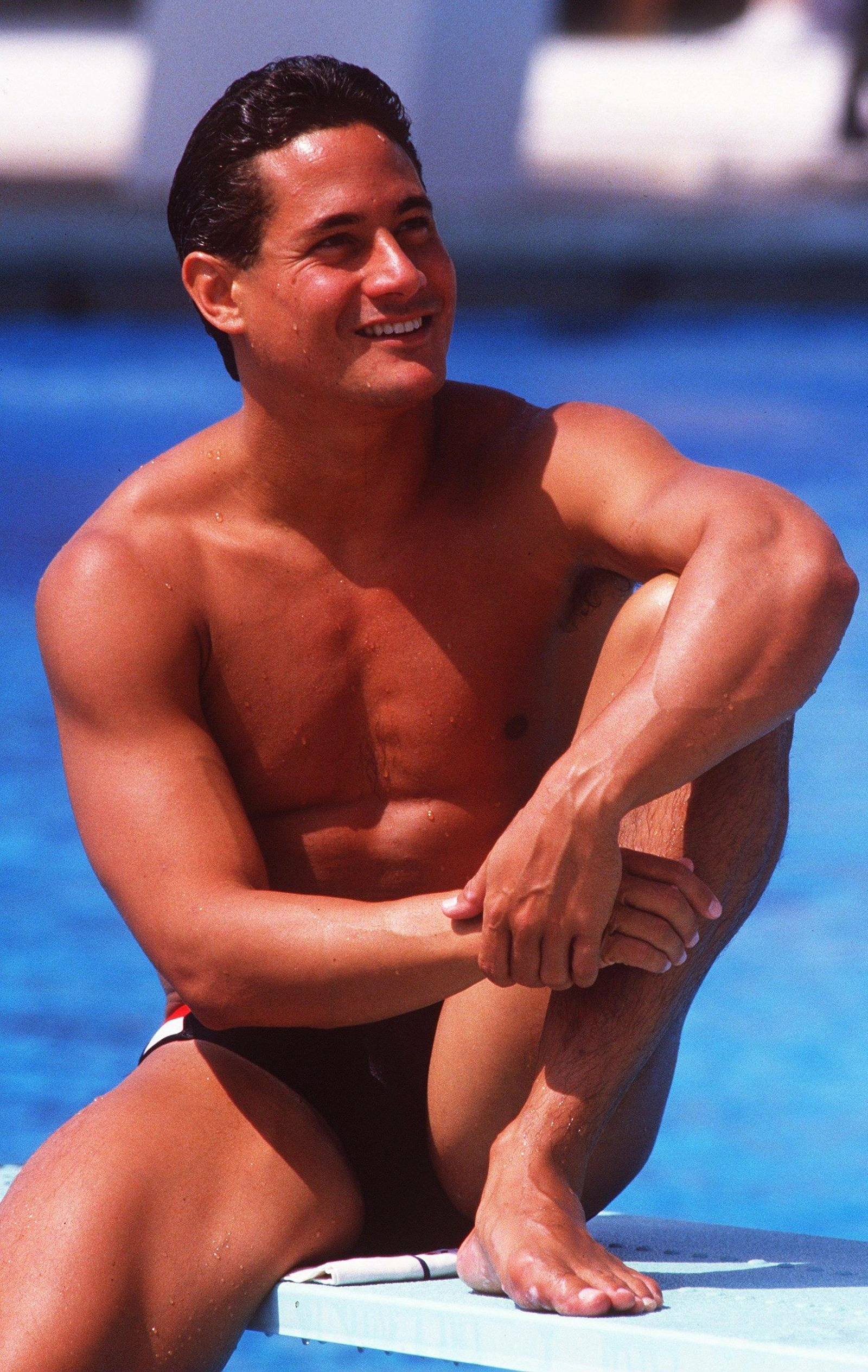
| 11 Quotes | |
| Born as | Gregory Efthimios Louganis |
| Occup. | Athlete |
| From | USA |
| Born | January 29, 1960 El Cajon, California |
| Age | 66 years |
| Cite | |
Citation Formats
APA Style (7th ed.)
Greg louganis biography, facts and quotes. (2026, February 11). FixQuotes. https://fixquotes.com/authors/greg-louganis/
Chicago Style
"Greg Louganis biography, facts and quotes." FixQuotes. February 11, 2026. https://fixquotes.com/authors/greg-louganis/.
MLA Style (9th ed.)
"Greg Louganis biography, facts and quotes." FixQuotes, 11 Feb. 2026, https://fixquotes.com/authors/greg-louganis/. Accessed 5 Mar. 2026.
Early Life and Background
Gregory Efthimios Louganis was born January 29, 1960, in El Cajon, California, and adopted as an infant by Peter and Frances Louganis, a Greek American family in the San Diego area. Small and asthmatic as a child, he found early refuge in disciplined movement - gymnastics first, then diving - where precision could be practiced into confidence and where a quiet kid could be unmistakably seen.
The Southern California aquatics circuit of the 1970s rewarded repetition, body control, and poise under scrutiny, all traits that suited Louganis temperamentally. Yet behind the composed exterior was a young man learning how to protect private truths in a country that still treated homosexuality as scandal and, later, HIV as a moral verdict. That tension between public perfection and private vigilance would shape not only his competitive demeanor but the moral stakes of his adulthood.
Education and Formative Influences
Louganis trained at Mission Bay and other San Diego facilities and emerged as a prodigy under influential coaches who emphasized basics over flash - takeoff mechanics, entries, and the psychological work of meeting fear without dramatizing it. He competed internationally as a teenager and was selected for the 1976 U.S. Olympic team, the first in a generation to see him as a transformational talent, not simply a medal prospect.
Career, Major Works, and Turning Points
At Montreal in 1976, still only 16, Louganis won silver on the 10-meter platform, then endured a crushing absence from the 1980 Moscow Games when the United States boycotted - a formative injustice for an athlete whose prime years were arriving on schedule. He returned to dominate the sport's most pressure-heavy stages, becoming the defining male diver of the 1980s: at the 1984 Los Angeles Olympics he won gold in both springboard and platform, and at the 1988 Seoul Olympics he repeated the double, even after striking his head on the springboard during the 3-meter preliminaries, a moment that forced him to manage injury, fear, and media spectacle while staying mathematically perfect. The later revelation that he was living with HIV during Seoul recast his achievements as feats accomplished amid extraordinary private risk and public misunderstanding; his subsequent memoir, Breaking the Surface (1995), and advocacy work became as consequential as the medals.
Philosophy, Style, and Themes
Louganis diving style was built on the aesthetics of inevitability - tight lines, controlled speed, and entries that seemed to erase impact. That look of effortlessness was not natural ease so much as an ethic: practice as a way of turning anxiety into ritual and the body into an instrument that could be trusted when the mind was loud. His career also taught him the brutality of sporting time, the way a champion is asked to be eternal in a profession designed for the young. “In sports, people reach their peak very early. You have to move on. I don't know if I will ever surpass what I did at the Olympics, but I'm still doing the work I always wanted to do”. It reads like a self-portrait of someone determined to measure life by craft and service rather than applause.
His inner life, however, was shaped by the costs of secrecy in an era when exposure could end sponsorships, erase teammates, and invite ridicule. “I just did not discuss my personal life, my sexuality with the media. That was my policy”. This was not simply caution but a survival strategy that demanded constant compartmentalization - the public body judged for angles and splash, the private self managing love, health, and fear. When he later acknowledged that those closest to him already knew, he described a quieter truth beneath the headlines: “People who were close to me - family and friends - they knew about my sexuality”. The arc from silence to candor became central to his post-Olympic identity, turning the perfected diver into a witness for dignity.
Legacy and Influence
Louganis endures as one of the greatest divers in Olympic history, not only for the rare sweep of springboard and platform in back-to-back Games (1984 and 1988), but for redefining what composure can mean under pressure. His story sits at a crossroads of late-20th-century American life - the Cold War politics that stole an Olympic chance, the media culture that demanded confession, and the AIDS crisis that tested public empathy. By pairing technical excellence with later openness, he expanded the emotional vocabulary available to athletes: that mastery can coexist with vulnerability, and that surviving - professionally, socially, medically - can be its own form of gold.
Our collection contains 11 quotes written by Greg, under the main topics: Friendship - Sarcastic - Life - Overcoming Obstacles - Resilience.
Source / external links