
Greg Norman Biography Quotes 23 Report mistakes
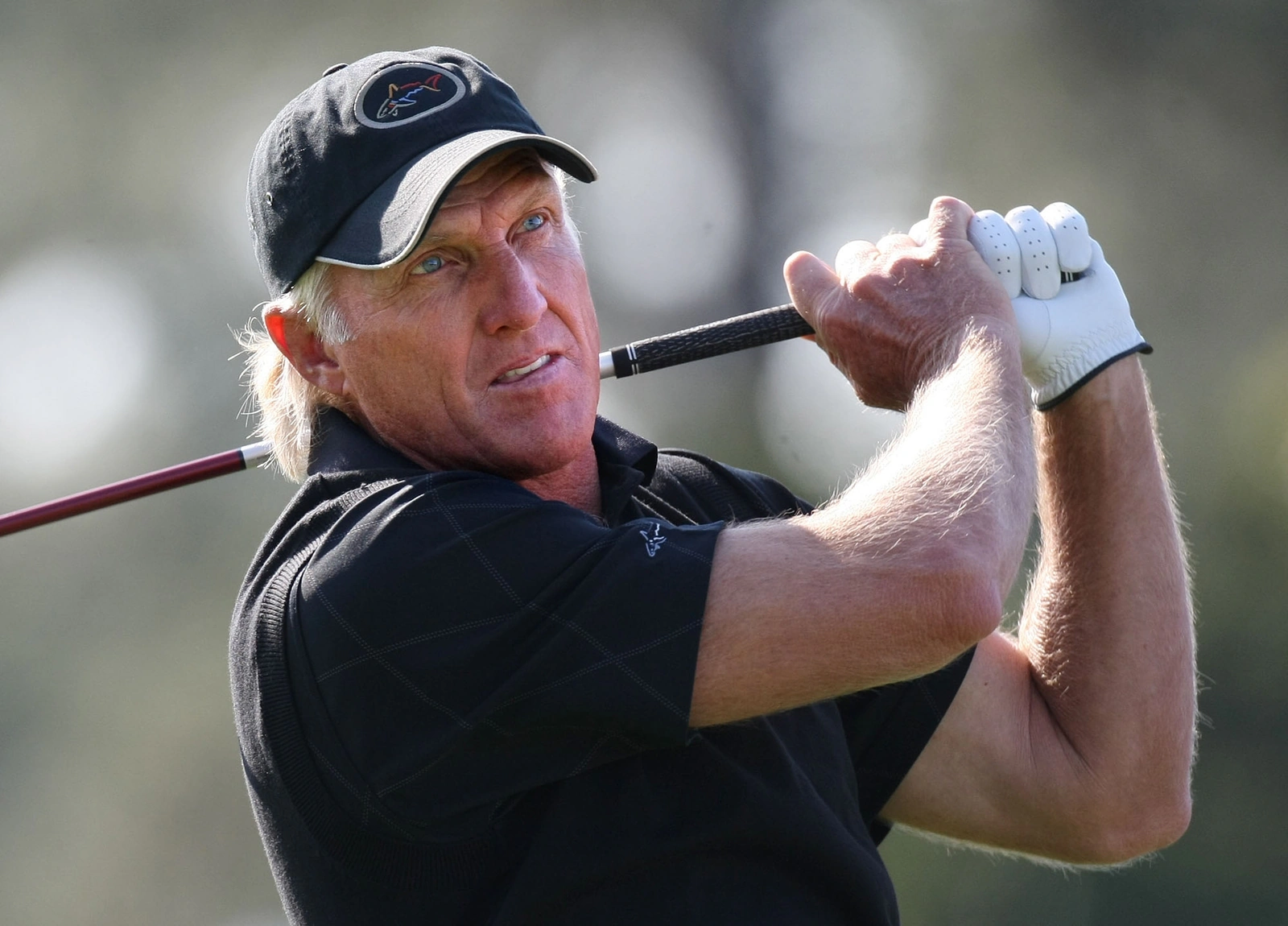
| 23 Quotes | |
| Born as | Gregory John Norman |
| Occup. | Athlete |
| From | Australia |
| Born | February 10, 1955 |
| Age | 71 years |
| Cite | |
Citation Formats
APA Style (7th ed.)
Greg norman biography, facts and quotes. (2026, February 11). FixQuotes. https://fixquotes.com/authors/greg-norman/
Chicago Style
"Greg Norman biography, facts and quotes." FixQuotes. February 11, 2026. https://fixquotes.com/authors/greg-norman/.
MLA Style (9th ed.)
"Greg Norman biography, facts and quotes." FixQuotes, 11 Feb. 2026, https://fixquotes.com/authors/greg-norman/. Accessed 25 Mar. 2026.
Early Life and Background
Gregory John Norman was born on February 10, 1955, in Mount Isa, Queensland, a mining town whose heat and distance sharpened a certain self-reliant Australian pragmatism. He grew up in a country that, in the 1960s and early 1970s, still treated golf as a genteel pursuit, far from the television-saturated global stage it would become. Norman later came to embody a newer archetype - the elite athlete as brand - but his origins were decidedly local, shaped by sport-as-outlet rather than sport-as-industry.As a teenager he moved with his family to the Brisbane area and cycled through the typical Australian athletic apprenticeships: cricket, rugby, and a casual relationship with golf that turned serious only after he discovered how quickly his competitive temperament translated to the game. The family unit mattered to him as ballast while ambition pulled him outward; he has been explicit about that debt: “I owe a lot to my parents, especially by mother and my father”. That sense of obligation - gratitude mixed with drive - would recur whenever his career entered turbulence.
Education and Formative Influences
Norman attended school in Queensland and did not follow a long university pathway; his education was the embodied kind, learned through repetition, travel, and the hard feedback of scorecards. His formative influences were practical: the Australian tournament circuit that demanded self-management, the disciplined example of players who treated practice like a profession, and the dawning realization that golf was becoming a televised contest of nerves as much as mechanics. By the mid-1970s he had turned professional (1976), committing to a life organized around airports, range sessions, and the lonely accountability of individual sport.Career, Major Works, and Turning Points
Norman rose through the Australasian Tour before becoming a central figure on the PGA Tour and worldwide circuits, ultimately spending long stretches as the world No. 1 in the late 1980s and 1990s. His major championship record became both proof of greatness and a public burden: he won The Open Championship in 1986 and 1993, contended repeatedly at Augusta, and endured the notorious collapse at the 1996 Masters that crystallized the cruel thinness between dominance and defeat. Yet his "work" was larger than trophies: the aggressive, high-flight driving style, the willingness to play globally, and a commercial instinct that turned him into "The Shark" - a sports icon with an apparel line, course-design business, and, later, a polarizing role in the restructuring of professional golf through LIV Golf, where he served as a key executive face of a new era of money, media, and geopolitical scrutiny.Philosophy, Style, and Themes
Norman played with a sprinter's conviction: take the initiative, trust the swing, force the field to react. Underneath that outward bravado was a craftsman's humility about the game itself - a belief that mastery is temporary and must be rebuilt daily. He spoke about preparation in plain, unsentimental terms: “That's why we have practice rounds. We make the adjustments as we go around, try and find out how to play the golf course the best we can. No big deal, it's nothing to me, it's the same for me as it is to everybody and we're all trying to understand it”. Psychologically, the phrasing matters: he reduces spectacle to process, a defense against pressure and a way to keep ego from interfering with execution.The second theme is resilience - not as inspirational slogan but as gritty recalibration across age, injury, and memory. Even in later-life starts, he framed recovery as a hierarchy of priorities, emphasizing control over romance: “Obviously it's my second senior event, and I'm tired obviously coming back from the British Open, from surgery, which was priority No. 1, did that successfully, and each week since the British Open I've felt in pretty good control of my golf game”. That insistence on "control" reveals an inner life shaped by the terror of golf's volatility, and by the public myth of Norman as fearless. In time, a third note entered - an earned quietness after decades of adrenaline and scrutiny: “To me I've just really, really found a relaxed, peaceful side of my life and I'm enjoying it”. The arc is telling: from attack mode, to method, to acceptance - without ever fully surrendering competitiveness.
Legacy and Influence
Greg Norman's legacy is double-edged and therefore enduring: as a player, he helped modernize golf's image into something more athletic, global, and commercially literate, while his near-misses became case studies in pressure that still frame how champions are judged. As a businessman and administrator, he accelerated debates about who controls elite sport - tours, players, sponsors, or sovereign capital - making him central to golf's most consequential institutional upheaval in generations. Whether remembered primarily as the swashbuckling Open champion, the haunted Masters runner-up, or the lightning rod of a new league, Norman remains a figure through whom modern golf explains itself: its glamour, its cruelty, and its relentless demand that a human being keep rebuilding confidence one swing at a time.Our collection contains 23 quotes written by Greg, under the main topics: Witty One-Liners - Victory - Sports - Work Ethic - Health.
Other people related to Greg: Raymond Floyd (Athlete)
Source / external links