
Greta Thunberg Biography Quotes 11 Report mistakes
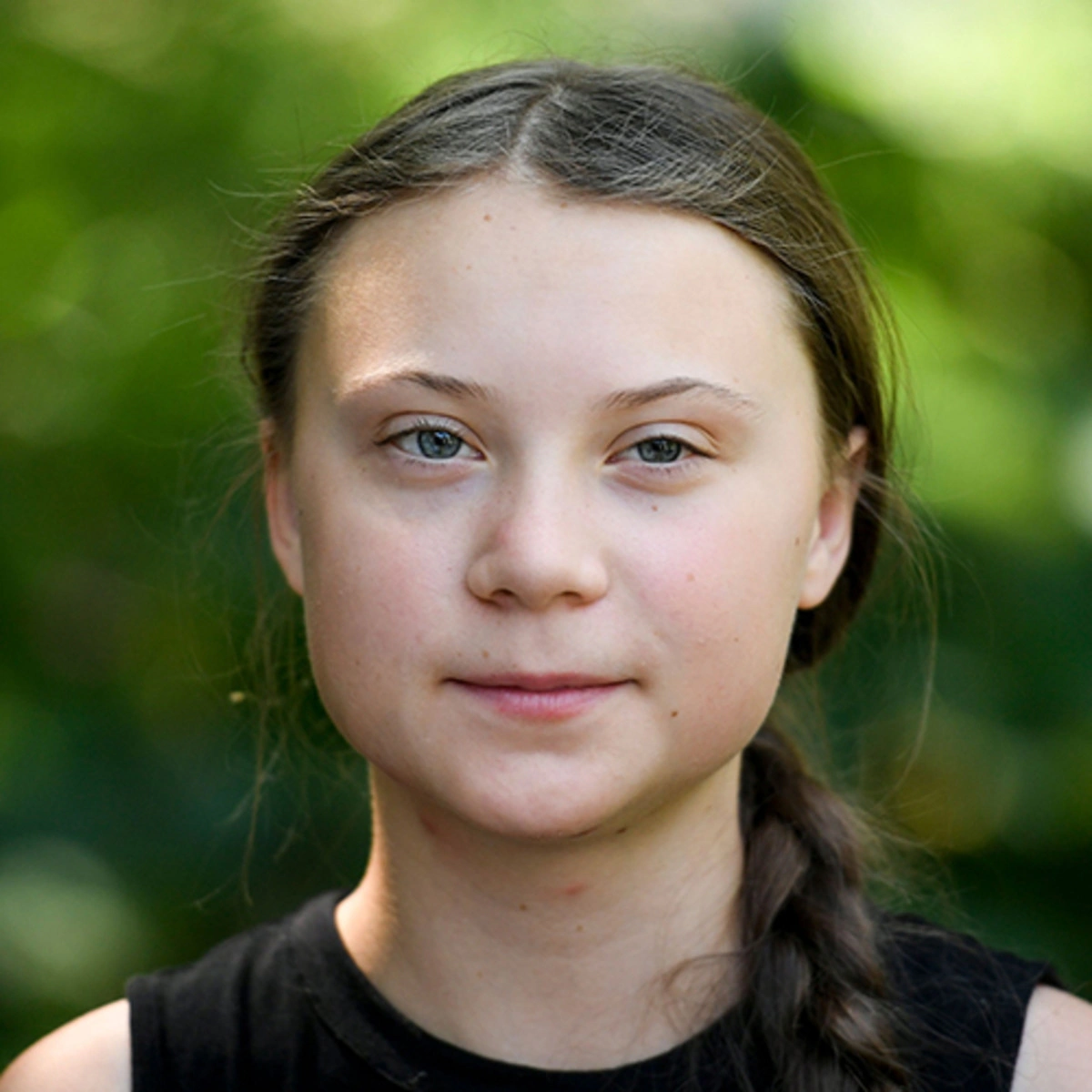
| 11 Quotes | |
| Born as | Greta Tintin Eleonora Ernman Thunberg |
| Occup. | Environmentalist |
| From | Sweden |
| Born | January 3, 2003 Stockholm, Sweden |
| Age | 23 years |
| Cite | |
Citation Formats
APA Style (7th ed.)
Greta thunberg biography, facts and quotes. (2026, February 11). FixQuotes. https://fixquotes.com/authors/greta-thunberg/
Chicago Style
"Greta Thunberg biography, facts and quotes." FixQuotes. February 11, 2026. https://fixquotes.com/authors/greta-thunberg/.
MLA Style (9th ed.)
"Greta Thunberg biography, facts and quotes." FixQuotes, 11 Feb. 2026, https://fixquotes.com/authors/greta-thunberg/. Accessed 5 Mar. 2026.
Early Life and Background
Greta Tintin Eleonora Ernman Thunberg was born on January 3, 2003, in Stockholm, Sweden, into a family already public-facing in Swedish cultural life. Her mother, Malena Ernman, was an opera singer; her father, Svante Thunberg, worked as an actor and producer; and her younger sister, Beata, would also become known in the arts. Growing up in a prosperous welfare state that prided itself on modernity and environmental policy, Thunberg absorbed a national self-image of rational governance - and later measured it against the carbon math of a warming world.In childhood she was described as intense and focused, a temperament that sharpened rather than softened as she encountered climate science. Thunberg has spoken publicly about living with Asperger syndrome, along with OCD and selective mutism earlier in life - conditions that, in her telling, shaped how she processed threat and injustice: less as background worry than as a concrete, unresolved problem demanding clarity. The mismatch between adult reassurance and scientific warnings became, for her, not an abstract debate but a daily moral dissonance.
Education and Formative Influences
Thunberg attended school in Stockholm during a period when climate warnings moved from specialist reports to mainstream headlines, from the IPCC assessments to unusually hot summers and extreme events across Europe. She has credited straightforward exposure to climate data, and the sense that adults were talking around it, as formative; her thinking was also influenced by Sweden's civic culture of protest and public inquiry. A family decision to reduce their own carbon footprint - including changes to travel and consumption that were widely reported - became both a personal experiment in consistency and an early rehearsal for the scrutiny that would later follow her.Career, Major Works, and Turning Points
In August 2018, at age 15, Thunberg began a school strike outside the Swedish Parliament, holding a simple sign: Skolstrejk for klimatet. The solitary action quickly became a template others could copy, spreading through social media into the global Fridays for Future movement. Major turning points followed in rapid succession: speeches at the 2018 UN climate talks in Katowice, a breakout address at the 2019 World Economic Forum in Davos, testimony and appearances around European elections, and a transatlantic voyage by sailboat to address the 2019 UN Climate Action Summit in New York, chosen as much for its symbolism as for its emissions. Her activism broadened into critiques of fossil fuel expansion, carbon_toggle politics, and what she framed as a systemic refusal to treat science as binding; she also curated and edited The Climate Book (2022), assembling scientists, writers, and activists into a primer designed to keep attention on evidence rather than personalities.Philosophy, Style, and Themes
Thunberg's inner life, as it surfaces in her public language, is organized around urgency, literalism, and a moral demand for congruence between knowledge and action. She does not primarily argue for optimism; she argues for recognition of danger and the discipline of responding to it. “I want you to act as if the house is on fire, because it is”. The line is not rhetorical flourish so much as a psychological tell: she experiences climate breakdown as present-tense emergency, and she speaks in a register that collapses the usual political distance between problem and consequence. In this framing, incrementalism reads as denial dressed up as process, and delay becomes an ethical failure rather than a strategic disagreement.Her style is austere, data-referential, and deliberately resistant to the comforting cadence of inspirational leadership. She often redirects attention from herself to emissions curves, budgets, and accountability, using blunt address to puncture institutional language. “We are in the midst of a mass extinction, and all you can talk about is money and fairy tales of eternal economic growth”. That sentence compresses a core theme: the collision between ecological limits and an economic story that promises perpetual expansion, and the anger of a young citizen watching adults prioritize markets over survivability. Yet her approach also insists on agency at every scale, turning a lone protest into a replicable civic act: “No one is too small to make a difference”. The psychological arc behind it is stark - fear converted into routine, routine into movement, movement into pressure.
Legacy and Influence
Thunberg's enduring influence lies less in any single policy win than in a cultural shift: she helped reframe climate change from a distant environmental issue to a present political emergency, and she did so by making consistency - between scientific warnings and public behavior - a standard by which leaders could be judged. Fridays for Future catalyzed mass youth mobilizations, changed newsroom rhythms, and supplied a vocabulary of accountability that entered parliaments, boardrooms, and classrooms. She also became a lightning rod in the era of polarized politics and online disinformation, illustrating how a young woman, speaking plainly, could provoke both global solidarity and furious backlash. In the long view, her biography is inseparable from the early 21st century's defining tension: whether societies that can measure their own danger will choose to act before the measurements become obituaries.Our collection contains 11 quotes written by Greta, under the main topics: Motivational - Justice - Nature - Change - Betrayal.
Frequently Asked Questions
- Greta Thunberg books: No One Is Too Small to Make a Difference; The Climate Book; co-authored Our House Is on Fire.
- Greta Thunberg now: Continues climate activism with Fridays for Future, speaking and campaigning in Sweden and internationally.
- Greta Thunberg boat: Crossed the Atlantic on the zero-emission yacht Malizia II in 2019 (returned on La Vagabonde).
- Beata Thunberg: Greta's younger sister, a Swedish singer and performer.
- What is Greta Thunberg net worth? Not publicly disclosed; media estimates vary and are unverified.
- How old is Greta Thunberg? She is 23 years old
Greta Thunberg Famous Works
- 2018 Our House Is on Fire: Scenes of a Family and a Planet in Crisis (Memoir)
- 2018 No One Is Too Small to Make a Difference (Collection of speeches)
Source / external links