
Gro Harlem Brundtland Biography Quotes 32 Report mistakes
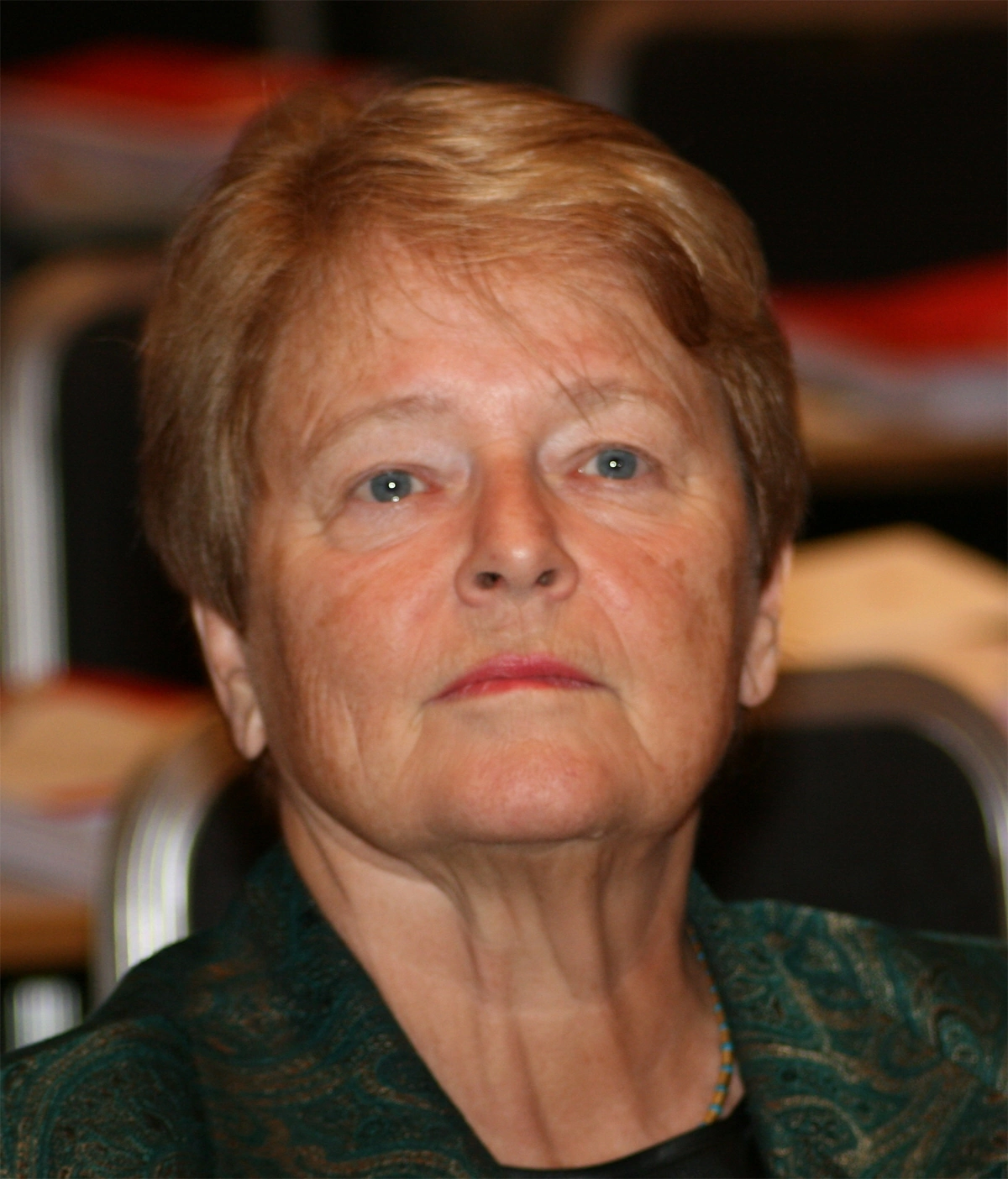
| 32 Quotes | |
| Born as | Gro Harlem |
| Occup. | Politician |
| From | Norway |
| Spouse | Arne Olav Brundtland |
| Born | April 20, 1939 Bærum, Akershus, Norway |
| Age | 86 years |
| Cite | |
Citation Formats
APA Style (7th ed.)
Gro harlem brundtland biography, facts and quotes. (2026, February 11). FixQuotes. https://fixquotes.com/authors/gro-harlem-brundtland/
Chicago Style
"Gro Harlem Brundtland biography, facts and quotes." FixQuotes. February 11, 2026. https://fixquotes.com/authors/gro-harlem-brundtland/.
MLA Style (9th ed.)
"Gro Harlem Brundtland biography, facts and quotes." FixQuotes, 11 Feb. 2026, https://fixquotes.com/authors/gro-harlem-brundtland/. Accessed 27 Mar. 2026.
Early Life and Background
Gro Harlem Brundtland was born Gro Harlem on 20 April 1939 in Oslo, Norway, into a family where medicine, public service, and international horizons overlapped. Her father, Gudmund Harlem, was a physician and later a prominent Labour politician and minister; her mother, Inga Brynolf, was trained as a lawyer. Growing up during and after the German occupation, she absorbed a distinctly Scandinavian lesson: security is built as much through social solidarity as through borders.The postwar Norwegian welfare state was not an abstraction in her childhood but a lived project, visible in expanding public health, housing, and education. That environment sharpened an early sensitivity to inequality that was practical rather than rhetorical - a belief that government is judged by outcomes in ordinary lives. Even before she held power, her temperament leaned toward the clinical: define the problem, measure it, and build institutions capable of preventing its return.
Education and Formative Influences
Brundtland trained as a physician at the University of Oslo, earning her medical degree in the mid-1960s, then deepened her public-health perspective through postgraduate study at Harvard University in 1965. The era was marked by rapid medical advances, feminist organizing, and new environmental anxieties, and she came to see health not as a private matter but as a social contract shaped by work, education, family policy, and the environment. That synthesis - medicine plus governance - became her lifelong instrument, reinforced by early work in Norway's public-health administration and by the conviction that prevention and social policy are more durable than crisis response.Career, Major Works, and Turning Points
Entering national politics through the Norwegian Labour Party (Arbeiderpartiet), Brundtland became Minister of the Environment in 1974, a portfolio that placed her at the intersection of oil-era growth and ecological limits. In 1981 she became Norway's first female prime minister, returning to the office in two longer terms (1986-1989 and 1990-1996) that navigated recession, North Sea wealth, and modernization of the welfare state, while also advancing gender equality in political leadership. Her global breakthrough came as chair of the World Commission on Environment and Development, whose 1987 report, "Our Common Future", popularized "sustainable development" as an ethic of intergenerational responsibility. From 1998 to 2003 she served as Director-General of the World Health Organization, steering the agency through renewed attention to tobacco control, health systems, and emerging infectious threats, and later continued global policy work through the UN system and initiatives such as The Elders.Philosophy, Style, and Themes
Brundtland's inner logic was consistent across arenas: the body politic, like the human body, thrives when prevention is funded, evidence is respected, and vulnerable systems are strengthened before they fail. She argued that the moral center of modern governance lies in protecting life chances - especially for women and children - and she was unusually willing to name uncomfortable tradeoffs, including in reproductive rights debates. Her leadership style combined Scandinavian consensus-building with a physician's intolerance for avoidable harm: she sought broad coalitions, but once a diagnosis was clear, she pushed for implementation, metrics, and institutional accountability.Her signature theme was the fusion of health, development, and environmental stewardship into one policy grammar. “Health is the core of human development”. In her worldview, that sentence is not inspirational but diagnostic: societies that underinvest in public health eventually pay through instability, stalled productivity, and weakened democracy. She framed spending on health as a growth strategy rather than charity - “Investing in health will produce enormous benefits”. - and treated cross-border threats as tests of international maturity. During outbreaks and global scares, she emphasized coordination over blame, insisting, “This syndrome, SARS, is now a worldwide health threat... The world needs to work together to find its cause, cure the sick and stop its spread”. The recurring psychological note is controlled urgency: a belief that reality will not negotiate, and that responsible leaders must act early, collectively, and at scale.
Legacy and Influence
Brundtland's enduring influence rests on making "sustainable development" a governing idea rather than an environmental slogan, and on elevating health to a strategic priority in global policy. In Norway, she helped normalize women in executive power and demonstrated that welfare-state politics could coexist with modernization and international engagement. Globally, her tenure at WHO reinforced the principle that disease control, tobacco policy, and resilient health systems are security issues, not merely medical concerns. For later leaders and advocates, the "Brundtland" imprint is the insistence that the planet, the economy, and the human body share one vulnerability: neglect the foundations long enough, and crisis becomes the only teacher.Our collection contains 32 quotes written by Gro, under the main topics: Ethics & Morality - Equality - Health - Human Rights - Aging.
Source / external links