
Grover Cleveland Biography Quotes 25 Report mistakes
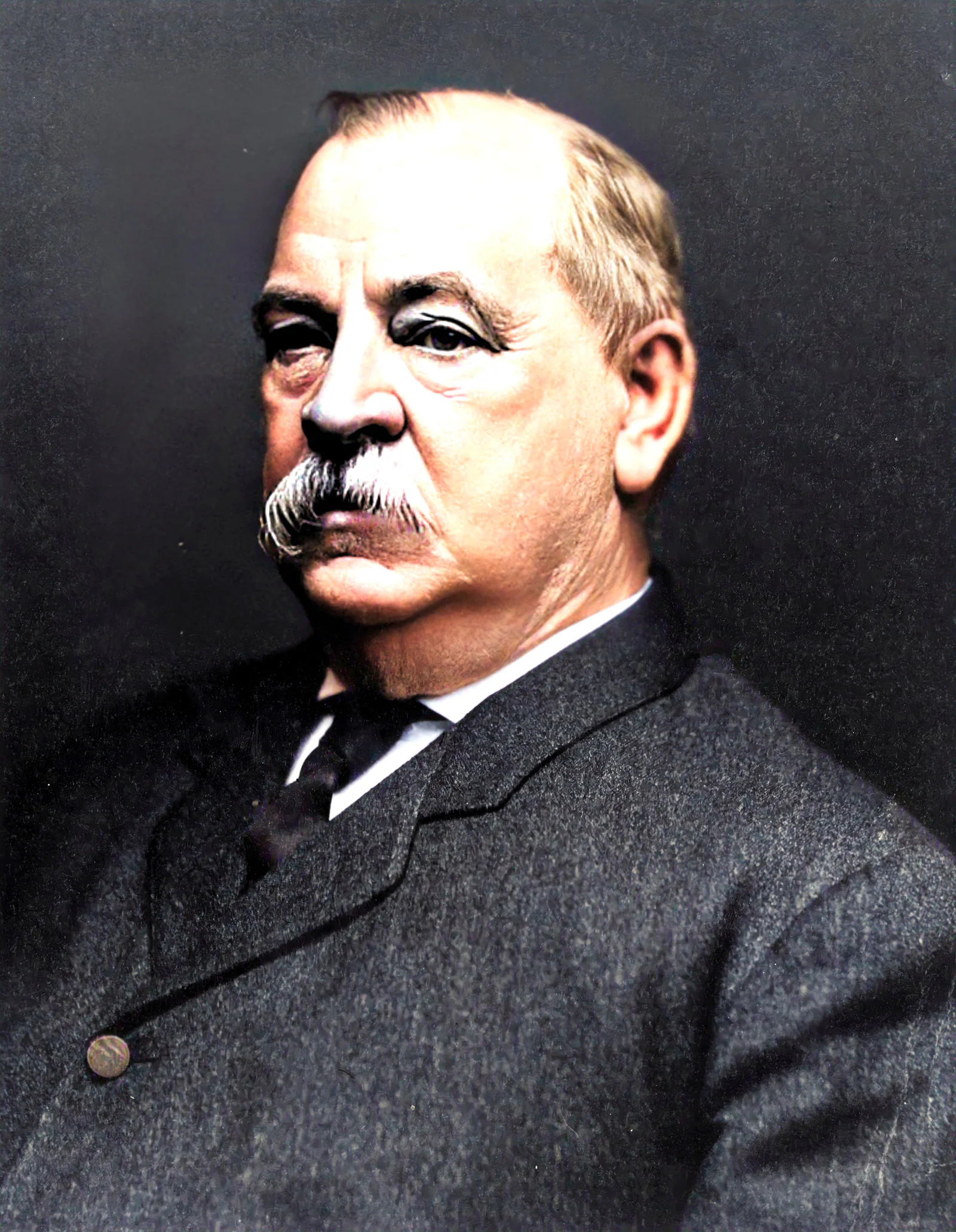
| 25 Quotes | |
| Born as | Stephen Grover Cleveland |
| Occup. | President |
| From | USA |
| Born | March 18, 1837 Caldwell, New Jersey, U.S. |
| Died | June 24, 1908 Princeton, New Jersey, U.S. |
| Cause | Coronary artery disease |
| Aged | 71 years |
| Cite | |
Citation Formats
APA Style (7th ed.)
Grover cleveland biography, facts and quotes. (2026, February 2). FixQuotes. https://fixquotes.com/authors/grover-cleveland/
Chicago Style
"Grover Cleveland biography, facts and quotes." FixQuotes. February 2, 2026. https://fixquotes.com/authors/grover-cleveland/.
MLA Style (9th ed.)
"Grover Cleveland biography, facts and quotes." FixQuotes, 2 Feb. 2026, https://fixquotes.com/authors/grover-cleveland/. Accessed 26 Mar. 2026.
Early Life and Background
Stephen Grover Cleveland was born on March 18, 1837, in Caldwell, New Jersey, the fifth child in a large Presbyterian family. His father, Richard Falley Cleveland, was a minister whose postings moved the household through small-town New York, including Fayetteville and later Clinton. The family lived close to the bone, and the moral language of the pulpit - duty, restraint, accountability - formed the earliest atmosphere of Cleveland's inner life: earnest, suspicious of show, and comforted by rules that could be enforced on himself as well as others.When his father died in 1853, Cleveland, still a teenager, was pushed early into adulthood. He worked as a shop assistant and teacher, then looked west not for adventure but for stability. In 1855 he reached Buffalo, New York, a growing lake port where rough politics met commercial ambition. Cleveland's personality in these years hardened into a kind of private austerity - less romantic striving than a resolve to be useful and to keep his own counsel.
Education and Formative Influences
Cleveland had no college education; his formation was practical and legal. In Buffalo he read law in the office of Rogers, Bowen and Rogers, was admitted to the bar in 1859, and learned the courthouse world from the inside out - debt, property, patronage, and the bargains that kept a city running. The Civil War era shaped him too: he did not serve in uniform, instead paying for a substitute under the draft, a lawful choice that later became a political weapon against him and reinforced his insistence that legality and legitimacy were not the same as popularity. In a party system built on favors, he began to imagine public office as a trust that should feel almost uncomfortable to hold.Career, Major Works, and Turning Points
Cleveland rose in Democratic politics as a reforming administrator: Erie County sheriff (1871-1873), then mayor of Buffalo in 1882, where he won notice for vetoing what he saw as waste and self-dealing. That reputation carried him to Albany as governor of New York (1883-1884), and then to the White House as the first Democratic president since before the Civil War (1885-1889). His presidency was defined by a hard line against patronage abuses, an avalanche of vetoes (especially of private pension bills he considered fraudulent), and an approach to government that treated the budget as a moral document. Defeated in 1888 despite winning the popular vote, he returned in 1893 for a second, nonconsecutive term - the only president to do so - and confronted the Panic of 1893, labor unrest, and the sectional fractures of the tariff and the currency question. He pushed the repeal of the Sherman Silver Purchase Act, defended the gold standard, opposed annexationist impulses toward Hawaii, and in 1894 used federal power in the Pullman Strike, decisions that deepened both his supporters' respect and his enemies' resentment.Philosophy, Style, and Themes
Cleveland's governing philosophy fused Victorian moral seriousness with classical liberal restraint. He believed legitimacy came from procedure, frugality, and the plain sense of limits - that the state could degrade citizens by treating them as clients. That suspicion sits inside his stark maxim, “Though the people support the government; the government should not support the people”. The sentence is less a denial of compassion than a fear of dependency and faction - a conviction that public generosity, once politicized, becomes a machine for buying loyalty and punishing dissent.His style was deliberately unornamented: blunt prose, relentless veto messages, and a preference for administrative cleanliness over soaring national narratives. He spoke of citizenship as work and self-command, insisting, “A truly American sentiment recognizes the dignity of labor and the fact that honor lies in honest toil”. In that belief, the inner Cleveland appears - a man who trusted effort more than charisma, rules more than impulses, and who could be simultaneously democratic in theory and stern in temperament. Yet his moral certainty narrowed his empathy: he opposed women's suffrage in language that assumed social roles were fixed, and his response to industrial conflict prioritized order over mediation. His warning that “The ship of democracy, which has weathered all storms, may sink through the mutiny of those on board”. reads as autobiography as much as caution: he feared not just enemies of democracy, but the citizenry's own appetites - for easy money, for spoils, for leaders who promised without counting.
Legacy and Influence
Cleveland died on June 24, 1908, in Princeton, New Jersey, after years of public commentary and private law work. His legacy is paradoxical: revered as a model of integrity and executive discipline, criticized for rigidity in a rapidly industrializing nation that was testing the boundaries of laissez-faire. Historians still argue over whether his small-government creed was prudence or blindness in the face of depression and labor upheaval, and whether his constitutional scruples were statesmanship or stubbornness. What endures is the Cleveland archetype - the president as custodian rather than redeemer - and the idea, increasingly rare in his own time and ours, that political courage can look like a veto signed in solitude.Our collection contains 25 quotes written by Grover, under the main topics: Wisdom - Justice - Leadership - Freedom - Life.
Other people related to Grover: Adlai E. Stevenson (Politician), Julius Sterling Morton (Scientist), Thomas Jordan Jarvis (Politician), John Griffin Carlisle (Politician), Roger Q. Mills (Politician)
Grover Cleveland Famous Works
- 1906 Fishing and Shooting Sketches (Book)
- 1904 Presidential Problems (Book)
Source / external links